

How a Candy Manufacturer Automated Defect Rejection at Line Speed
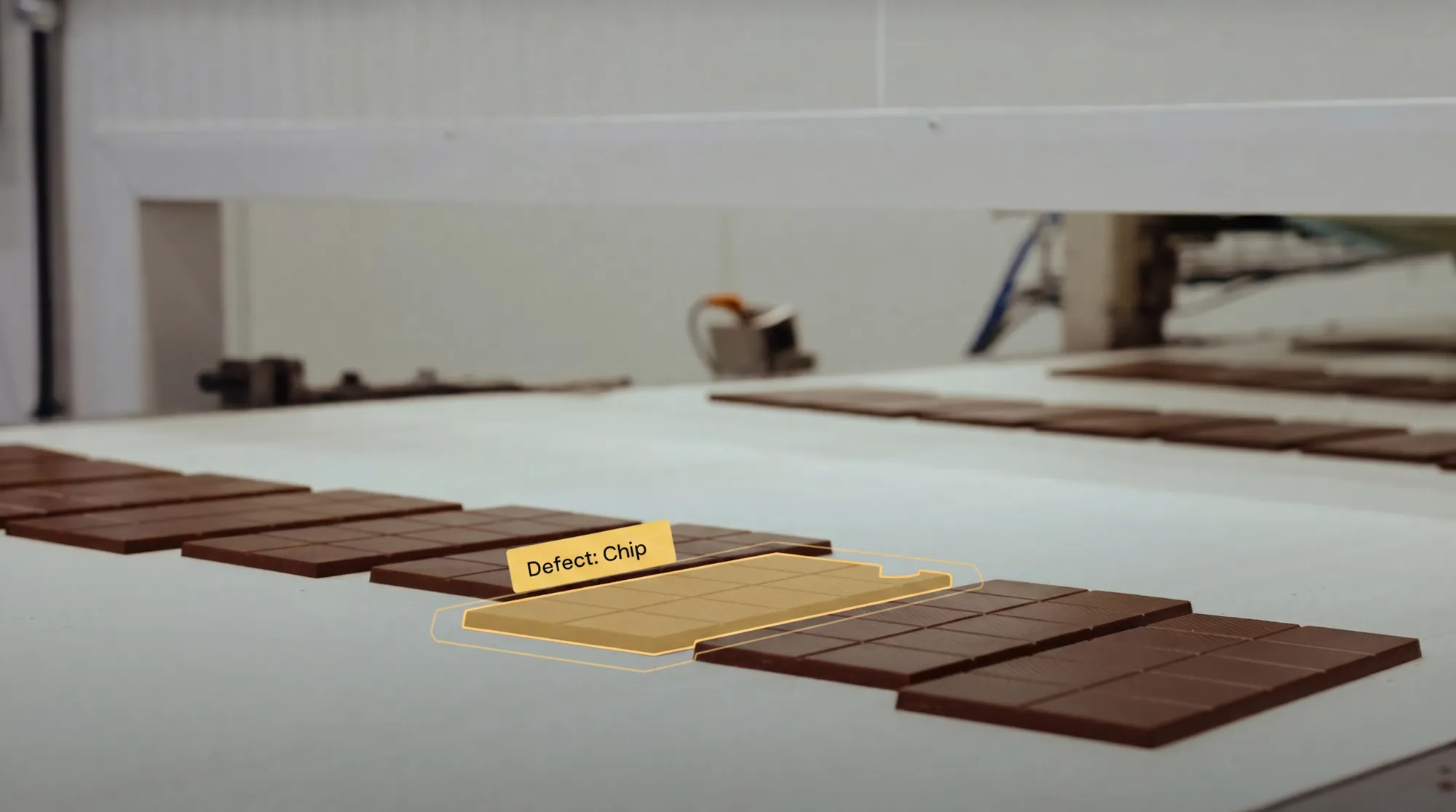
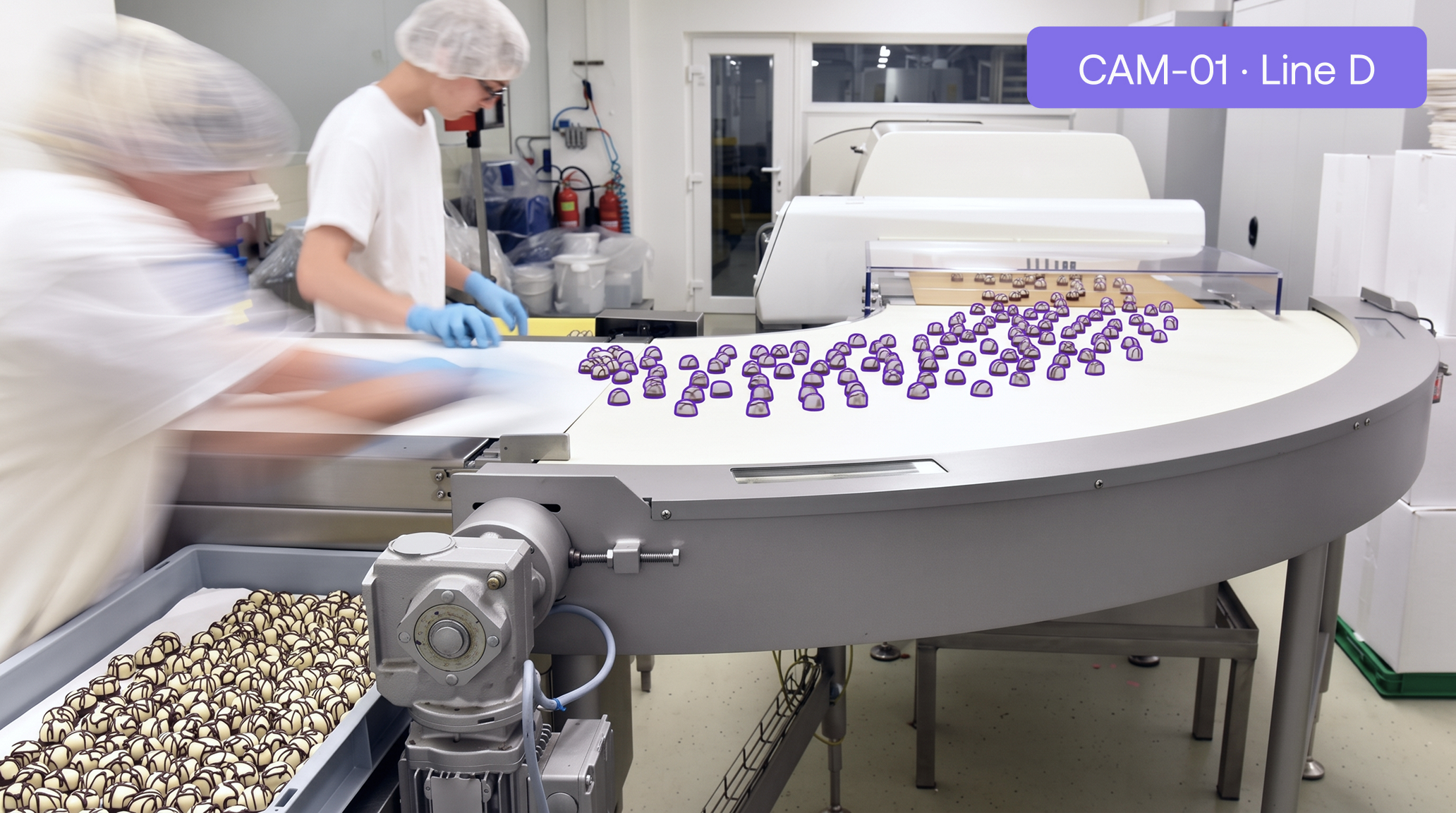
A Canadian candy manufacturer needed to find defective products and foreign material on a high-speed inspection line, and remove them before packaging.
Why couldn't people keep up with the line?
Manual inspection could not keep pace with the line. At that speed, defects can go undetected, and anything missed goes on to packaging, distribution and, eventually, customers. The goal was easy to state and hard to do: catch the bad products and take them off the line without slowing it down.
How does a defect get off the line?
Maneva trained an AI model on production images and operational data from this line, covering both good and defective products. The model watches every product on the high-speed inspection line in real time and is connected to a robotic arm and reject mechanism. When it flags a defect, the product is removed automatically, before it reaches packaging.
The line doesn't run under fixed conditions. Product size, line speed and the environment all change, so the system was tested across those changes and tuned to keep false rejects low, because every good product thrown out is lost product.
What changed?
- Defects come off automatically, at full line speed.
- Manual inspection on this line was replaced, and throughput held.
- Less waste and lower recall risk, with fewer defective products reaching customers.
For more on why real-time checks catch what people miss at speed, read real-time defect detection on the conveyor belt.
Have a line like this?
Today VITA, Maneva's Video-to-Action AI agent, sees, decides and acts on every unit like this on confectionery lines. If defects get past your team because the line is too fast, book a demo and we'll show you what it looks like on your product.