
Plug-and-Play AI Quality Inspection: How to Deploy on Your Existing Line Without Custom Hardware
Having spent 35 years managing operations and driving continuous improvement across food and beverage processing plants, I have sat through hundreds of technology sales pitches. They almost always follow a familiar script: a slick presentation promising "revolutionary smart factory transformation," a sticker-shock capital expense quote for proprietary camera hardware, and a six-month implementation schedule that involves drilling into machine frames, re-routing conduit, and tearing up active packaging lines.
By the time the system is finally installed, your maintenance crew is saddled with specialized optical hardware they do not know how to repair, your operators are frustrated by false reject alarms, and your plant has lost weeks of planned production output.
It is no surprise that plant managers push back. When your day is defined by razor-thin margin targets, strict OEE requirements, and relentless customer delivery schedules, taking a line down for an unproven hardware retrofit feels like high-stakes gambling.
A comprehensive review indexed on NCBI's PubMed Central confirms what experienced operators have known intuitively: 77% of AI vision implementations remain trapped at the prototype or pilot stage. The study notes that while machine learning model accuracy in controlled settings regularly tops 95%, and often hits 98% to 100%, deployment barriers prevent these solutions from ever achieving full production scale. The single biggest blocker holding plants back is the friction of custom hardware integration.
Manufacturing does not need more complex hardware, specialized optical sensors, or multi-month installation projects. It needs plug-and-play AI quality inspection that works natively with the equipment and camera infrastructure you already own.
Why does traditional machine vision need custom hardware?
Traditional machine vision systems were engineered around hardware-heavy architecture. To inspect a product visually, vendors historically insisted on selling a closed ecosystem: specialized smart cameras, proprietary lighting rings, dedicated controller boxes, and custom-fabricated mounting brackets positioned directly over the line. In high-speed food and beverage processing, sanitary washdown protocols, severe ambient moisture, tight spatial constraints, and rapid product changeovers are daily realities. This legacy hardware approach creates three major operational roadblocks:
- Capital budget and ROI friction: Asking an executive team to approve $50,000 to $100,000 per line just for specialized vision hardware, before the system has proven its value on your actual product mix, kills projects in the boardroom.
- Installation downtime and mechanical interference: Custom vision rigs require physical modifications to existing conveyors, indexers, or sealers. Scheduling line downtime for mechanical installation creates instant conflict between Operations and Engineering, immediately putting the project behind schedule.
- Maintenance vulnerability and spare-parts creep: When a proprietary optical sensor or vendor-specific camera housing fails on a Saturday night shift, your local technicians cannot grab a standard replacement off the stockroom shelf. Your line sits idle, or you run blind for days waiting for vendor support.
AI quality control in manufacturing has to flip this paradigm. The intelligence belongs in software processing visual context, not in overpriced, custom hardware mounted on the floor.
How do VITA and ALIS run on the cameras already installed?
When we developed our VITA (Video-to-Action AI) and ALIS (AI Line Supervisor) agents at Maneva, we built them directly around the realities of the plant floor. Operators do not want another stand-alone dashboard to monitor, and maintenance leads do not want another set of proprietary hardware components to maintain.
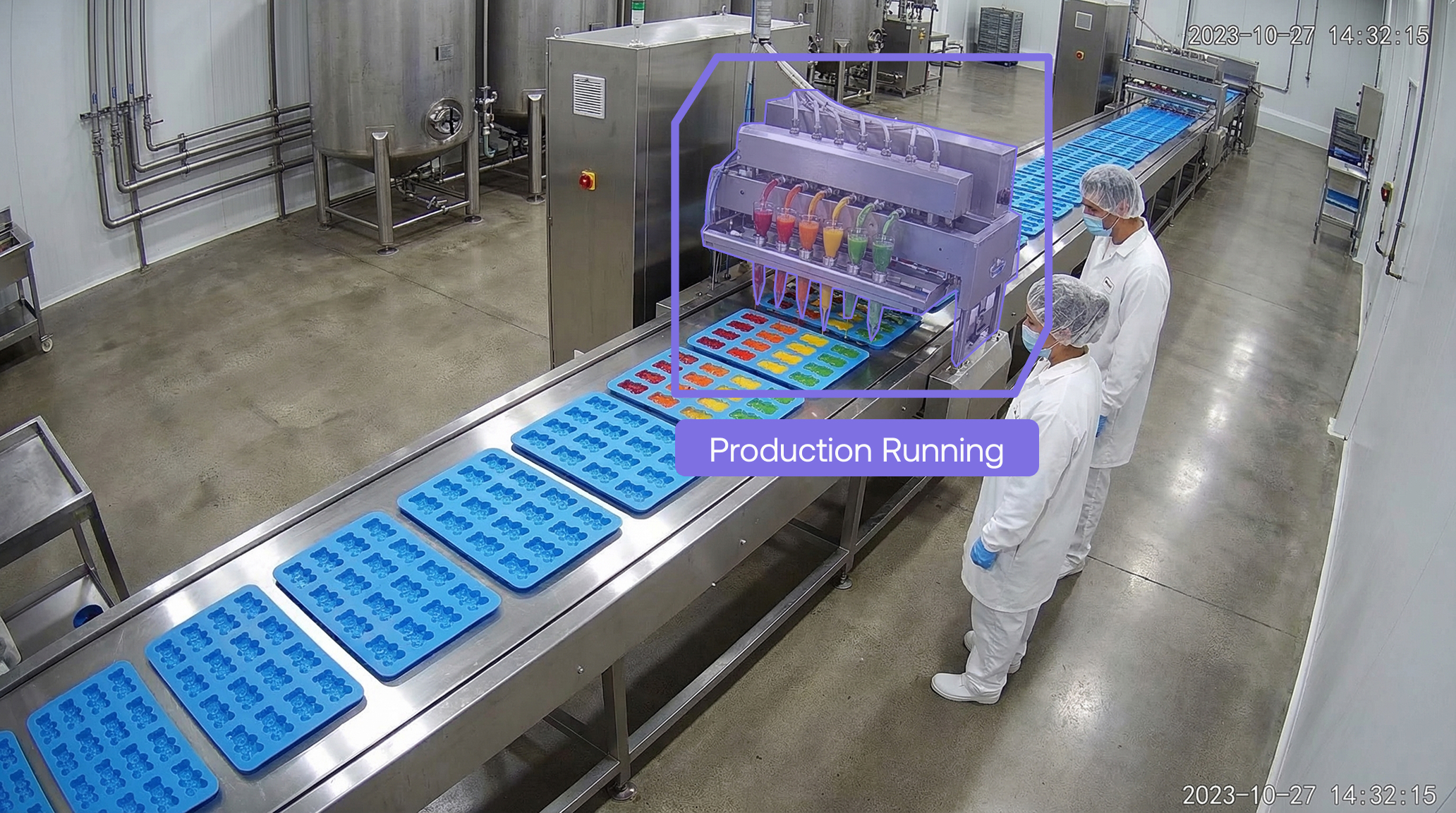
Instead of deploying specialized vision hardware, a true plug-and-play architecture connects directly to your facility's existing visual infrastructure. Modern food processing plants are already equipped with dozens of standard visual feeds: security cameras overhead, IP-based process monitoring cameras, or low-cost off-the-shelf industrial webcams mounted to basic framework. VITA taps directly into these existing video streams, using edge processing to run high-speed inference without requiring specialized optical rigs. By separating intelligence from physical hardware, plug-and-play AI quality inspection turns ordinary video feeds into real-time operational sensors.
Case: post-seal inspection on a high-speed tray sealing line
To see how this works without custom hardware, consider a common packaging challenge: high-speed tray sealing for fresh protein or prepared meals. Product loading moves fast. Slight misalignments cause product overhang, sauce splashes, or moisture across the sealing flange of a thermoformed tray. The mechanical heat sealer comes down. Machine sensors register correct temperature, pneumatic pressure, and dwell time, so no equipment fault triggers. The compromised package passes down the line, through case packing, and onto a pallet. QA catches the defective seal 30 minutes later during an offline water-bath squeeze test. By then, hundreds of packages have entered cold storage, forcing a costly manual teardown, sort, and repack.
Instead of installing an expensive custom vision inspection station, the plant mounts a standard off-the-shelf IP camera over the conveyor immediately post-sealing, plugging its ethernet cable directly into the plant network.
- Instant frame-by-frame auditing: VITA analyzes the sealed edge the moment the tray exits the sealing head, identifying flange contamination, channel leaks, or incomplete film seals frame by frame, with all data stored in a visual library for future reference.
- Closed-loop isolation: The system triggers an immediate signal to a basic existing pneumatic reject arm downstream, kicking the bad package off before it ever enters case packing.
- Upstream root-cause guidance: Rather than throwing a generic fault, ALIS analyzes the defect pattern and sends a plain-language alert to the operator's screen, for example "Pocket 2 showing seal-burn inconsistency, check film tension or heating-bar cleaning."
No line modifications. No custom vision enclosures. Just immediate defect isolation using basic camera feeds.
Traditional machine vision vs plug-and-play AI: what is the difference?
When evaluating vision deployments, comparing traditional setups against a plug-and-play AI architecture highlights why so many projects stall:
How do you deploy AI inspection without stopping the line?
Deploying AI quality control in manufacturing without hardware friction comes down to three practical steps:
- 1. Harness existing camera feeds first: Audit your plant floor for existing visual coverage. Overhead CCTV feeds, packaging-area monitoring cameras, or basic IP cameras mounted to standard framing can instantly serve as visual inputs.
- 2. Codify operator knowledge: Avoid systems that require ongoing vendor support to update inspection parameters. With VITA, your experienced operators, the people who know what a good seal or correct fill level looks like, train the system visually, defining the boundaries using real line examples and embedding tribal knowledge directly into the AI knowledge base.
- 3. Focus on time-to-action: An inspection system that only draws red boxes around defects adds cognitive load without solving the problem. Ensure the AI feeds directly into floor execution through ALIS: dispatching real-time setting recommendations, triggering reject arms, or scheduling targeted maintenance during upcoming shift breaks.
How long should an AI inspection deployment actually take?
If an AI solution demands six months to a year of custom hardware integration, it was not designed for the reality of the plant floor. The 77% pilot graveyard identified in the research is not a failure of machine learning accuracy, it is a failure of deployment architecture. By shifting intelligence into software and leveraging standard, off-the-shelf camera inputs, plug-and-play AI quality inspection removes the hardware friction that holds manufacturers back.
As operational leaders, our goal is not to collect high-tech gadgets on the floor. It is to protect product quality, eliminate mass repacks, and keep lines running at target throughput. This is the same closed-loop pattern I described in The Thinking Factory, Part 2, now aimed squarely at deployment: real-time visual inspection in days, ROI in weeks, and scale across the enterprise. Book a demo at maneva.ai to see plug-and-play AI quality inspection on your existing line.