
What is AI-powered kaizen?
Maneva AI does not replace the Kaizen practitioner. It strengthens the practitioner by making data, movement patterns, process performance, and hypothesis testing available before, during, and after the event.
Why is continuous kaizen so hard to sustain?
Kaizen means continuous improvement: doing things better, step by step. The exercise is often framed as a seven-step approach, but let's be honest: most people do not follow it closely.
It is one of those things we say we do, but after so much customization, it barely resembles the real exercise. We do not customize because we are transformation freaks; we customize because doing things better is painful. It requires change, and it requires change in the right direction. The challenges are many, including the following:
- Not enough resources: the problem must be fixed, but you cannot pull anyone off the line, so the people you have available are the ones with the least knowledge of the problem.
- Even your scarce resources are not freed from their other duties, so you have only a couple of hours to fix a problem that has been there for years.
- You have the problem symptoms and the urgency, but the data you need to analyze it isn't there.
- The process is not correctly planned. Instead of starting the Kaizen exercise, your team is still debating what the process even is.
- The lack of data and process mapping compromises your root cause analysis and your new process redesign.
- The person with the authority to implement and reinforce the changes was never in the room, so now you have to persuade them after the fact.
- Because of all the above, at any sign of error, mistake, or risk, they will undo all the changes and blame you for not solving the problem.
These limitations significantly compromise the Kaizen result, and you end up customizing the Kaizen routine, not because you want to, but because you have to.
How does AI change each step of a kaizen event?
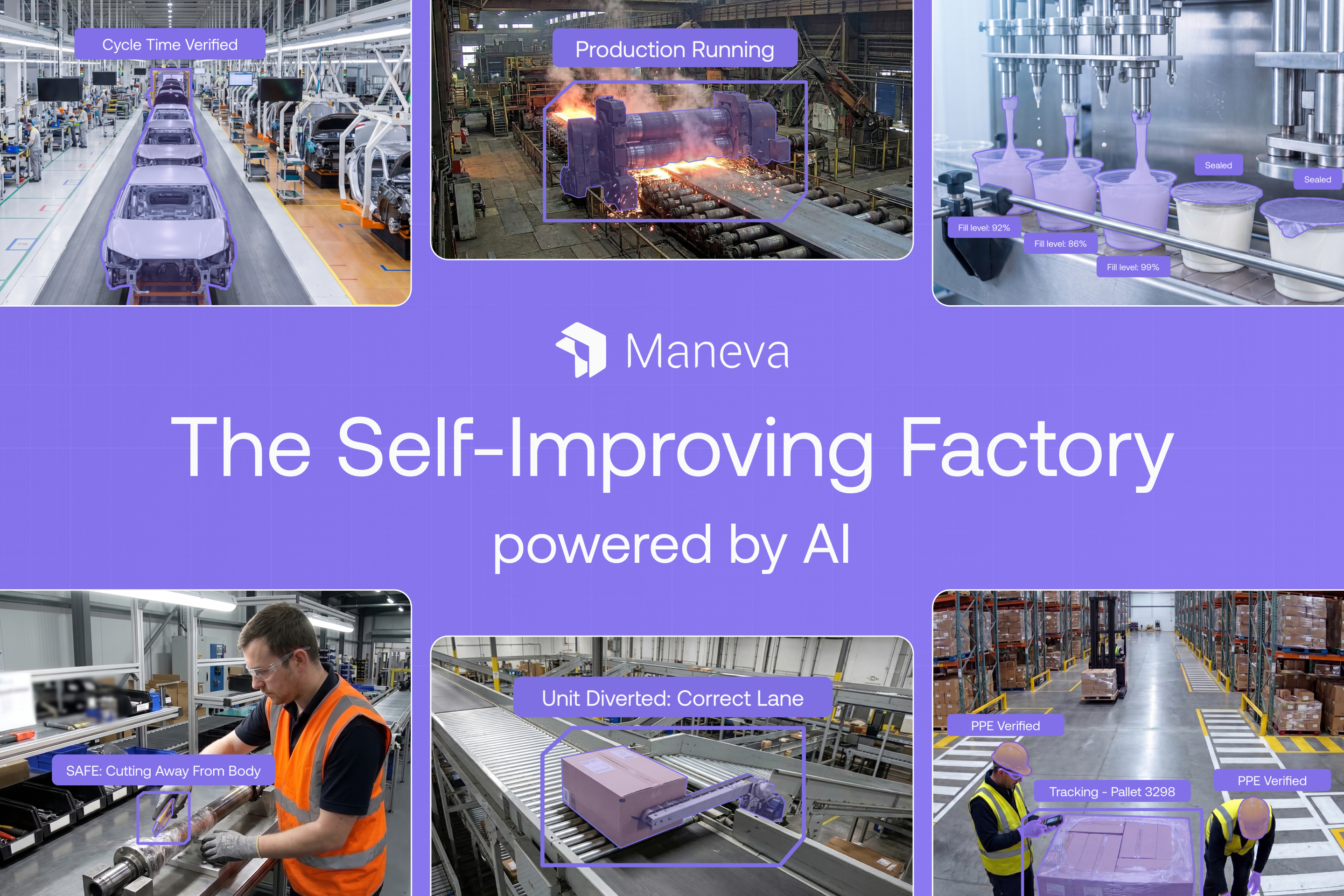
When you have AI agents such as Maneva's VITA and ALIS, you unlock a game changer. This is AI-powered Kaizen: the same seven steps, with an order of magnitude more power behind each one. It is the operating-model shift I described in how AI scales continuous improvement, now applied step by step to a live Kaizen event. Let's walk each step.
1. Pre-event planning (set scope, goals, and team)
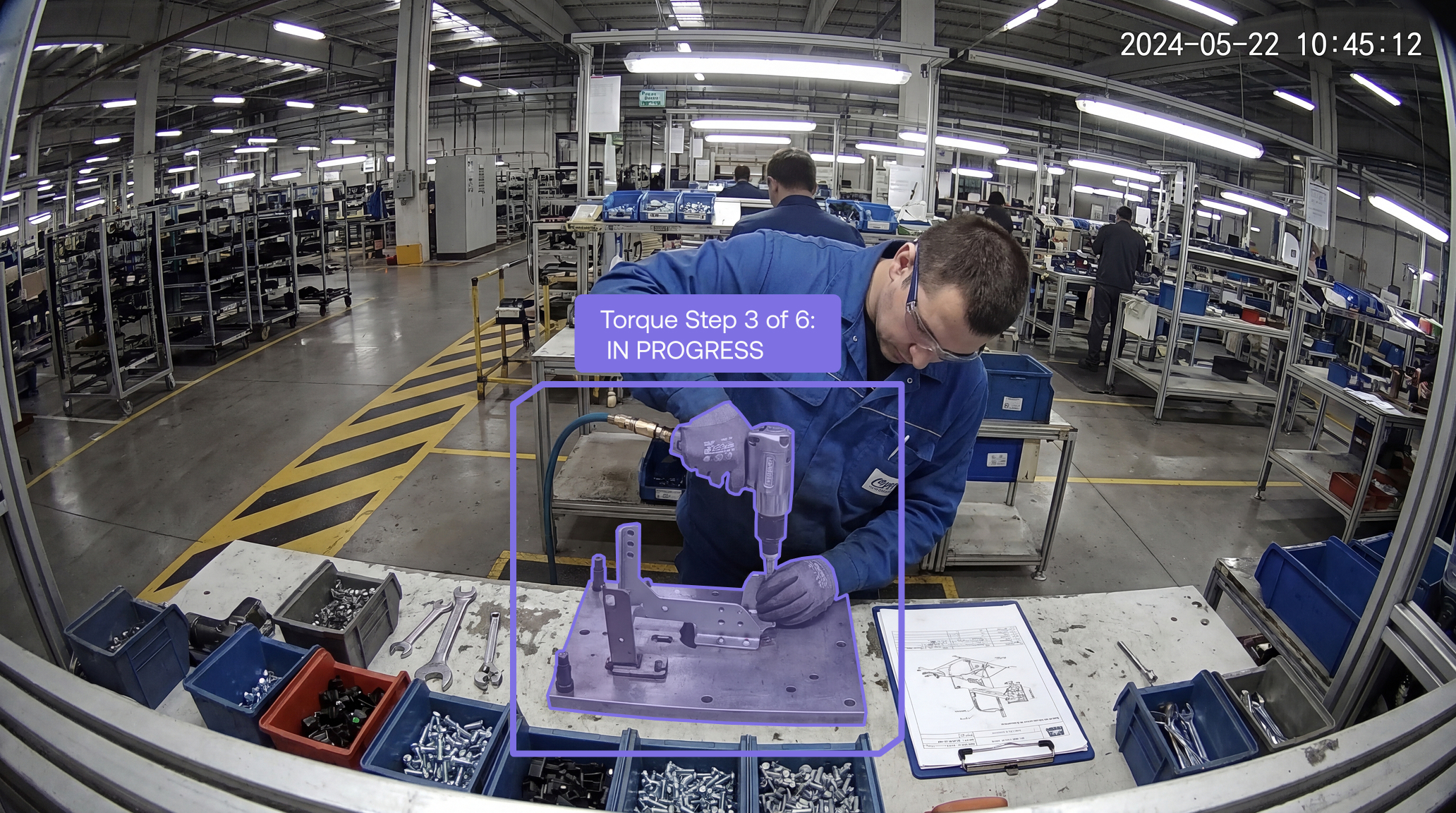
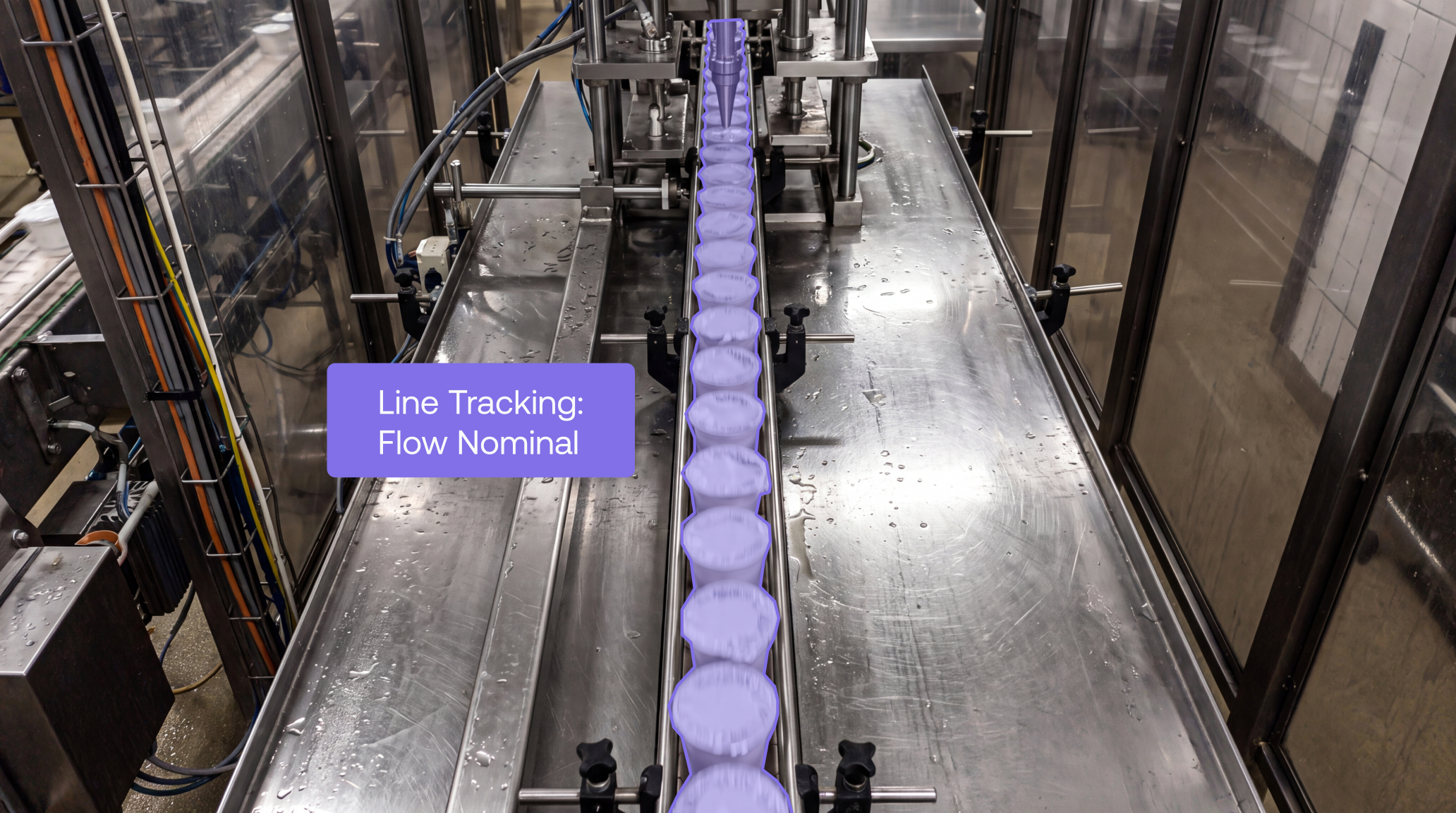
Maneva VITA monitors every single product going through the line. It pinpoints every defect, calculates most of the line's KPIs (OEE, line speed, and more), and connects those outcomes to the line inputs (center lines) through the Maneva Orchestration Platform. This gives you a full picture of your line's inputs and outputs, plus the added value of a reasoning layer connecting the dots. You now have a complete assessment of which problem to tackle first, no more feelings or hunches, just a clear problem description, scope, and goals. Your only remaining job is to select the right team, which you're well positioned to do, since you already know the project scope.
2. Map the current state
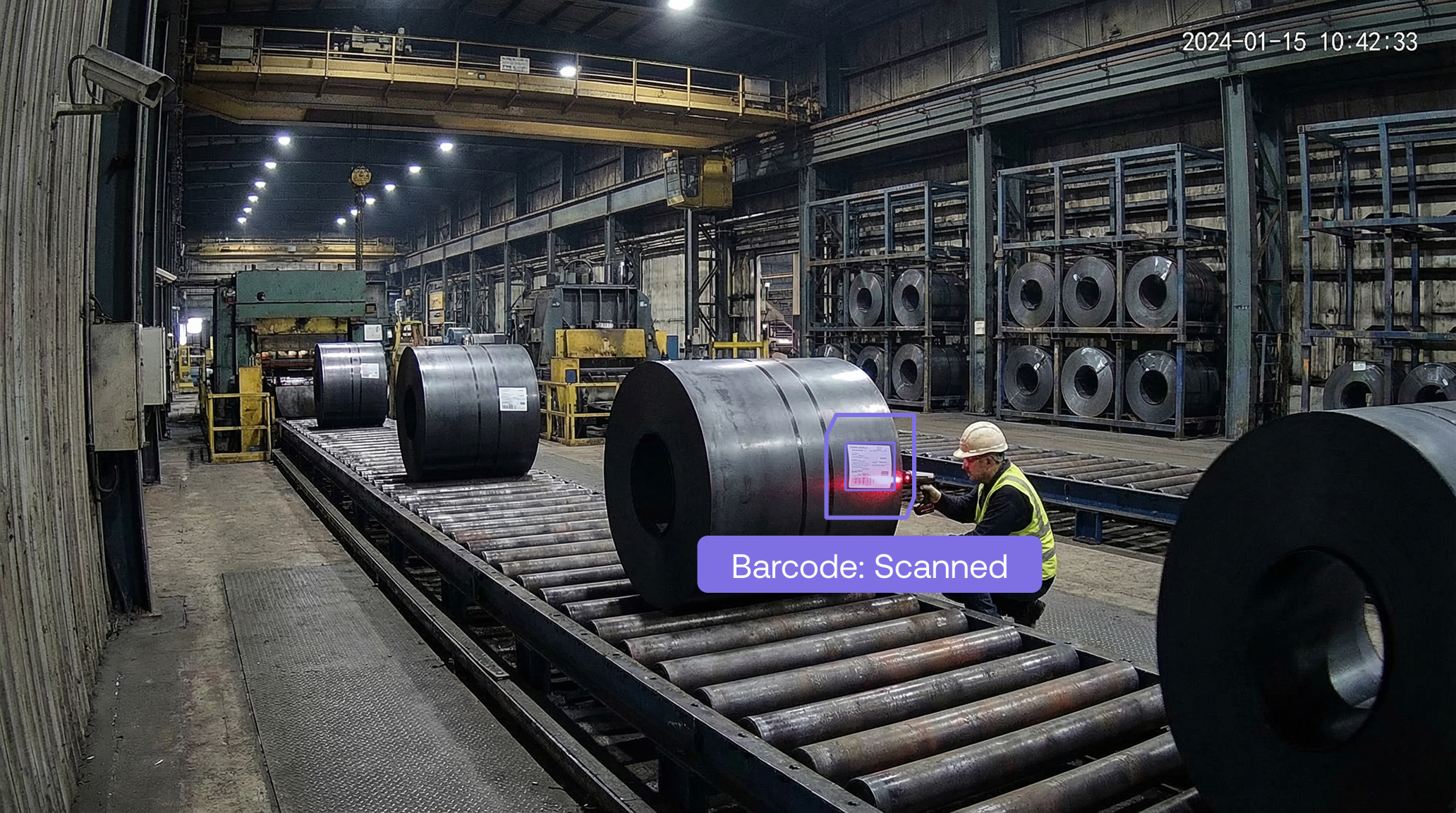
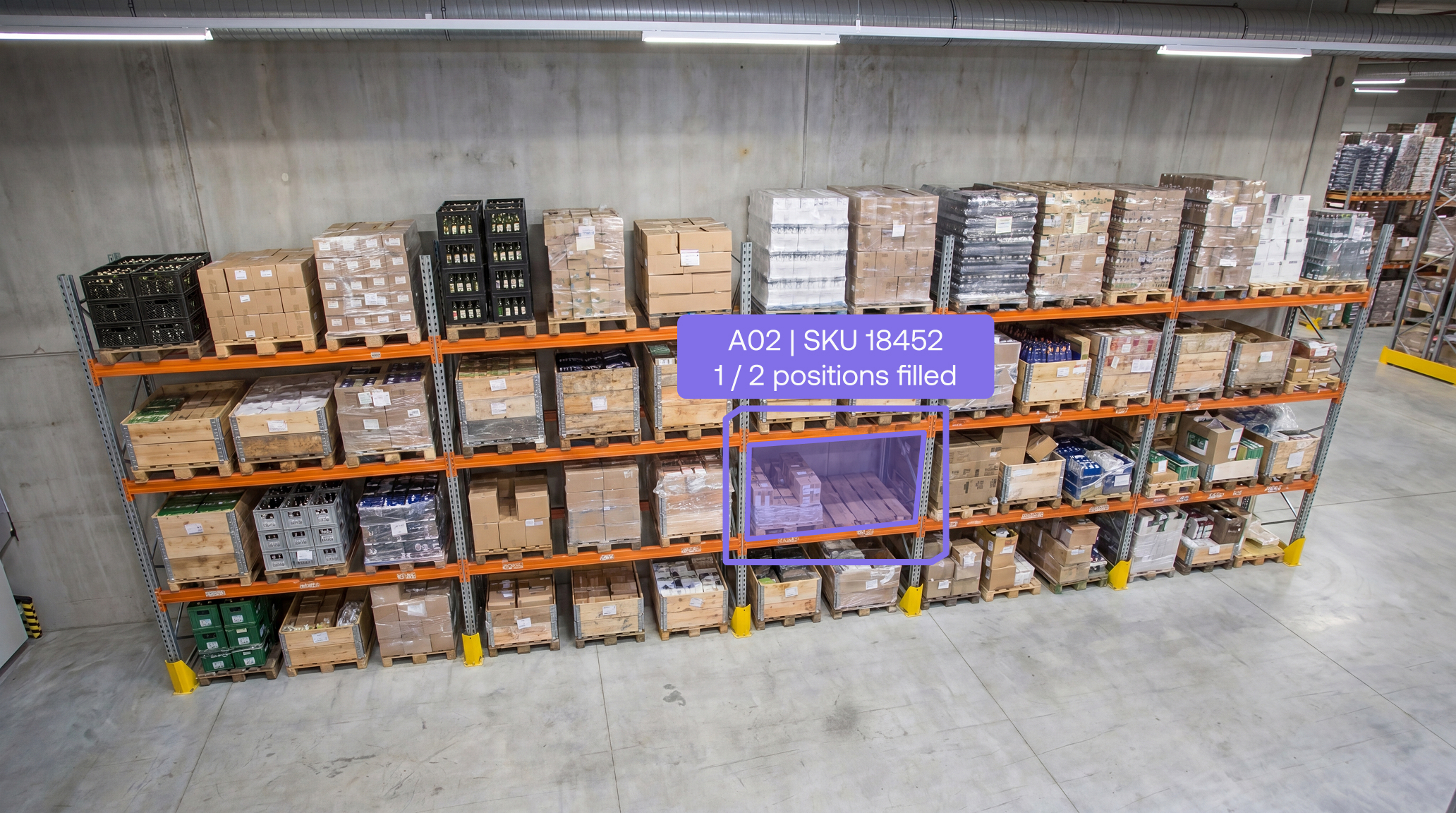
Because Maneva ALIS monitors all movement on your floor, you get a real spaghetti diagram, in the Lean Enterprise Institute sense, for free, and always up to date. You know the observer paradox, that the act of measuring interferes with what is being measured? With Maneva you don't have that problem: the floor won't behave differently just because people know a supervisor is watching. You have, right in your hand, the data you need to detect non-value-adding movement and transport. Your Gemba walk improves too, because you now know the performance of every subprocess through Maneva VITA. You can identify the bottleneck and get a straight answer on how to balance your flow, just by asking the Orchestration Platform.
3. Root cause analysis
You're still in control of the Five Whys, Ishikawa, and the other root cause tools, but your AI assistant tests your hypotheses immediately. You're no longer trapped by a wrong Five Whys, because you have 100% of the data at your fingertips, plus a dedicated AI that can check every hypothesis raised during the brainstorm.
4. Design the future state
Here is where your expertise shines. An AI only knows what it knows. Maneva has shielded you against errors and dead-end traps, but your deep understanding of the process and its limitations (legal boundaries, customer requirements, and the rest) is still what guarantees the new, improved performance.
5. Implement and test
In the past, this step meant requesting extra resources to collect all the information you need to report your findings, new performance, risk analysis, and more. Maneva does that for you. Even better, because Maneva also monitors movement, you can "see" the adherence to the new procedure as it happens.
6. Standardize and report out
You still have work here. Type into the Orchestration Platform, "Summarize this run for me," and it produces a comprehensive report of your new process performance. You still need to document your findings, fulfill your ISO duties, and so on. Boring but necessary work.
7. Follow up and sustain
In the past, you would again request resources to run 30-, 60-, and 90-day follow-ups to guarantee the improvement is still there and that people have adhered to the new SOP. That's over. Maneva keeps running and watching performance 24/7. It pinpoints any deviation the moment it happens, instead of waiting for discrete checkpoints. It works like a dedicated supervisor agent, making sure your solution holds and keeps running exactly as intended.
As you can see, the AI does not substitute for you during the Kaizen event. It bulletproofs you with full data and hypothesis testing. It turns you into a higher-level process improvement warrior.
What kaizen looks like when the data is always there
Kaizen was never supposed to be a checklist. It's a discipline, and disciplines are hard to sustain when you're short on time, data, and buy-in. That's exactly the gap Maneva AI closes. VITA and ALIS keep watch over every product and every movement on the floor, the Orchestration Platform turns that stream of data into straight answers, and none of it asks you to hand over the job of thinking. You still run the Gemba walk, still ask the Five Whys, still decide what "better" looks like for your line.
There's a fitting symmetry in the name. The engine underneath Maneva is itself called Kaizen, our knowledge engine that reasons from live floor data rather than a static database. Your discipline and its knowledge, pointed at the same goal. McKinsey's research on AI in manufacturing operations makes the same point at the plant level: the biggest gains come from putting real-time data in the hands of the people running the floor, not from replacing their judgment.
What changes is everything around those decisions: less guessing, less politics, less re-litigating the same root cause three months later because nobody wrote it down. Bring the data, and Kaizen stops being something you customize out of necessity, it starts being something you can actually finish. That's Kaizen power mode: same practitioner, same seven steps, an order of magnitude more power behind every one of them. Book a demo at maneva.ai to see AI-powered Kaizen on your line.