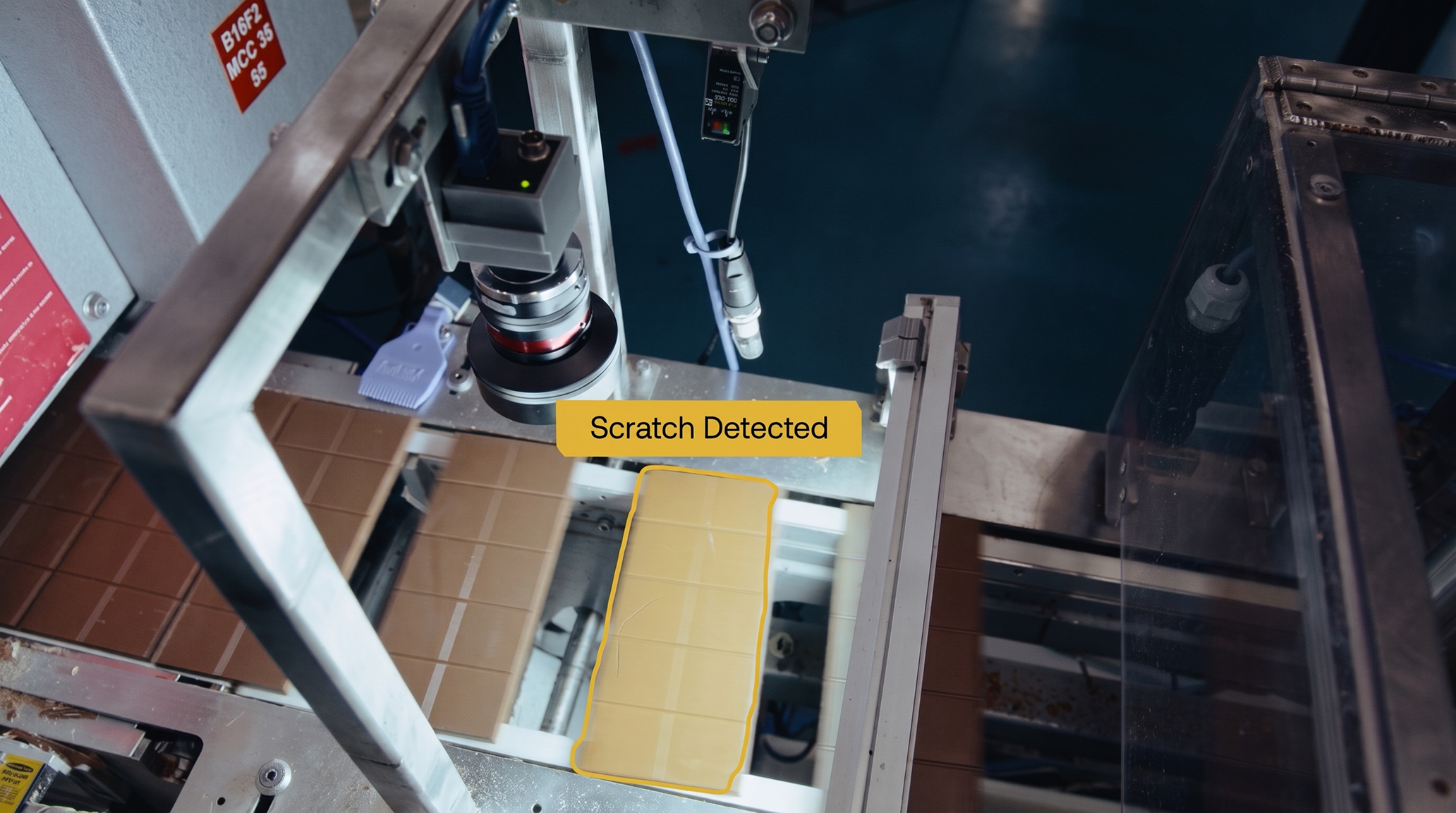
Camera above a chocolate line with one bar outlined in yellow and labeled Scratch Detected
Use cases

How do confectionery plants catch defective chocolate bars at line speed?

With AI on a camera above the line, every bar is checked as it passes, not just a sample. Video-to-Action AI spots scratches, breaks, misshapen and discolored bars at line speed and triggers the reject mechanism, so defective bars are removed before they reach packaging.

Confectionery
Quality Assurance

What it catches

Video-to-Action AI checks every bar that passes the camera, not a sample. On a chocolate line it flags:

  • Surface scratches and scuffs
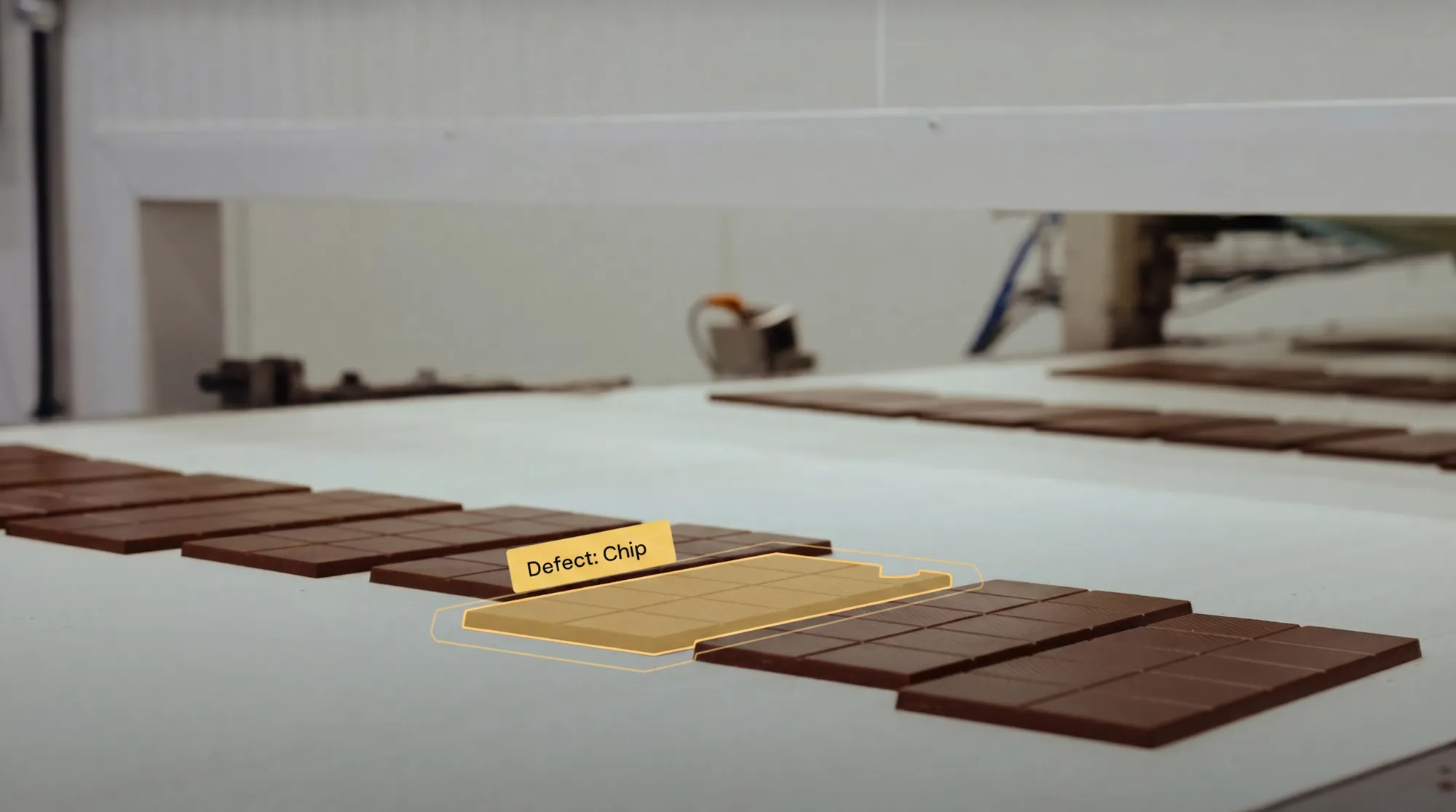
  • Broken or chipped bars
  • Misshapen or incomplete bars
  • Discoloration and uneven surfaces that change how the bar looks to the customer
  • Packaging faults after wrapping: damaged wrap, broken seals and incorrect labels

Why manual checks miss it

Chocolate lines move too fast for people to look at every bar, so manual inspection relies on sampling, and defects between samples go through. Small scratches and cracks on a glossy, dark surface are easy to miss, and attention drops over a long shift. In our customer story, the manufacturer found manual inspection time-consuming, labor-intensive and prone to error, even with quality controls in place.

How it acts

VITA, Maneva's quality and downtime agent, decides on every bar in real time: accept, reject or reroute. It can make up to 30 quality decisions per second, so inspection keeps pace with the line instead of slowing it.

A rejected bar is removed by the line's reject mechanism, such as a pusher or air jet, before it reaches packaging. Each decision is logged with its image, so the quality team can review exactly what was rejected and why.

Defect counts are tracked live. When the same defect starts repeating, the line team can check the molds or conveyor before more bars are affected, instead of finding the problem at the end of the shift.

Where it sits on the line

The camera watches the bars from above as they travel along the conveyor, ahead of the reject point and before wrapping. A second view after wrapping can check the finished pack.

Some lines can start with cameras they already have; many need at least one off-the-shelf camera placed for the task. Maneva helps choose the camera and where to put it, then trains the model on images of your own good and defective bars.

Result

A premium chocolate manufacturer moved from sampling to AI inspection of every bar, reaching up to 99.9% detection accuracy across surface defects, breaks and packaging flaws, with fewer false calls than manual inspection. Read the customer story.

See it on a line like yours →

More for confectionery plants: AI for confectionery lines →

Frequently Asked Questions

Frequently Asked Questions

Didn't find what you need? Our team will walk you through Video-to-Action AI and show how it fits your production environment.
Yes. VITA can make up to 30 quality decisions per second from the line's camera feed, so every bar is checked at full line speed without slowing production.
A standard camera sees the surface: scratches, breaks, shape and color. Defects inside the bar need X-ray imaging. If your line already runs X-ray, the AI can learn from those images too.

It depends on your site and the problem you want to solve. Some customers can start with the cameras they already have. Many need at least one new off-the-shelf camera placed and set up for the task, so the AI sees exactly what it needs to see.

Maneva helps you scope this from the start. We look at your line, the result you want, and what the camera needs to capture, then recommend the right camera and where to put it.

Maneva is hardware agnostic and connects to a wide range of camera types, including:

  • Standard RGB and security cameras for many quality, downtime, safety and efficiency use cases
  • 3D and depth cameras for measuring volume, position and dimensions
  • Thermal and infrared cameras for heat signatures and low-light areas
  • Short-wavelength infrared (SWIR) cameras, which see through plastic to check seal integrity
  • High-resolution precision cameras for defects under a millimeter across large surfaces

If you can see it in the video, our AI can understand it and act on it. Start with one line, and we'll help you choose the setup that gets you there.

Related Resources

Chocolate bars on a production conveyor, with one bar highlighted in yellow by AI inspection and labeled Defect: Chip where a corner is missing
How a Chocolate Manufacturer Automated Product Inspection
Book A Demo
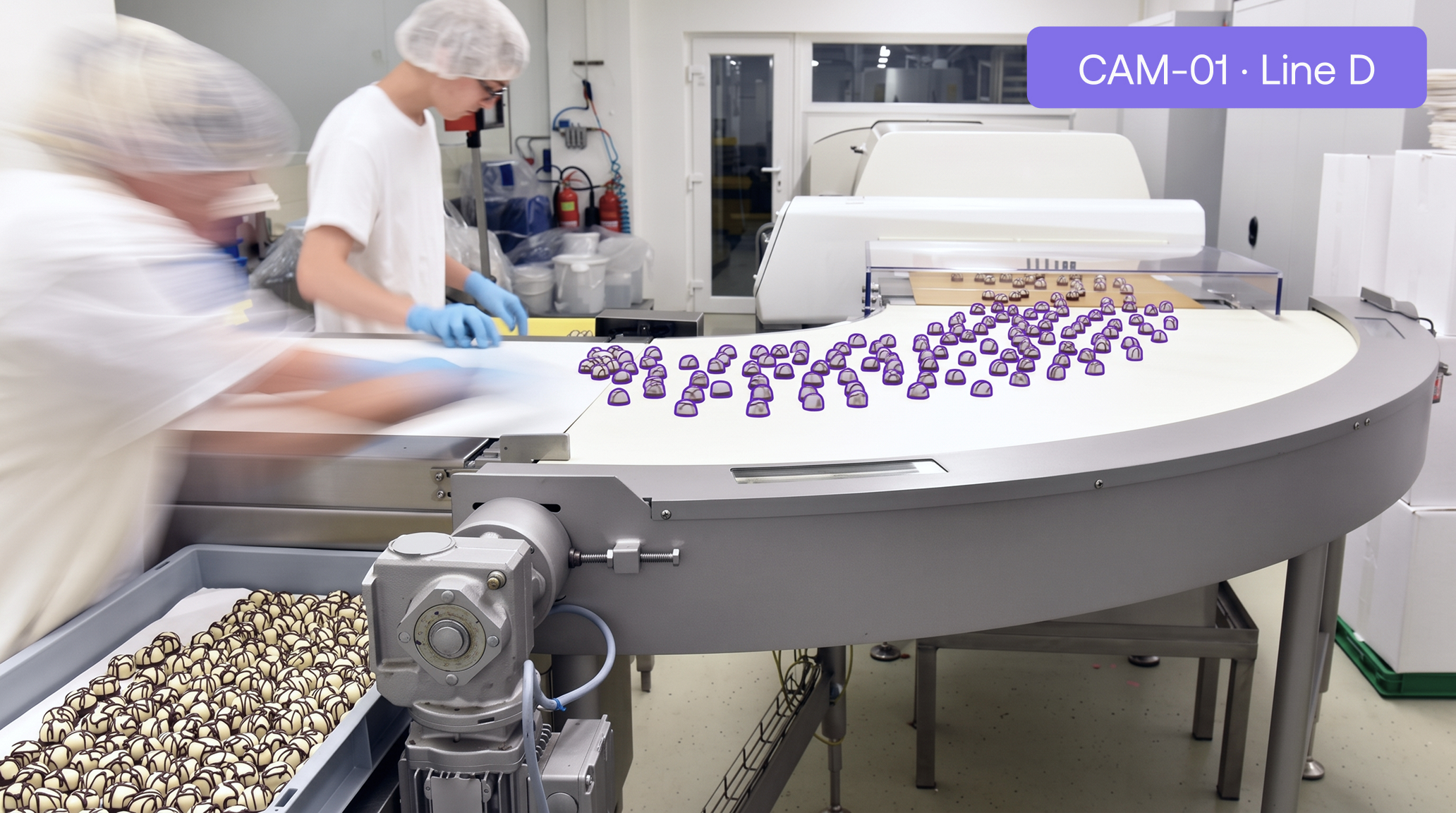
Candy pieces on a rotating conveyor table, highlighted in purple by AI inspection on camera CAM-01, Line D, as workers in hairnets sort product
How a Candy Manufacturer Automated Defect Rejection at Line Speed
Book A Demo
AI quality control manufacturing system detecting defect on food production line before product reaches customer
What a Single Manufacturing Defect Actually Costs
Book A Demo

Book a Demo