
What it catches
On a food line, Video-to-Action AI checks the shape of each unit for:
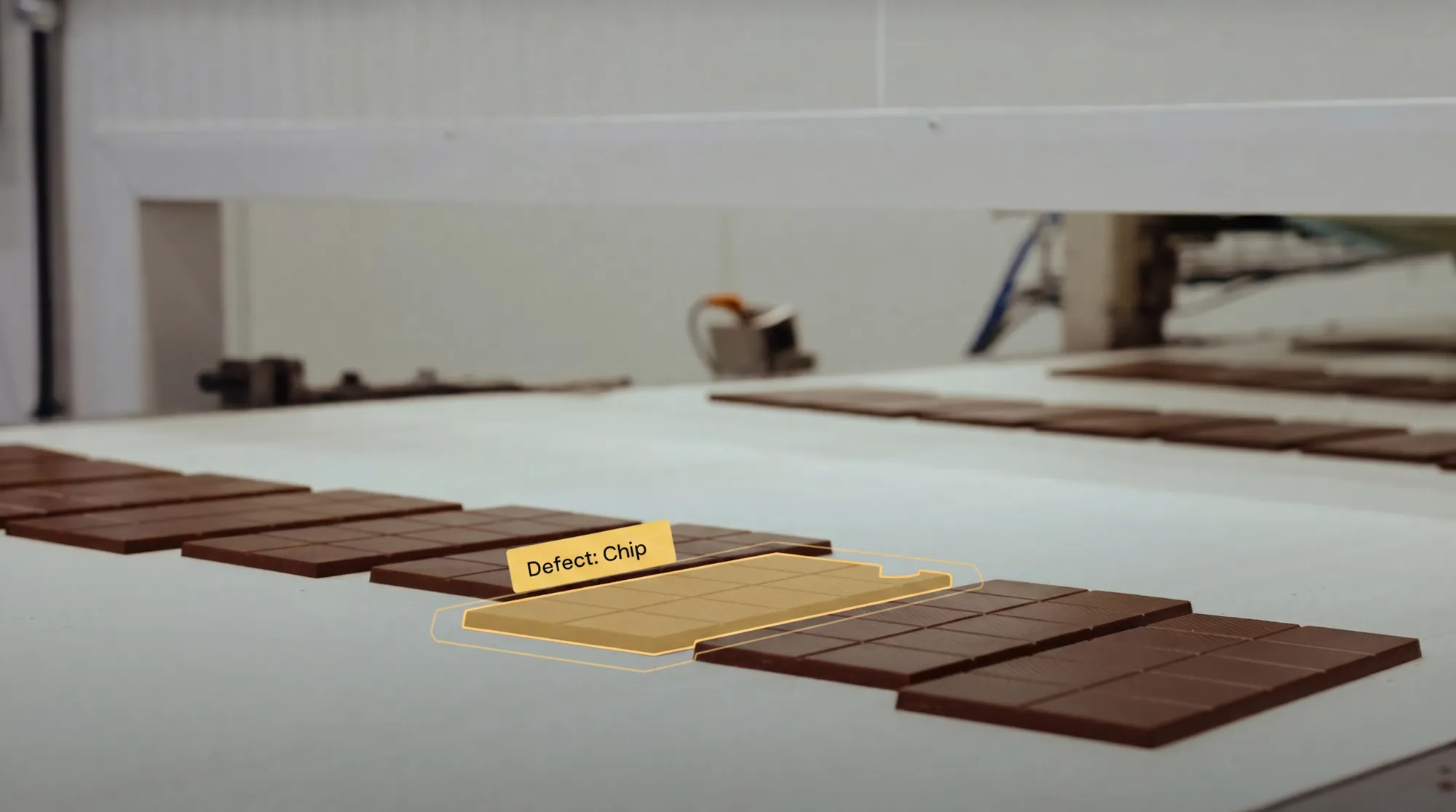
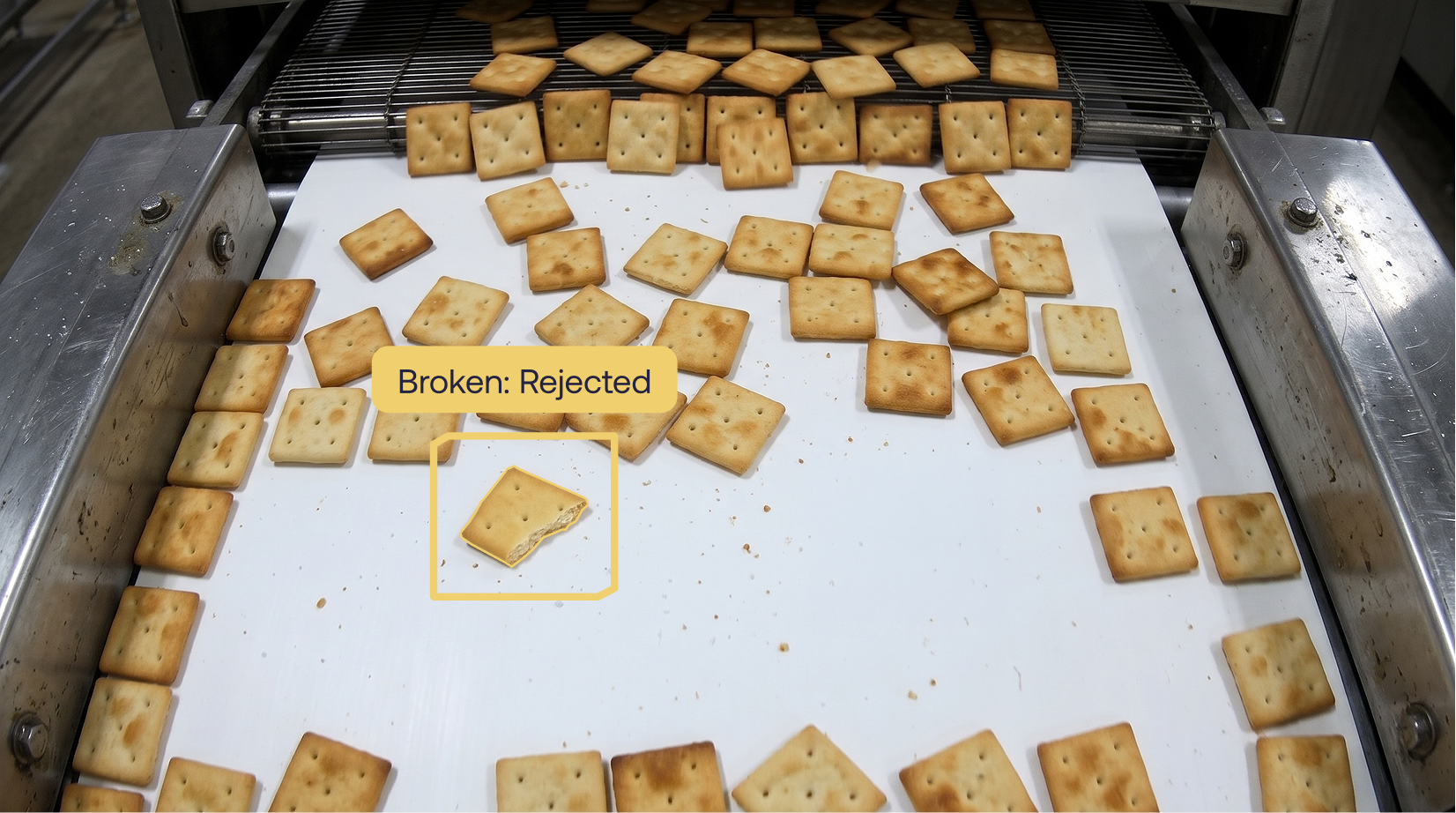
- Broken or chipped pieces
- Misshapen or deformed products
- Incomplete products, such as missing corners or edges
- Units outside your size range
- Height and flatness problems, with a 3D camera
Why manual checks miss it
At line speed, people cannot look at every piece, so inspection relies on sampling and judgment that drifts over a shift. Fixed-rule vision struggles too, because every good piece of food looks slightly different and a rule tight enough to catch a broken piece also rejects good ones.
How it acts
VITA, Maneva's quality and downtime agent, makes up to 30 accept or reject decisions per second. A misshapen unit is removed by the line's own pusher, air jet, diverter or robotic arm, and lightly misshapen units can go to rework instead of scrap, where your process allows it.
Every decision is logged with its image. Repeated shape defects point back to the step that causes them, such as forming, cutting or cooling.
Where it sits on the line
The camera sits above the conveyor after forming or baking, ahead of packaging, with a 3D camera where height or flatness matters. Some lines can start with cameras they already have; many need at least one off-the-shelf camera placed for the task. Maneva helps choose the camera and where it goes.
Result
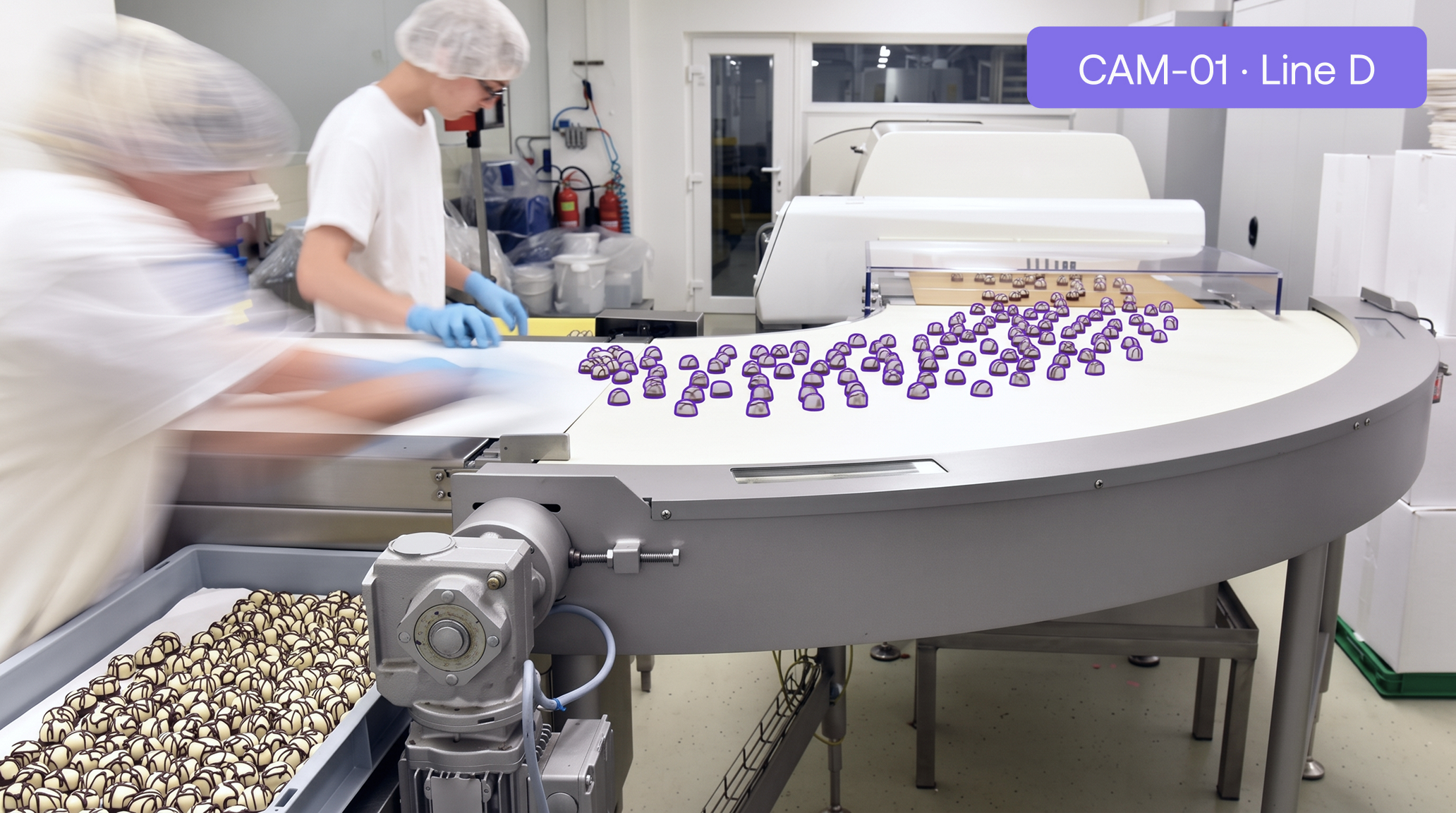
Every unit is checked against the same standard, not a sample. On a candy line, Maneva connected the model to a robotic arm, and defective products now come off automatically at full line speed while throughput held. Read the customer story.
More for food and beverage plants: AI for food and beverage lines →
Frequently Asked Questions
Didn't find what you need? Our team will walk you through Video-to-Action AI and show how it fits your production environment.