
What it catches
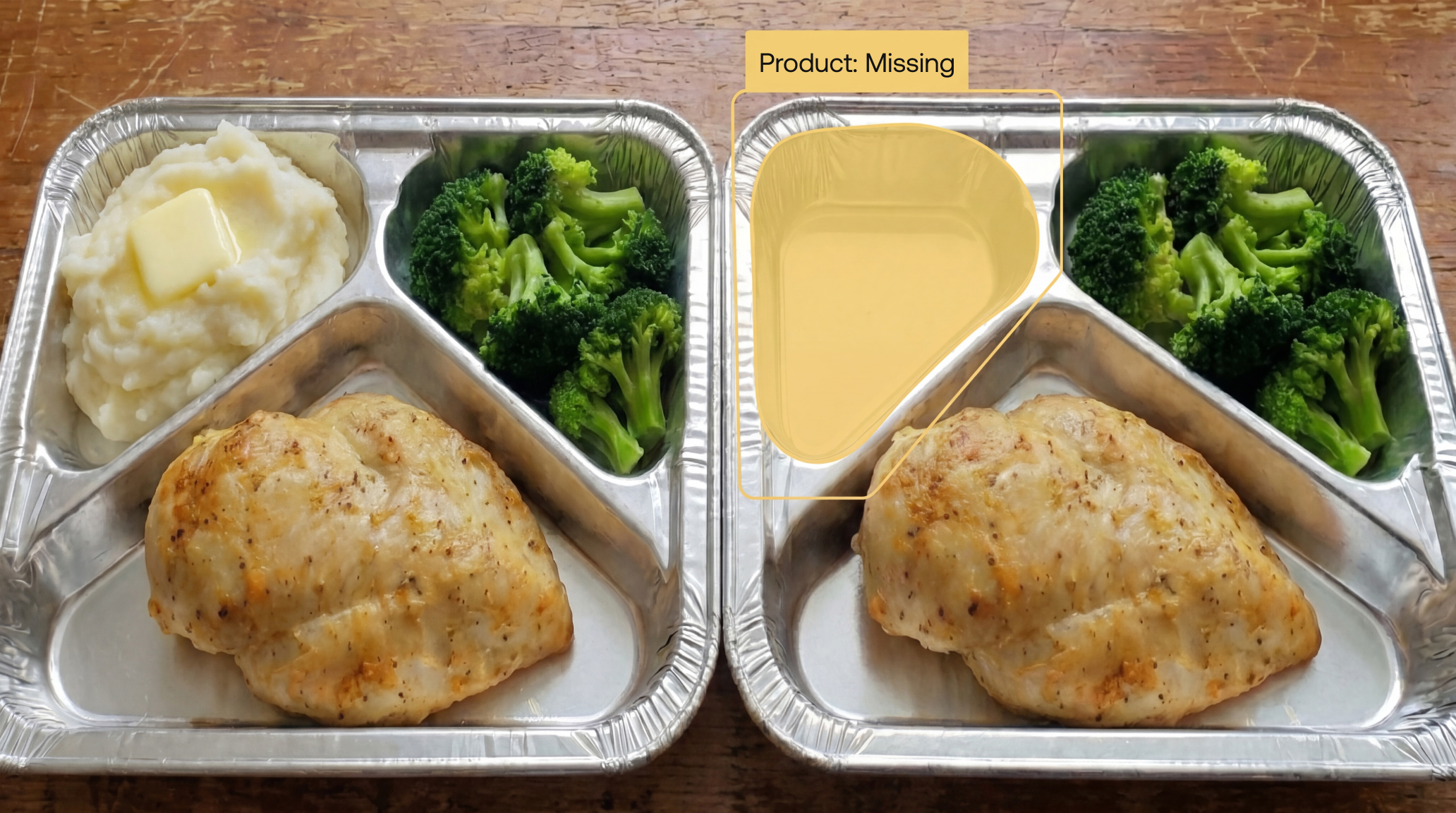
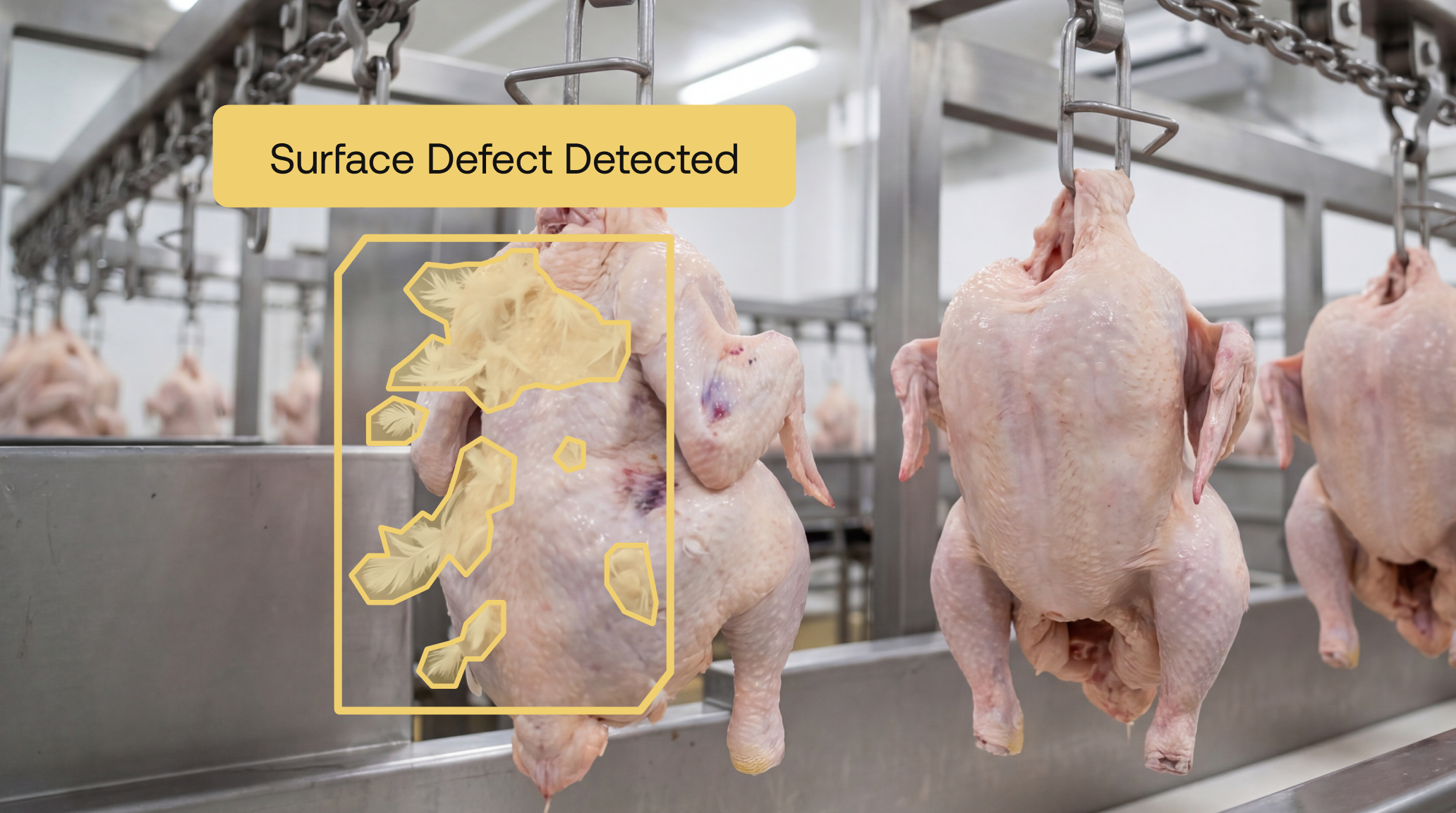
On a meat or poultry line, Video-to-Action AI checks the surface of each carcass or cut. The model is trained on images of your own product, so it learns what to flag on your line, such as:
- Bruising and blood spots
- Discoloration
- Visible contamination on the surface
- Foreign material on the surface, such as plastic, glove pieces or metal parts
- Damaged or torn product
Why manual checks miss it
Lines move fast, product looks similar from piece to piece, and inspectors work in cold, wet conditions for a full shift. Small surface defects get through, and results drift between operators and shifts. A defect found at the customer costs far more than one found on the line, in returns, rework and trust.
How it acts
VITA, Maneva's quality and downtime agent, makes a decision on every piece in real time. Product with a surface defect or foreign material is held or rerouted to trim or rework before it reaches packaging.
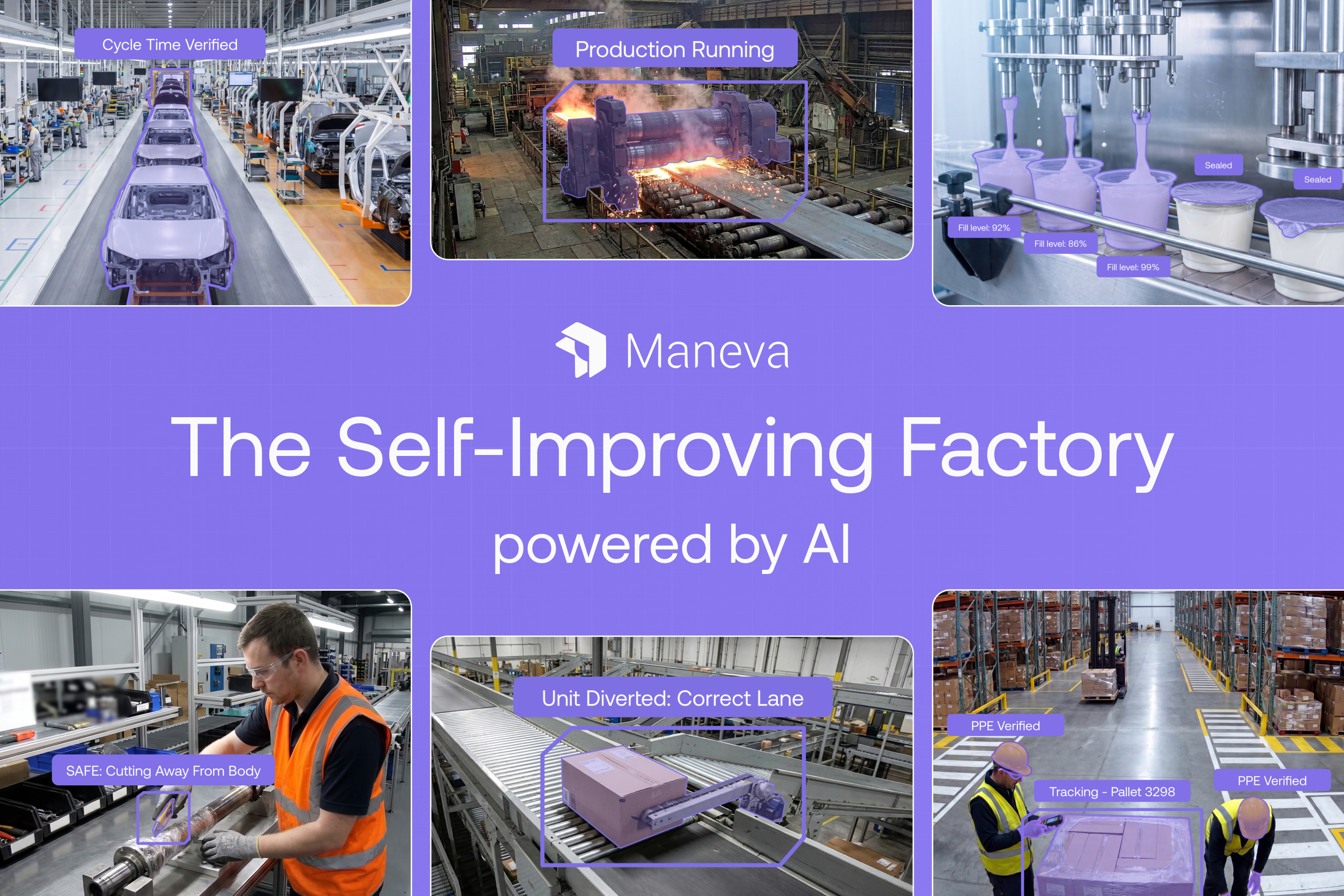
It is the same surface defect detection Maneva runs on other production lines, from boards to bricks to containers, trained on images of your product. Each decision is logged with its image, which gives the quality team traceability: what was flagged, when and on which line.
What cameras can and cannot see
A camera sees the surface. Bone fragments, metal or other material inside the meat still need X-ray. If your line already runs X-ray imaging, the AI can learn from those images too, so the two checks work together rather than overlapping.
Some lines can start with cameras they already have; many need at least one off-the-shelf camera placed for the task. Maneva helps choose the camera and where it goes.
Result
Every piece is checked instead of a sample, and every flagged piece is logged with its image.
More for meat and poultry plants: AI for meat processing →
Frequently Asked Questions
Didn't find what you need? Our team will walk you through Video-to-Action AI and show how it fits your production environment.