
What it catches
On a board or panel line, Video-to-Action AI checks each piece for:
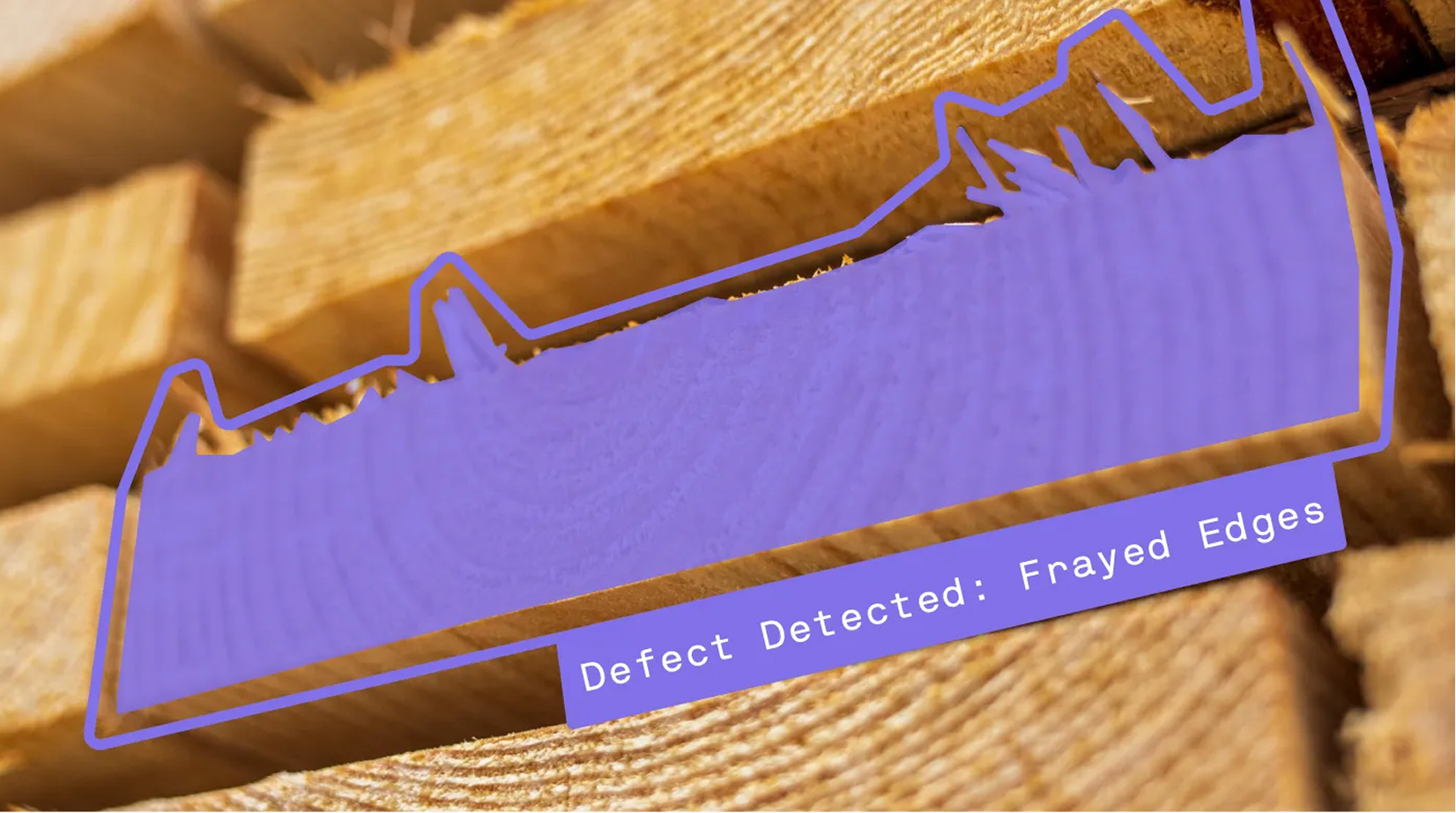
- Frayed or torn edges
- Cracks and chips
- Spots and discoloration
- Dents and scratches
- Defects down to about 0.8 mm, with the right camera
Why manual grading struggles
Boards move fast, every piece looks slightly different, and graders make hundreds of decisions an hour. Grading drifts between people and over a shift, so good stock gets downgraded and defective boards slip through to the customer. Rule-based vision systems help, but struggle with natural variation in wood.
How it acts
VITA, Maneva's quality and downtime agent, decides on every board in real time and grades it against your rules. The result can drive a manual pull, a reject system or a robot, and each defect is saved as an image, so grading can be audited and tuned.
Because the model is trained on images of your own boards, it handles the natural variation in wood that fixed rules miss.
Where it sits on the line
The camera, often a line scan or 3D camera, sits above the board line after sawing or planing, ahead of sorting. Some lines can start with cameras they already have; many need at least one off-the-shelf camera placed for the task. Maneva helps choose the camera and where it goes.
Result
Every board is checked and graded the same way. Maneva customers have seen up to 16x longer mean time between stoppages; on one board line, stops went from every 1.5 minutes to every 25 minutes on good material.
More for wood and panel plants: AI for wood processing →
Frequently Asked Questions
Didn't find what you need? Our team will walk you through Video-to-Action AI and show how it fits your production environment.