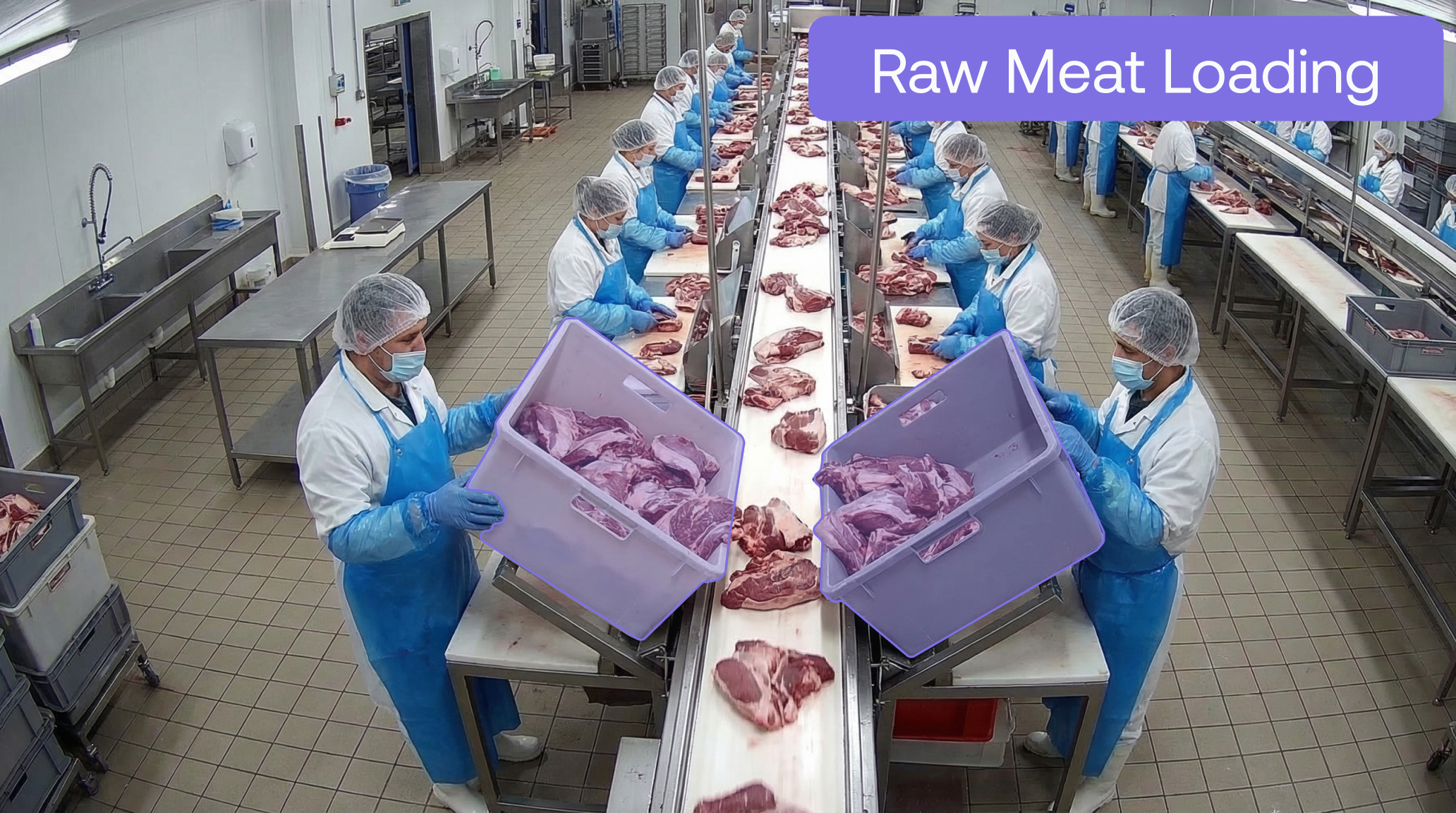

Why Your Production Line is Running at 60% OEE, And How AI Tells You in Real Time Why
It's 6:45 AM. You walk into the plant with your mug of coffee in one hand and yesterday's production report in the other. You look at the final number under Overall Equipment Effectiveness (OEE). It's 61.2%. Your target is 82%. You feel that familiar, dull ache in your stomach because you already know how the morning production meeting is going to go. It's going to be a 45-minute exercise in finger-pointing, guessing, and defensive posture.
Maintenance will swear the high-speed slicer was operational 98% of the shift. Quality Assurance will point out that a massive weight-variance spike at 2:00 PM forced a partial hold on three pallets of premium deli meat. Operations will argue that raw material presentation from the formulation room was inconsistent, causing the downstream automated packaging line to repeatedly jam and fault out.
As a seasoned Operations Leader who has spent decades on the floor of further processed protein and deli meats facilities, I have lived this script hundreds of times. In a high-volume manufacturing environment, a 60% OEE isn't just an abstract statistic; it's a silent crisis that eats away at profitability every single minute. It means your capital equipment is sitting idle, your labor costs are inflated, and your capacity is severely underperforming. But the most frustrating part isn't the loss itself, it's the fact that you are managing your floor through a rearview mirror. As Carl Tokarek argued in What Your OEE Score Is Not Telling You, traditional OEE data tells you that you lost the battle yesterday, but it completely fails to explain exactly why you lost it in real time.
Why do production lines plateau at 60% OEE?
In high-volume food processing, particularly further processed meats like sliced deli hams, log proteins, and pre-packaged bacon, real-time OEE is notoriously difficult to optimize. The manufacturing environment is inherently harsh, variable, and fast-paced. We track Availability, Performance, and Quality, but the data collection systems we rely on are fundamentally broken. They are lagging, subjective, and full of blind spots.
When a line drops to 60% OEE, it rarely happens because of a catastrophic mechanical failure that shuts the plant down for four hours. Those are obvious, and teams know how to fix them. Vorne's research on OEE benchmarks shows that world-class OEE for discrete manufacturers sits around 85%; food processing typically benchmarks lower because of variability in inputs. Instead, a 60% OEE is the "death of a thousand cuts", a twenty-second micro-stop here, a minor product misalignment there, a slight operator pacing mismatch during a product changeover, an error in date coding or labeling, or a subtle speed loss as a blade begins to dull.
Our operator log sheets are filled with catch-all phrases like "Line Adjustment" or "Process Disruption" or "Labor not available." These entries don't tell you anything actionable. Was the line down because the loader was waiting for product from the smokehouse? Or did the interlock sensor on the guard plate get tripped because of excess moisture from a recent washdown, or was the crew late returning from lunch? Without continuous, objective visibility, improving OEE feels like "chasing a ghost." You try to implement standard Lean Six Sigma methodologies, but your baseline data is built on a foundation of guesswork.
Case: the phantom slicer downtime nobody could find
I remember a specific stretch in my past role overseeing a high-speed deli meat slicing and packaging line. For three consecutive weeks, our afternoon shift consistently logged a 15% drop in OEE compared to the morning shift. The operator log sheets blamed 'mechanical lag' on the primary indexing conveyor. Maintenance spent hours adjusting belts, swapping out servo motors, and recalibrating the timing. Nothing changed.
It wasn't until a senior Operator and I stood on the floor for two hours straight, during a Gemba walk, that we caught the real reason. Because of a slight variance in the texture and moisture of the ham logs arriving from the chilling coolers on that shift, the product was slipping a fraction of an inch. To compensate and avoid weight giveaways and "tailing," the operator was manually throttling the machine speed down by 20% to keep the stack count accurate. The equipment wasn't broken; the process was adapting to an unseen upstream variable. If we had possessed real-time visibility, we could have corrected the chilling dwell time instantly instead of wasting three weeks adjusting perfectly fine hardware. (And yes, Maneva's Video-to-Action AI can tell you how cold the tempered logs are delivered to the slicer to keep the process in optimal range for slicing.)
How does Maneva find hidden OEE losses in real time?
This is precisely where the old-school manufacturing mindset must evolve, and it's why I joined the team at Maneva AI. We engineered our technology to solve the exact issues that kept me awake, or at least very busy tracking down the facts, for thirty-five years. We don't just calculate your OEE; we leverage your existing plant floor camera infrastructure to create a continuous, intelligent Video-to-Action AI feedback loop that identifies the root causes of efficiency loss in real time.
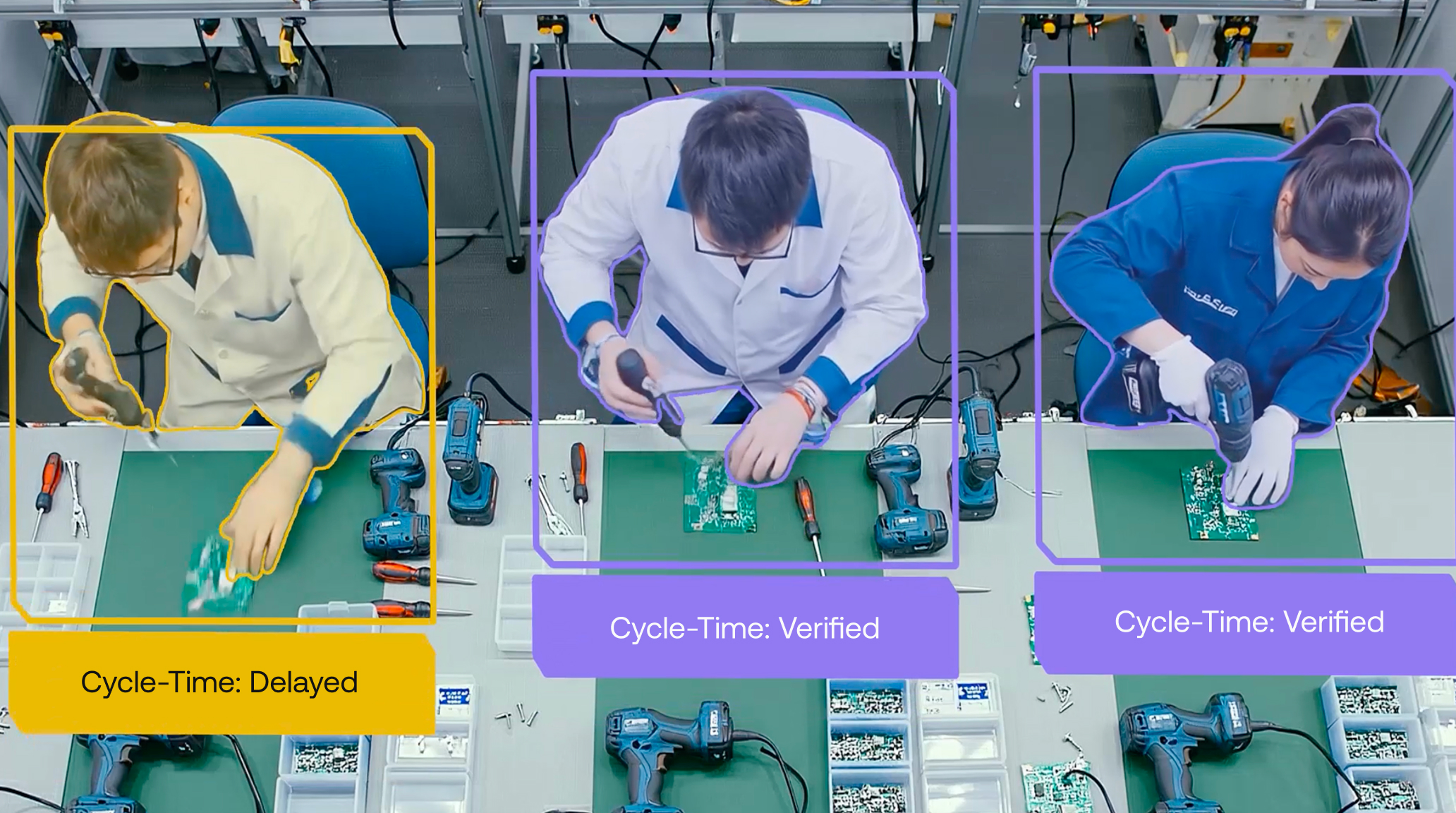
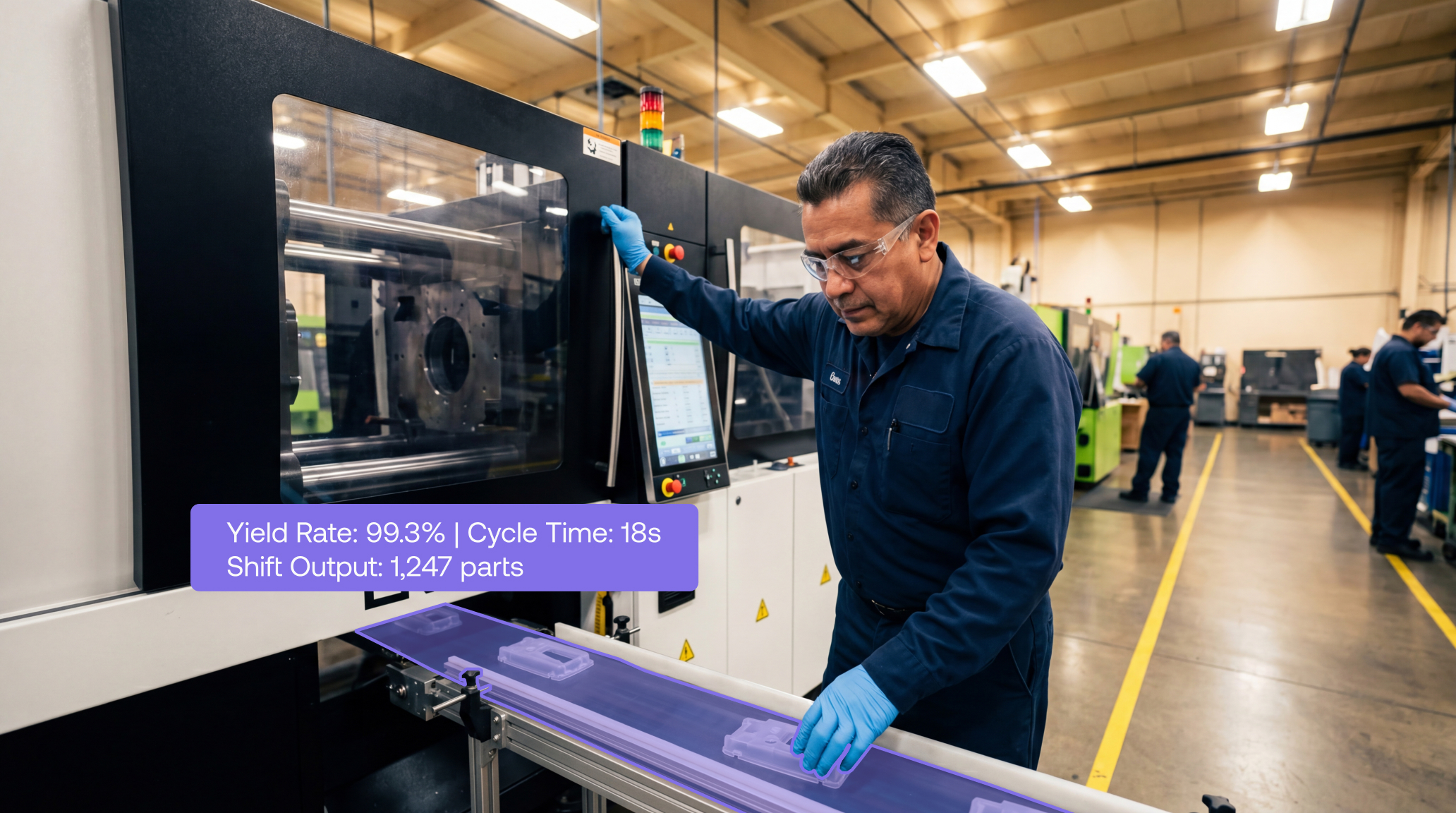
Instead of relying on an operator to manually record the event after the fact, Maneva AI's computer vision models observe the actual physical state of your production line. The system automatically cross-references physical human actions, product movement, and machine status. When your line speed drops below the target threshold, or when a micro-stop occurs, Maneva AI captures the event, analyzes the visual context, and can immediately categorize the loss element within the OEE framework as well as send alerts so that you can pivot production and meet the success metrics for the day.
If a product conveyor on a further processed deli line jams because a piece of the belting broke off, Maneva AI doesn't just log a generic "Conveyor stopped." It flags a "Conveyor stopped due to broken part" and immediately alerts the area supervisor through a message to a smart device or dashboard, sounds an alarm, or signals an Andon light. You move from finding out about a failure during the next morning's meeting to correcting the physical behavior on the floor within sixty seconds of its occurrence.
How AI improves availability, performance and quality separately
To move a line from 60% to 80%+ OEE, you must systematically dismantle the hidden losses in Availability, Performance, and Quality. Here is how Maneva AI transforms each pillar from a lagging metric into an active operational tool:
1. Availability
In further processed protein plants, small stops are very destructive to performance. A line stops for 30 seconds because an automated sensor gets blocked by a piece of stray trim, or an operator has to step away to grab a new roll of packaging film. These events are too brief for an operator to log properly and accurately, so they get recorded inaccurately. Maneva AI tracks every single pause, instantly correlating the stop with the exact visual context. Over a week, those unlogged 30-second stops frequently add up to 4 or 5 hours of pure lost capacity. Maneva aggregates this visual data, allowing you to see exactly what percentage of your availability loss is driven by a specific, repeatable bottleneck.
2. Performance
Are your lines actually running at their rated speed? Often, operators turn down the dial on a wrapper or a vacuum packager because they feel the product handles better at a slower pace, or because upstream feeding is sluggish. Maneva AI continuously measures actual cycle times against standard operating conditions. As well, product changeovers in deli plants, moving from a smoked ham log to an oven-roasted turkey breast, can destroy a shift's performance. Maneva can track the precise steps of clean-in-place (CIP) and tooling changes (with more advanced models), highlighting exactly where the delay occurs, ensuring your teams adhere to the optimized standard work sequence.
3. Quality
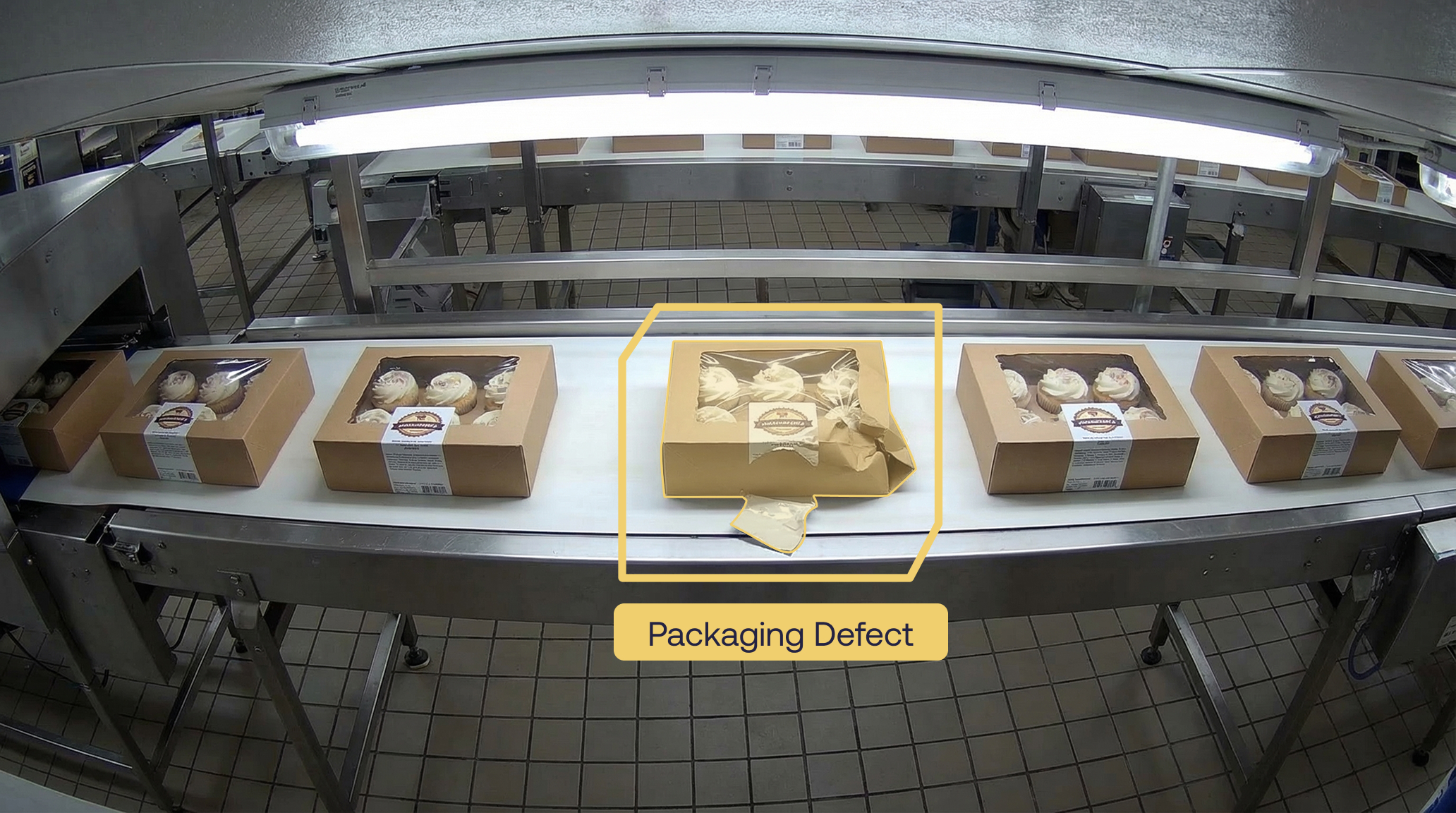
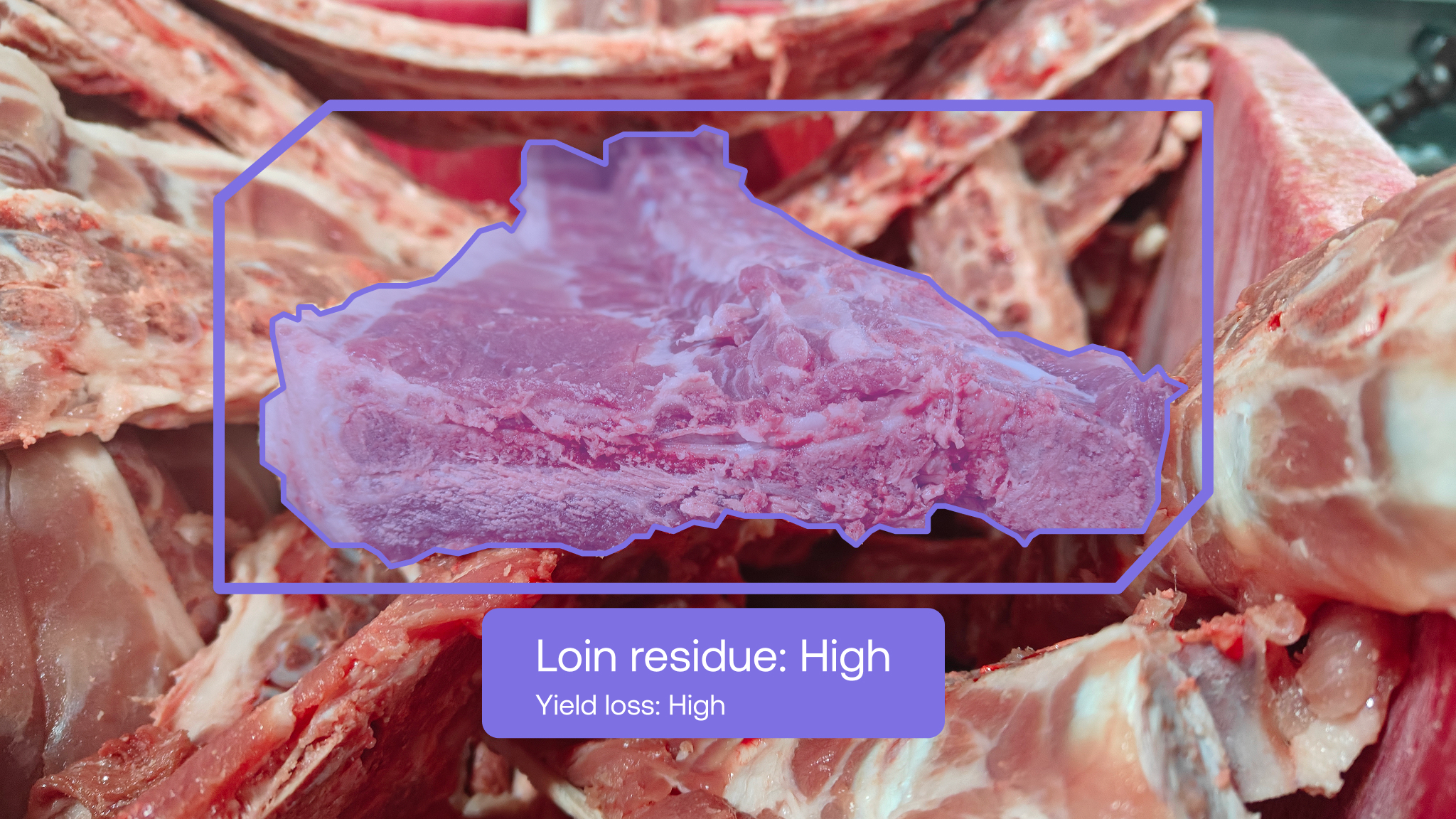
In our industry, quality losses aren't just about defective product, they're about yield and giveaway. If your slicer is producing uneven slices or ragged edges (tails), you are generating excess trim that must be reworked, or worse, you're over-packing packages to guarantee net weight, which destroys your performance and margins. Maneva AI monitors product presentation and output consistency in real time. If a product's structural presentation changes, or if packaging seal integrity is compromised by a stray particle of fat, or if the date code suddenly stops printing or has an incorrect label, the system catches it immediately. You reject one package instead of running an entire batch of bad seals that eventually get rejected by QA to be reworked or worse yet, returned by a major retail customer.
Case: intermittent seal failures on modified atmosphere packaging
Years ago, we experienced an intermittent issue where modified atmosphere packages (MAP) of sliced deli meat were losing their seal integrity, leading to short shelf lives and retail returns. Our QA checks happened every two hours. If a heat-sealer temperature drifted or if a speck of meat contaminated the sealing surface right after a check, we could run hundreds of packages before the next inspection caught the defect. The rework costs were staggering, and the impact on our Quality OEE factor was devastating.
With Maneva's VITA (Video-to-Action AI) agent running real-time defect detection, this vulnerability disappears. The system continuously monitors the sealing station. The moment a piece of trim compromises a single seal zone, an alert is triggered immediately. You save the product, you protect your yield, and your Quality metric stays pinned near 100%.
What changes on the floor once hidden losses become visible
When you provide a plant floor team with Maneva AI, the entire culture of the facility shifts. You stop operating in a reactive "firefighting" mode where you are constantly trying to figure out why yesterday was a bad day. Instead, you empower your supervisors, engineers, and operators with undeniable, objective, and visual reality in real time. In my deep-dive on ALIS, the AI Line Supervisor, I walked through how the agent layer of Maneva works on the floor. This blog is the OEE outcome that agent layer delivers.
Your morning production meetings transform completely. You no longer sit around arguing about what might have happened on Line 3. Instead, you look at a clean, AI-driven dashboard and report, backed by precise video events that show exactly where the bottlenecks occurred. McKinsey's research on AI in manufacturing operations confirms that manufacturers who connect AI signals directly to the floor crew, not back-office dashboards, are the ones actually moving OEE.
You can confidently say: "Line 3 ran at 62% OEE yesterday because we had 14 micro-stops due to improper log positioning at the slicer infeed, costing us 42 minutes of availability, and a speed loss of 8% during the afternoon shift because of formulation variances."
That is the power of true Video-to-Action AI. You eliminate the guesswork, you bridge the gap between maintenance and operations and quality, and you finally break through that frustrating 60% OEE ceiling. If you are ready to stop managing your facility through the rearview mirror and want to see what Maneva AI can unlock on your production lines, let's talk. The data is already there, flowing through your cameras, it's time to put it to work.