
What it catches
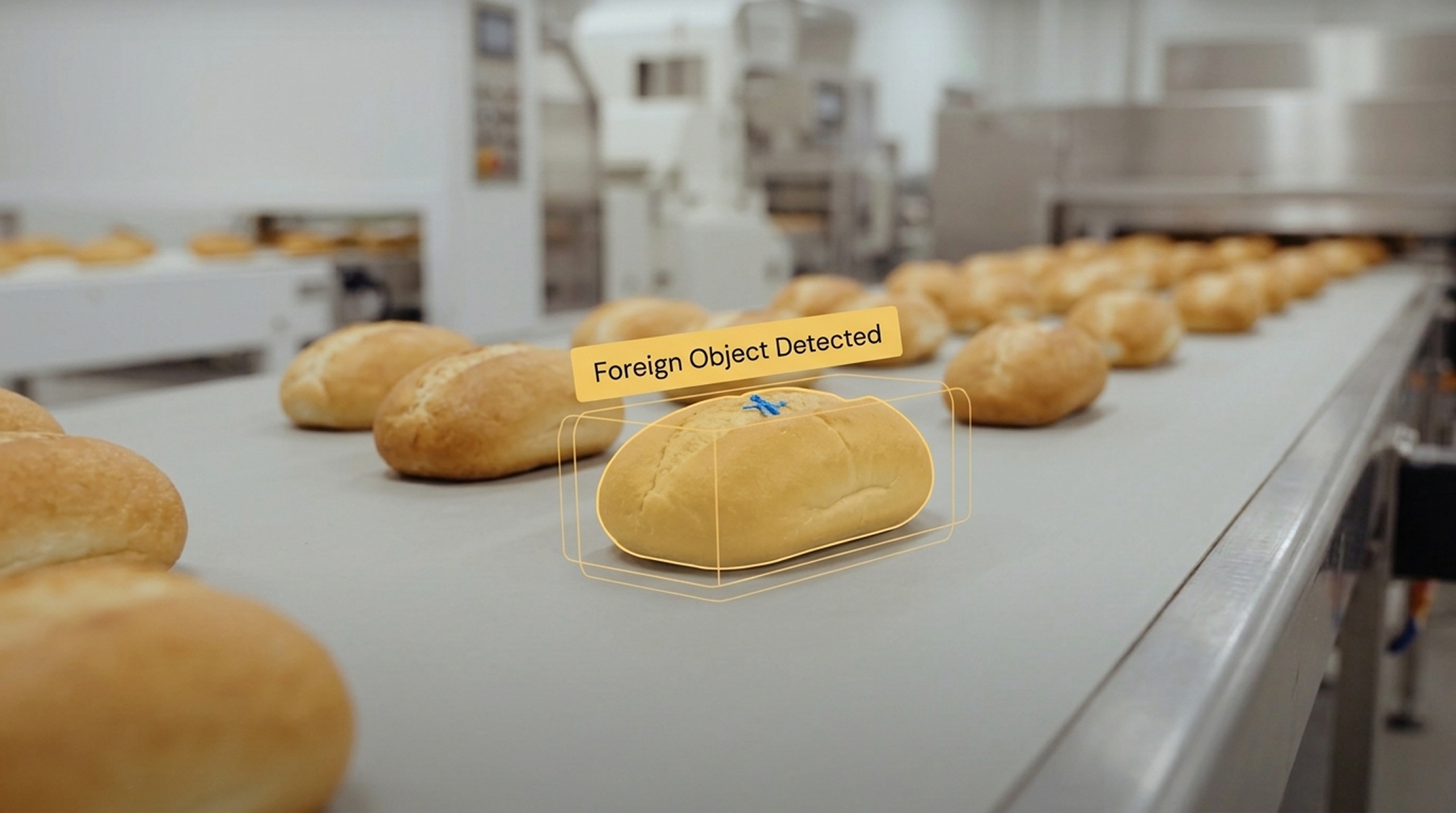
On open product lines, such as baked goods, snacks or ready meals, Video-to-Action AI flags anything on the surface that does not belong:
- Plastic fragments, including the blue plastic plants use so it stands out
- Glove pieces and packaging scraps
- Metal parts, such as small fasteners
- Other loose material lying on the product or belt
Why other checks miss it
Metal detectors only find metal, and low-density plastic can be hard for X-ray to see. Visual inspection at line speed relies on someone noticing a small fragment among thousands of identical products. A camera checks the surface of every unit, which covers the gap those systems leave.
How it acts
VITA, Maneva's quality and downtime agent, decides on every unit in real time. When it sees a foreign object, it triggers the line's reject mechanism, so the product is removed before it is packed, and logs the event with its image.
Logged events show where foreign material enters the line, for example after a particular machine or at a station where gloves are changed, so the team can remove the source, not only the product.
What cameras can and cannot see
A camera sees the surface. Objects inside the product still need X-ray. If your line already runs X-ray imaging, the AI can learn from those images too. The camera sits above the conveyor, before packing. Some lines can start with cameras they already have; many need at least one off-the-shelf camera placed for the task.
Result
Every unit is checked, not a sample, and each removal is logged for your food safety records.
More for food and beverage plants: AI for food and beverage lines →
Frequently Asked Questions
Didn't find what you need? Our team will walk you through Video-to-Action AI and show how it fits your production environment.