
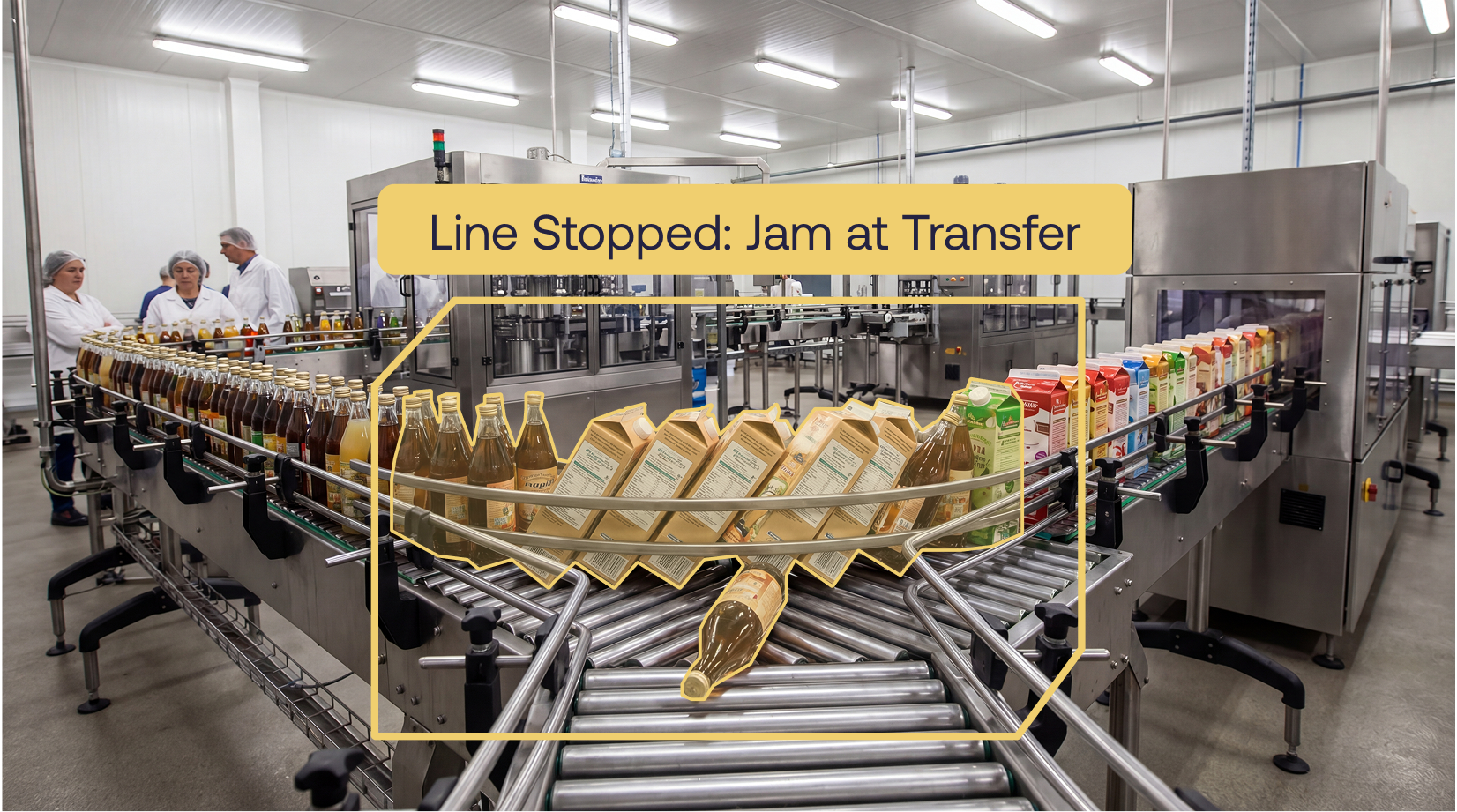
What it records
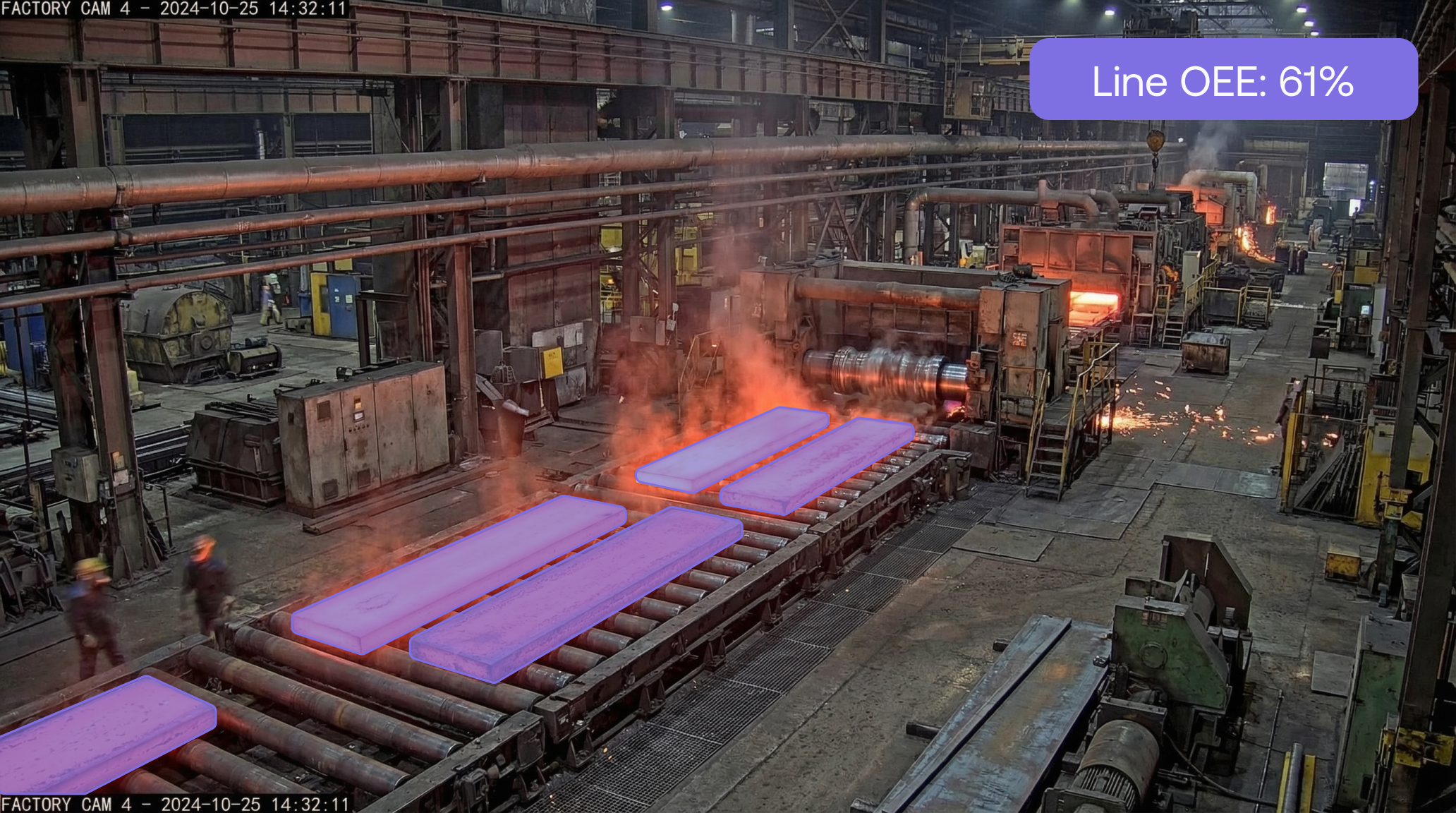
Across a packaging or processing line, Video-to-Action AI records:
- When the line goes down, and when it starts again
- Which area or machine caused each stop
- How long each stop lasted
- Gaps against the operator log: stops that were missed or logged with the wrong reason
Why downtime data is unreliable today
Downtime is usually logged by hand, after the stop is cleared and the line is running again. Short stops go unrecorded, reasons get logged as "other" or "mechanical", and the same stop can be blamed on different machines by different shifts. Machine data, where it exists, shows that a machine stopped, not what caused it.
How it acts
VITA, Maneva's quality and downtime agent, watches each area of the line. When the line goes down, it records the stop, the area that caused it and how long it lasted, and checks that against what operators logged.
The result is downtime data the plant can trust: which areas and machines cause the most lost time, so maintenance and engineering fix the biggest causes first instead of the most recent ones.
Where the cameras go
Cameras cover each area or machine that can stop the line, such as fillers, baggers, wrappers and the transfers between them. Because it works from video, it can cover older machines and lines built from different vendors. Some lines can start with cameras they already have; many need at least one off-the-shelf camera placed for the task. Maneva helps choose the camera and where it goes.
Result
Every stop is recorded with a reason, so downtime reports reflect what actually happened on the line. For why OEE hides these losses, read What your OEE score is not telling you.
More ways to keep lines running: AI for downtime reduction →
Frequently Asked Questions
Didn't find what you need? Our team will walk you through Video-to-Action AI and show how it fits your production environment.