
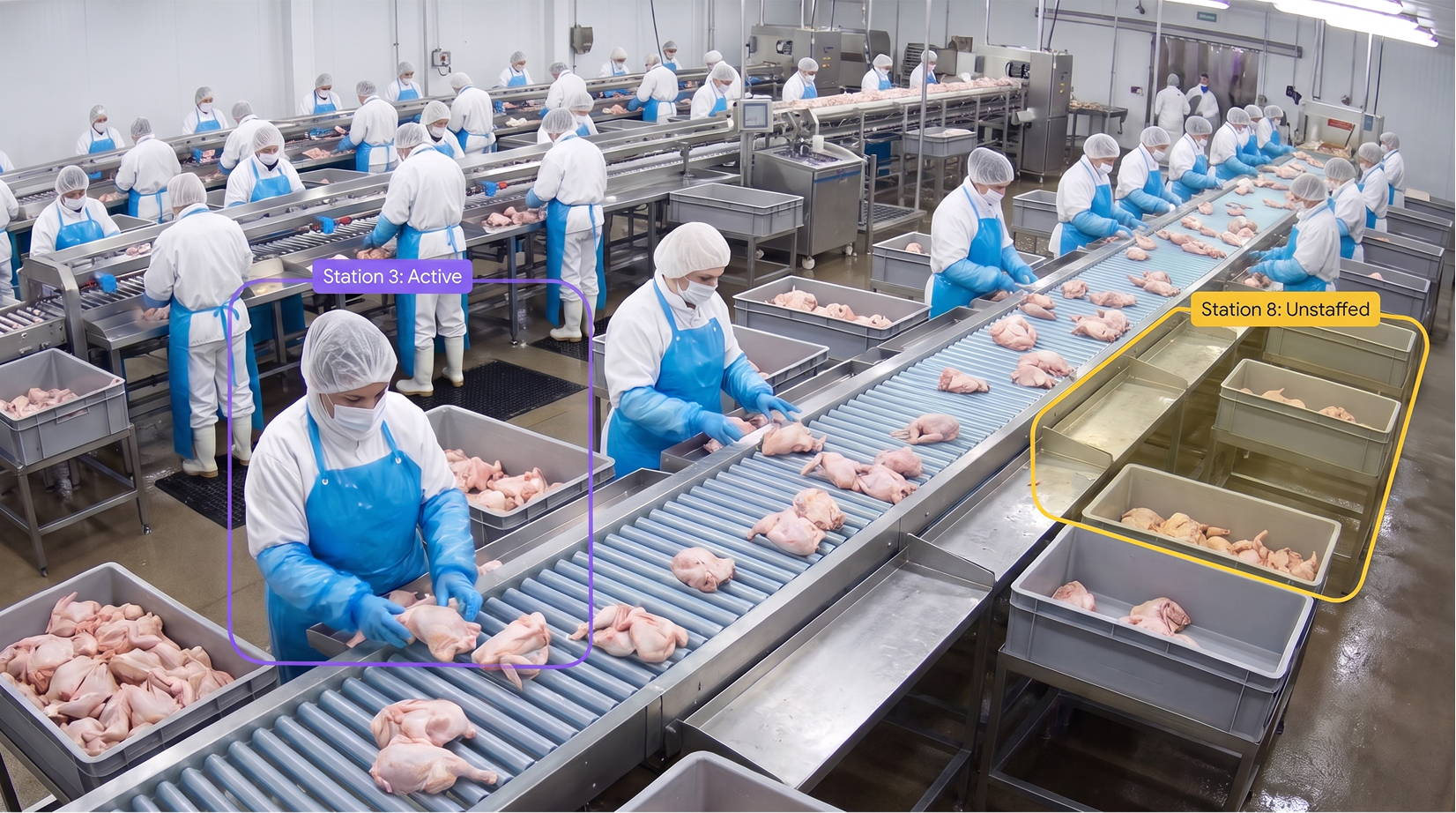
What it measures
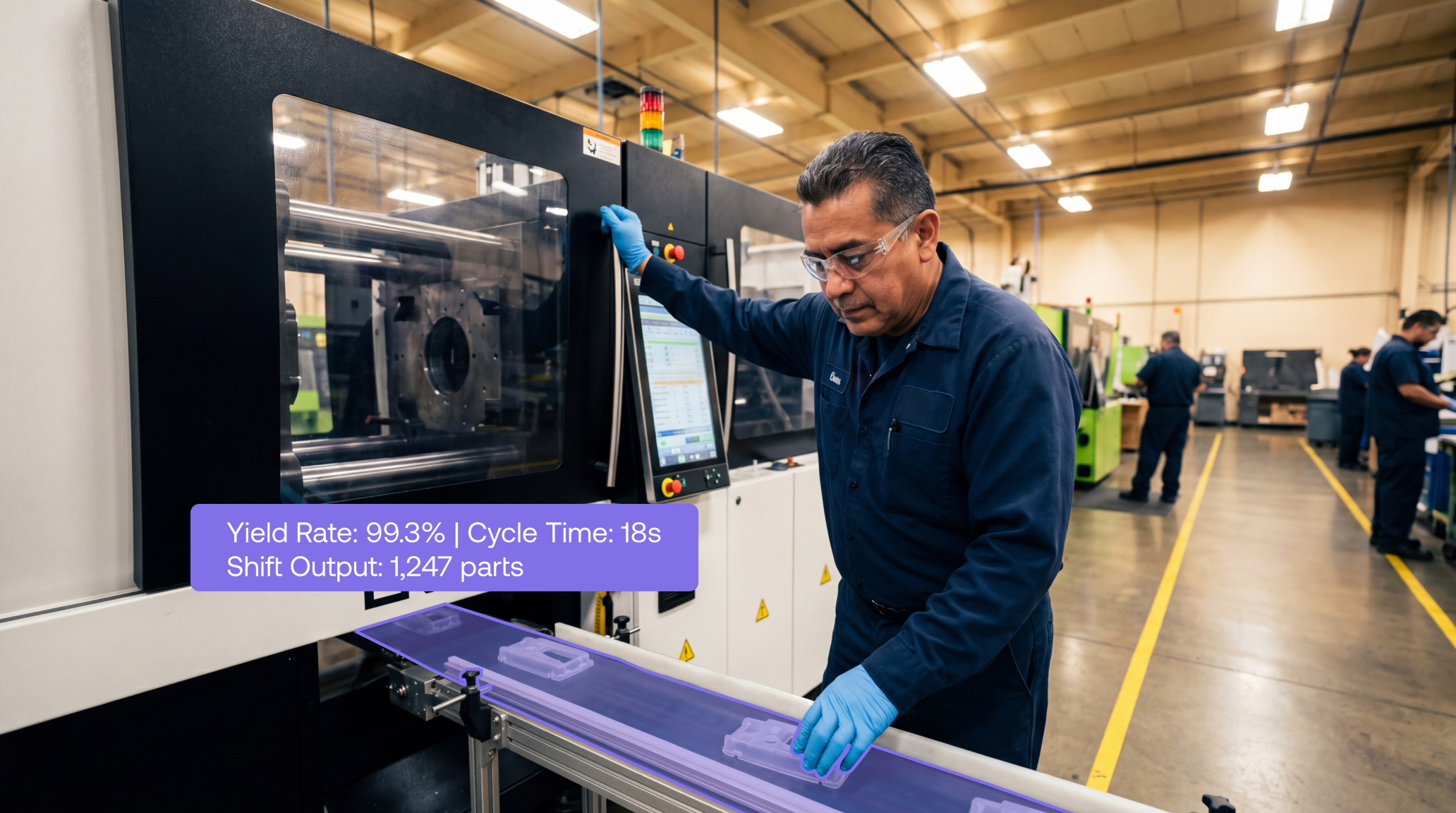
On a cutting, trimming or further processing line, ALIS tracks:
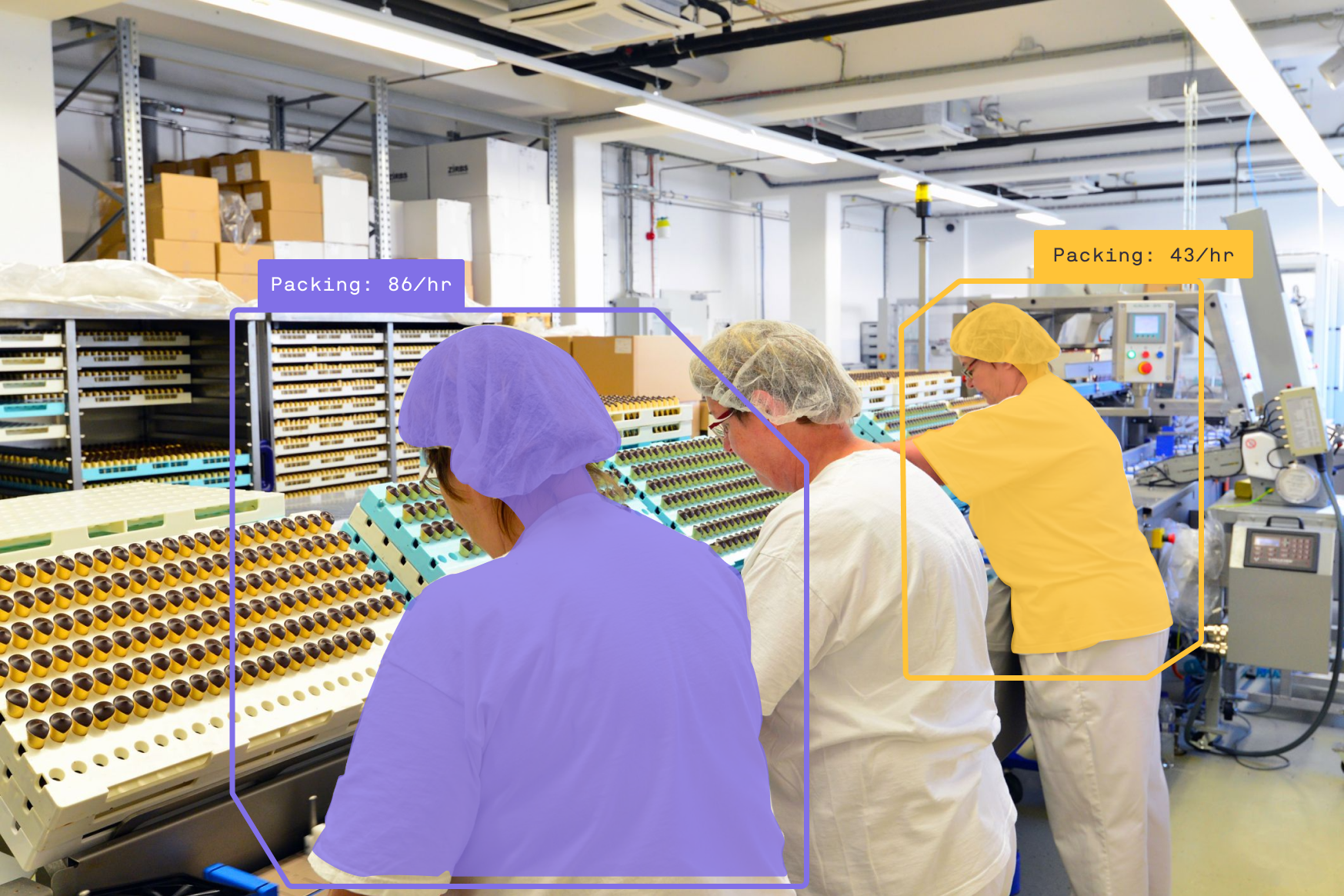
- Staffed or empty: whether someone is at each station
- Active or idle: whether the station is working
- How many people are at each station, and for how long
- Machine producing time: whether each machine is running with product on it
- Results by station, machine and shift
Why it is hard to see today
Manual lines are measured with time studies and end-of-shift output counts. A time study shows one moment, and output counts show the total, not where the time went. Idle minutes spread across many stations and machines rarely show up anywhere.
How it acts
ALIS measures staffing, activity and machine running time continuously from video. Supervisors see it as a live view during the shift or as a daily report, broken down by station, machine and shift, so production time becomes something each shift can see and own.
Over time, the record shows which stations and machines lose the most producing time, which helps when planning staffing, layout or maintenance. Some plants use the same data to support output-based incentive programs.
Where the cameras go
Cameras cover the line from above, with each station and machine in view. Nothing is installed on the stations themselves. Some plants can start with cameras they already have; many need at least one off-the-shelf camera placed for the task. Maneva helps choose the camera and where it goes.
Result
Supervisors manage production time with data by station and shift instead of end-of-shift totals. For how this adds up across a plant, read How AI delivers a 20-30% OEE uplift.
More for meat and poultry plants: AI for meat processing →
Frequently Asked Questions
Didn't find what you need? Our team will walk you through Video-to-Action AI and show how it fits your production environment.