
What it catches
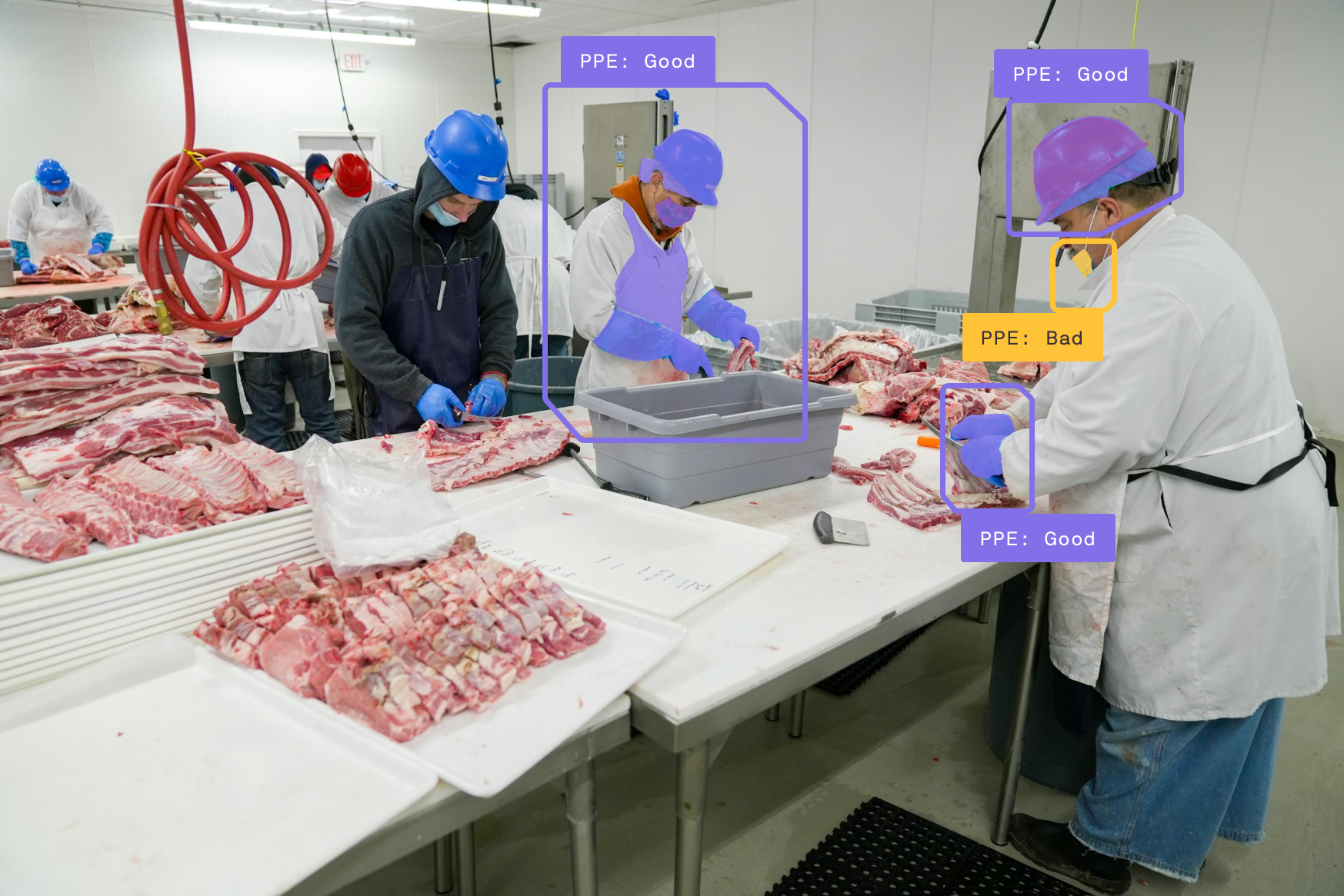
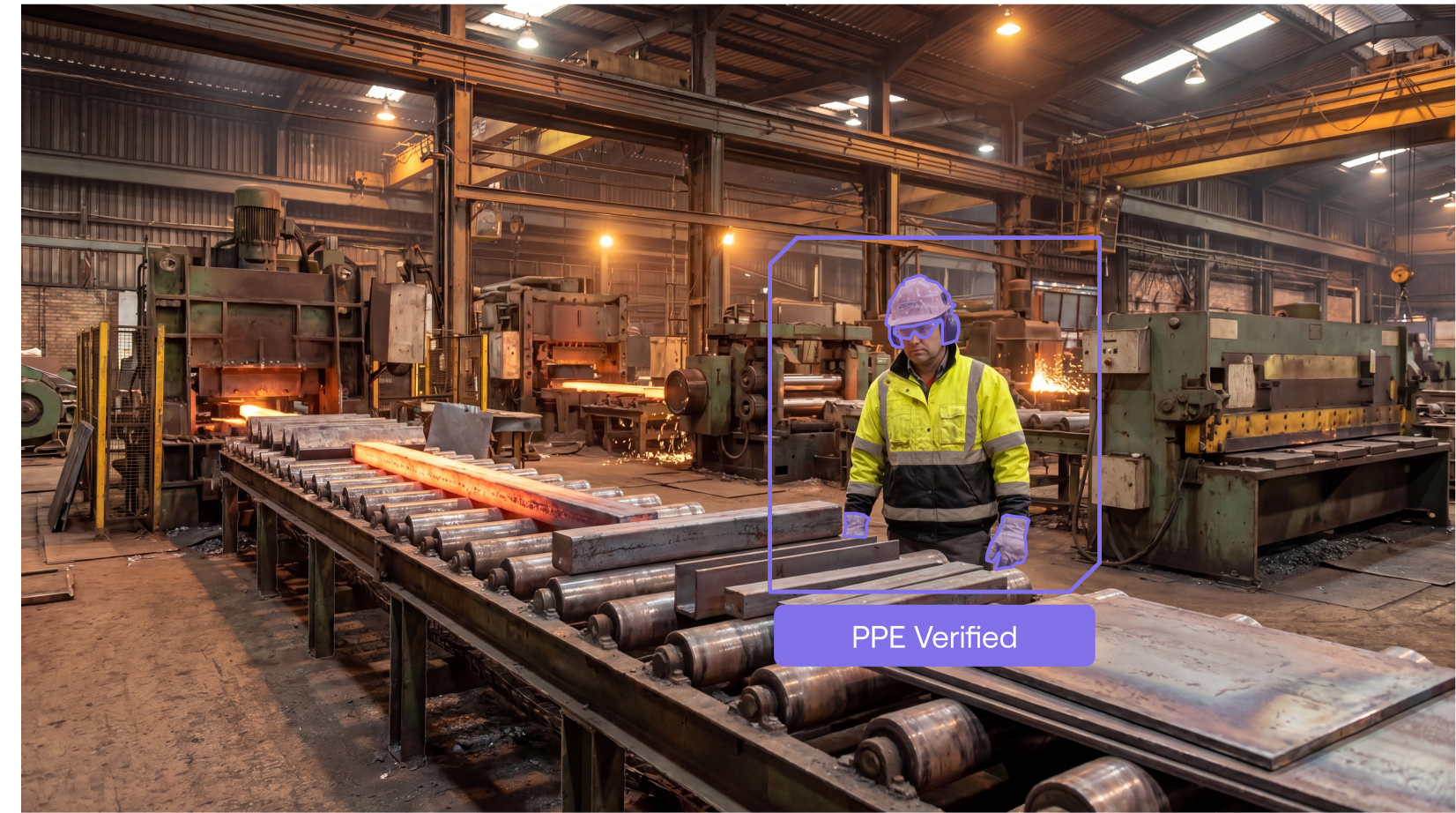
In hot zones, ALIS checks that each person wears what your plant requires, such as:
- Hard hats
- Face shields and safety glasses near molten or hot metal
- Heat-resistant gloves and protective clothing
- High-visibility vests around moving equipment
- Hearing protection in loud areas
Why spot checks miss it
Hot zones are uncomfortable places to wear full PPE, so gear comes off for a moment, and that moment is when injuries happen. Steel plants are large and spread out, and a supervisor cannot be at every furnace, mill stand and shear. Spot checks and sign-off sheets do not show what happened between checks.
How it acts
ALIS checks each person against the PPE rules for that zone, continuously. When required gear is missing, it alerts the supervisor in real time, so the issue is fixed before the person reaches the hazard. A camera at the entrance to a hot zone can check gear before someone goes in.
Every check is time-stamped and stored, giving the safety team a record by zone, shift and type of gear, which shows where training, supply or procedures need attention.
Where the cameras go
Cameras cover the entrances to hot zones and the work areas around furnaces, mills and shears. Some plants can start with cameras they already have; many need at least one off-the-shelf camera placed for the task. Maneva helps choose the camera and where it goes.
Result
ALIS has helped customers reach up to 50% fewer near-miss safety events, and PPE compliance becomes a continuous record instead of a periodic check.
How a safety program comes together: Building an AI factory safety program →
Frequently Asked Questions
Didn't find what you need? Our team will walk you through Video-to-Action AI and show how it fits your production environment.