

AI Predictive Maintenance in Manufacturing: What the Real Cost Difference Means for Your Production Line
In high-volume food and beverage manufacturing, "Run-to-Fail" is far more than an outdated maintenance strategy. It is a high-stakes gamble with your facility's profitability. After spending 31 years on the front lines of the industry, I've sat in the hot seat during those Tuesday morning downtime events when a critical drive motor burns out or a gearbox seizes without warning. In those moments, the atmosphere in the plant can shift quickly from productive to panic.
Experience has taught me a painful truth: the immediate cost for a replacement part or four hours of technician overtime is often the smallest number on the final bill. The true cost of reactive maintenance is like an iceberg. The visible tip is the repair, but the massive hidden portion consists of lost yield, compromised food safety, and the erosion of your team's morale. AI predictive maintenance manufacturing solutions break that cycle by shifting control away from the machine and back to the team. When you are reactive, the machine dictates your schedule, your labour costs, and your stress levels. Breaking that cycle requires more than just better maintenance team members. It requires a fundamental shift in how we perceive the health of the production line.
The Food Industry Reality: More Than Just a Repair Bill
In food and beverage processing, the cost of reactive action is exceptionally steep. We aren't just moving widgets. We are managing perishable products under strict regulatory scrutiny. Research shows that unplanned downtime costs the average manufacturing facility around $260,000 per hour, and the average plant experiences 25 unplanned downtime incidents every month. When a line stops unexpectedly in food manufacturing, the clock starts ticking on far more than lost production time.
The Regulatory and Safety Risk: A sudden mechanical failure can lead to temperature deviations or seal integrity issues. I remember one specific day where a simple conveyor bearing failure caused a 20-minute micro-stoppage. Because the line was stalled under the thermal processing stage, we had to scrap three skids of product due to thermal deviation. In a reactive environment, you aren't just fighting a clock. You're fighting lost production time, lost product, and your compliance record.
The Hidden Cost of Sanitation: In many sectors, you fix the machine and hit start. In food and beverage manufacturing, a mid-run mechanical failure often triggers a mandatory full wash-down. I've lived through quick fixes that took thirty minutes to repair but required four hours of sanitation before a single ounce of product could safely hit the belt again, quickly destroying your OEE.
The Human Toll: Thirty years on the floor teaches you that reactive maintenance is the primary driver of talent attrition. Constant firefighting kills the spirit of your best mechanics and engineers. When your skilled technicians spend 90% of their time responding to alarms, they have 0% of their time left for preventative work or continuous improvement projects. You end up losing your best people to plants that have their process in control.
Shifting the Narrative with Maneva AI
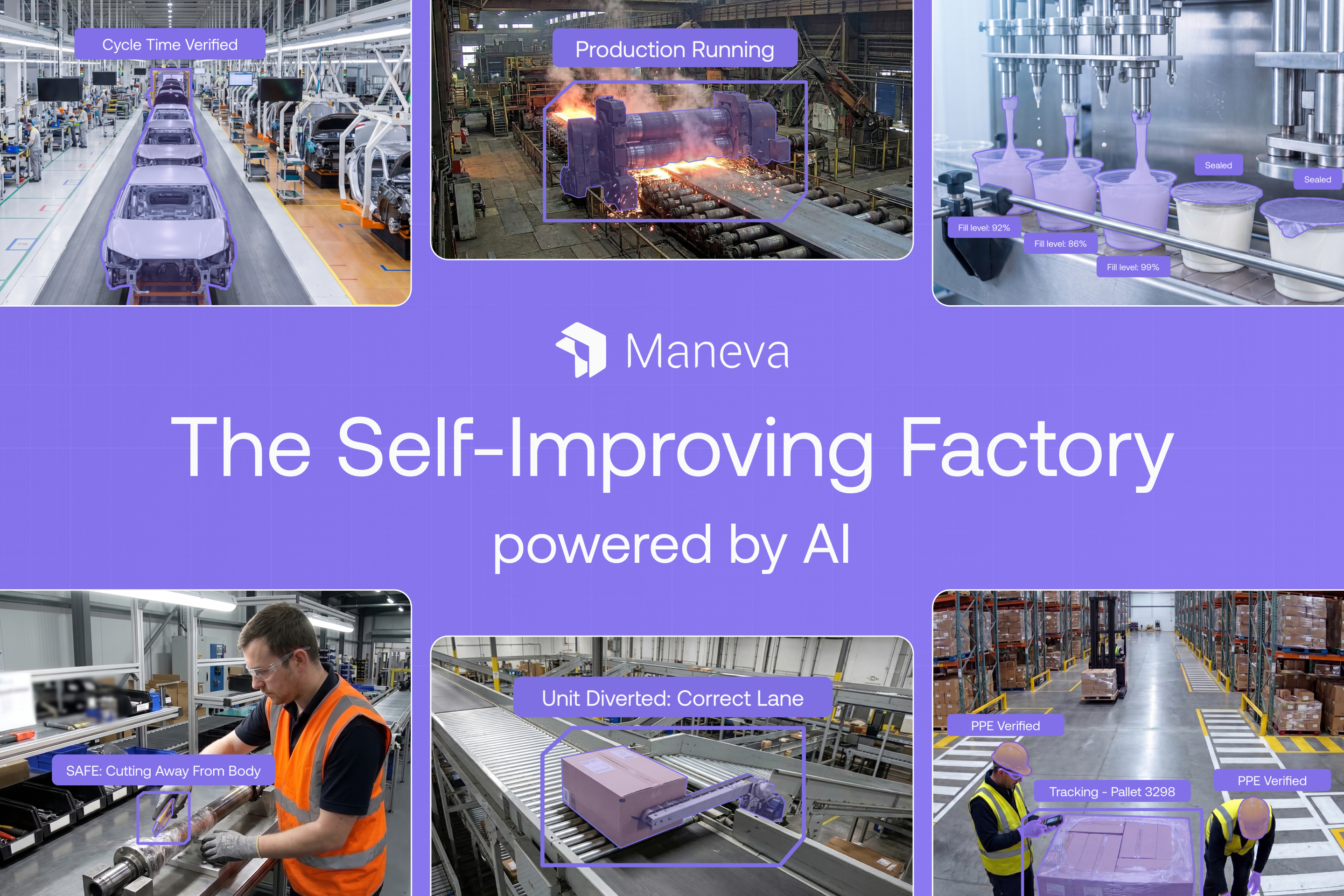
Moving from reactive to AI predictive maintenance manufacturing is about moving from a culture of crossing your fingers and hoping, to a culture of certainty. For decades, we relied on the trained ear of a senior mechanic who knew exactly what a failing pump sounded like. But as lines have become faster and more complex, and seasoned talent leaves the industry, we can no longer rely on periodic human intervention. Maintenance cost reduction at scale now requires intelligent, always-on video AI. This is where Video-to-Action intelligence changes the game.
VITA: Seamless Oversight Across Extreme Environments
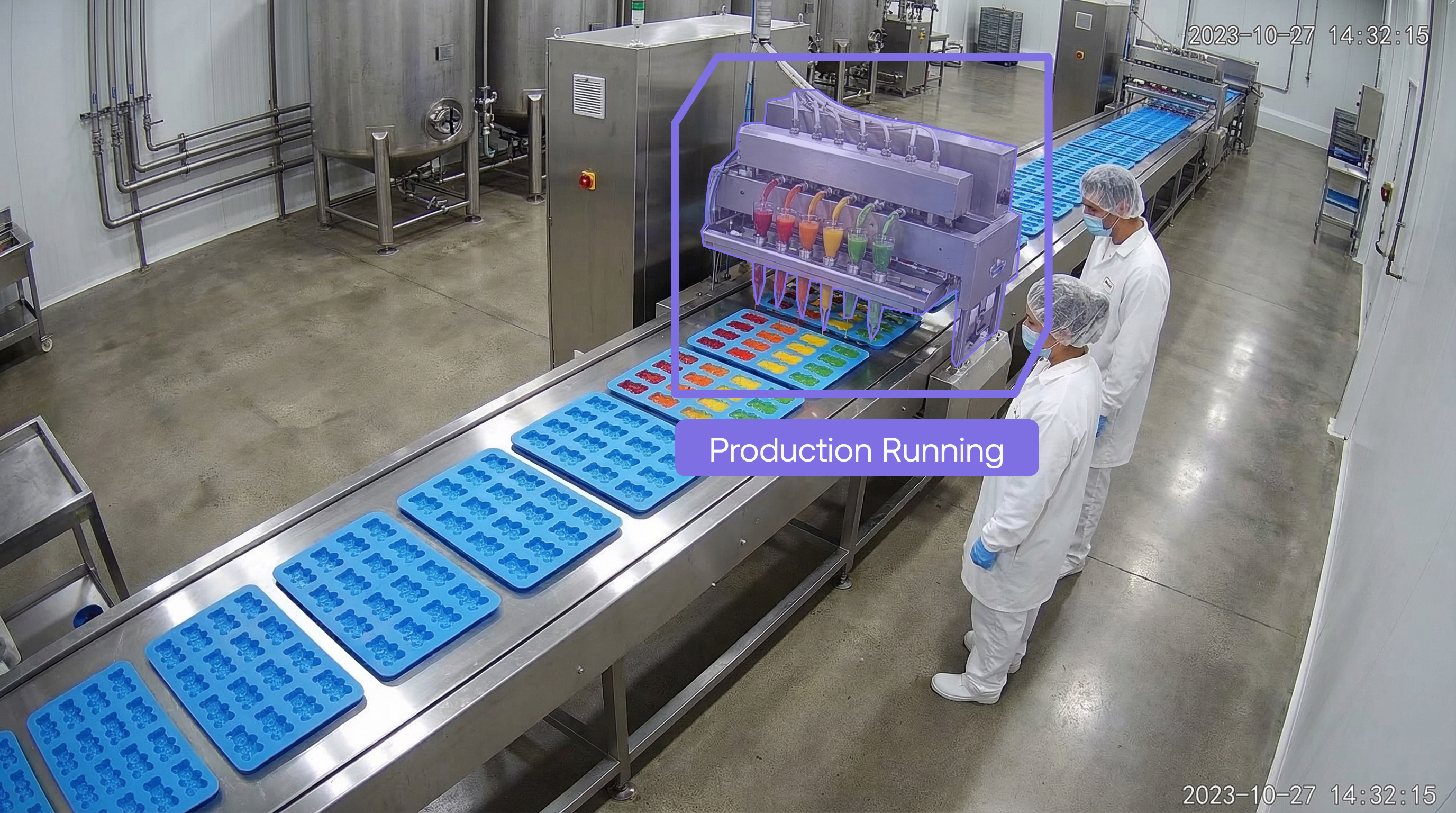
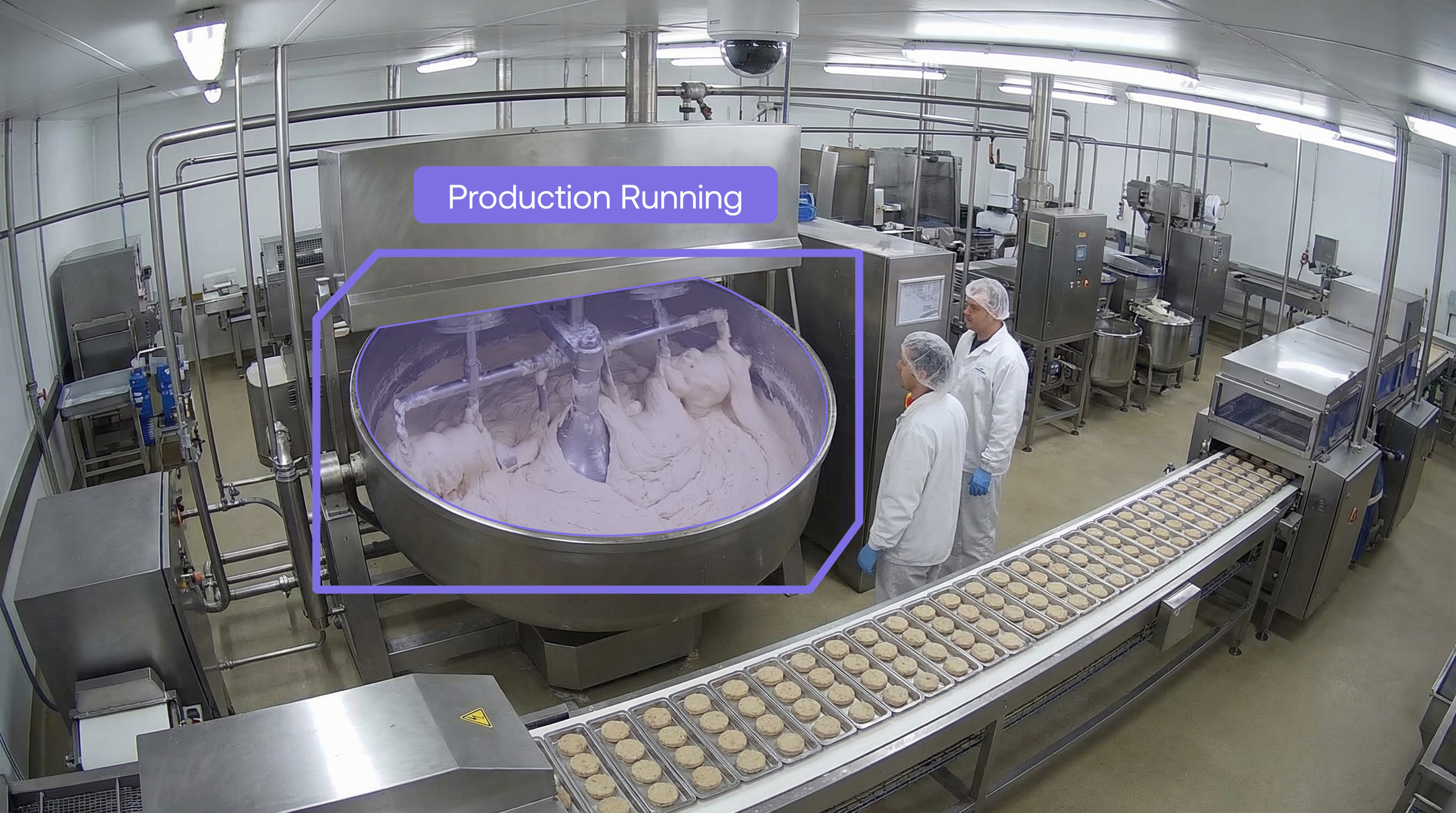
Consider a multi-stage chicken wing line where a transfer belt between the industrial oven and the spiral freezer begins to track slightly to the left. To a human operator, the line appears to be moving normally. However, that half-inch drift causes the wings to clump at the freezer intake rather than entering in a single, even layer. This clumping leads to uneven freezing, where the centers can remain soft, potentially violating food safety standards and forcing a total product hold. This is a preventable production line downtime cost. VITA is designed to catch these physical anomalies in real time:
- Fryer Sediment and Flow: Product is moving along on a single layer as expected, identifying any anomalies in real time.
- Oven Belt Tension: Identifies the surging motion of a heavy-duty oven chain that is beginning to stretch or jump teeth, long before it snaps under the heat.
- Freezer and Mechanical Stress: Monitors the movement of the belt and the micro-vibration of the spiral freezer's main drive motor as it battles ice buildup on the rails, alerting issues before the system hits a high-limit trip.
VITA identifies the subtle precursors to equipment failure prevention: a belt that is beginning to fray in the heat, a sorter arm that has lost its micro-timing by a fraction of a second, or a guard door that is vibrating loose. It sees the physical degradation long before it causes a catastrophic seizure in the middle of a production run.
ALIS: Mapping the Pattern of Failure
Where VITA looks at the what, ALIS looks at the how. In my experience, machines rarely fail because of bad luck. They fail because of operational stress. ALIS tracks the flow of the line to identify the silent killers of equipment, like surging and slugging. I've seen lines where the upstream speed was slightly out of sync with the downstream capacity, causing products to bunch up and slam into a diverter gate hundreds of times an hour. That constant physical hammering eventually snaps the actuator. ALIS identifies these bottlenecks and visualizes them as hot zones of operational stress. It allows leadership to see that a machine isn't bad. It's being abused by the process. By fixing the flow, you save the machine and reduce manufacturing downtime significantly.
Kaizen: Institutional Knowledge in Real-Time
One of the greatest risks I've observed is the Brain Drain. When a 30-year veteran retires, their ability to sense a machine's health goes with them. Kaizen, Maneva's industrial LLM, bridges that gap. It doesn't just send a generic alert. It aggregates the visual data and translates it into a specific, actionable maintenance brief. I've sat in too many morning production meetings where the maintenance report was a shrug and a "we don't know why it broke." Kaizen changes that report to: here's what happened, when, and why.
The Business Case for Switching
The numbers behind AI predictive maintenance manufacturing speak for themselves. According to McKinsey, predictive maintenance can cut maintenance costs by 20% to 30% and reduce equipment breakdowns by nearly 70%. Research by Deloitte puts the figure even higher, citing a 25% to 40% reduction in overall maintenance costs and a 30% to 50% drop in unplanned downtime. For a facility losing $260,000 per hour to downtime, even a 30% reduction represents millions of dollars returned to the bottom line every year. That is the real cost difference between reactive and predictive.
Reflecting on thirty-plus years on the production floor, the most successful plants I've ever managed were not the ones with the newest equipment, but the ones with the most predictable equipment. Reliability is the foundation upon which all other KPIs, including yield, safety, and quality, are built.
I often tell teams that emergency is just another word for failed planning. When you are in reactive mode, you are always behind. You are paying premium prices for overnight shipping, burning out your labour force with mandatory Saturday repairs, and losing the trust of your customers every time a shipment is delayed. By leveraging Maneva's AI platform, you are making a conscious choice to stop being a firefighter and start being a strategist. You are using technology to reduce manufacturing downtime and put your process in control.
In the food and beverage industry, as in all manufacturing industries, the goal is Autonomous Excellence. It's about creating a production environment where the line has the intelligence to tell you what it needs before it breaks, keeping your margins healthy, your product safe, and your schedule intact. After thirty-plus years, I can confidently say: the best repair is the one you never had to make.