Compliance Before an Incident Happens
I've spent more than 25 years on factory floors, first with Kimberly-Clark, then Medline, then Clorox, and later through a string of OpEx consulting engagements before landing in my current role as Director, OpEx and AI Transformation at Maneva AI. In that time I've walked thousands of miles of plant floor, sat through more incident reviews than I can count, and watched the same story repeat itself in nearly every facility: the near-miss that everyone saw coming, the safety audit finding that got logged and then forgotten, the PPE violation that was "just this once" until it wasn't. I didn't come to AI because I love technology for its own sake. I came to it because I got tired of writing incident reports that started with "if only someone had caught this sooner."
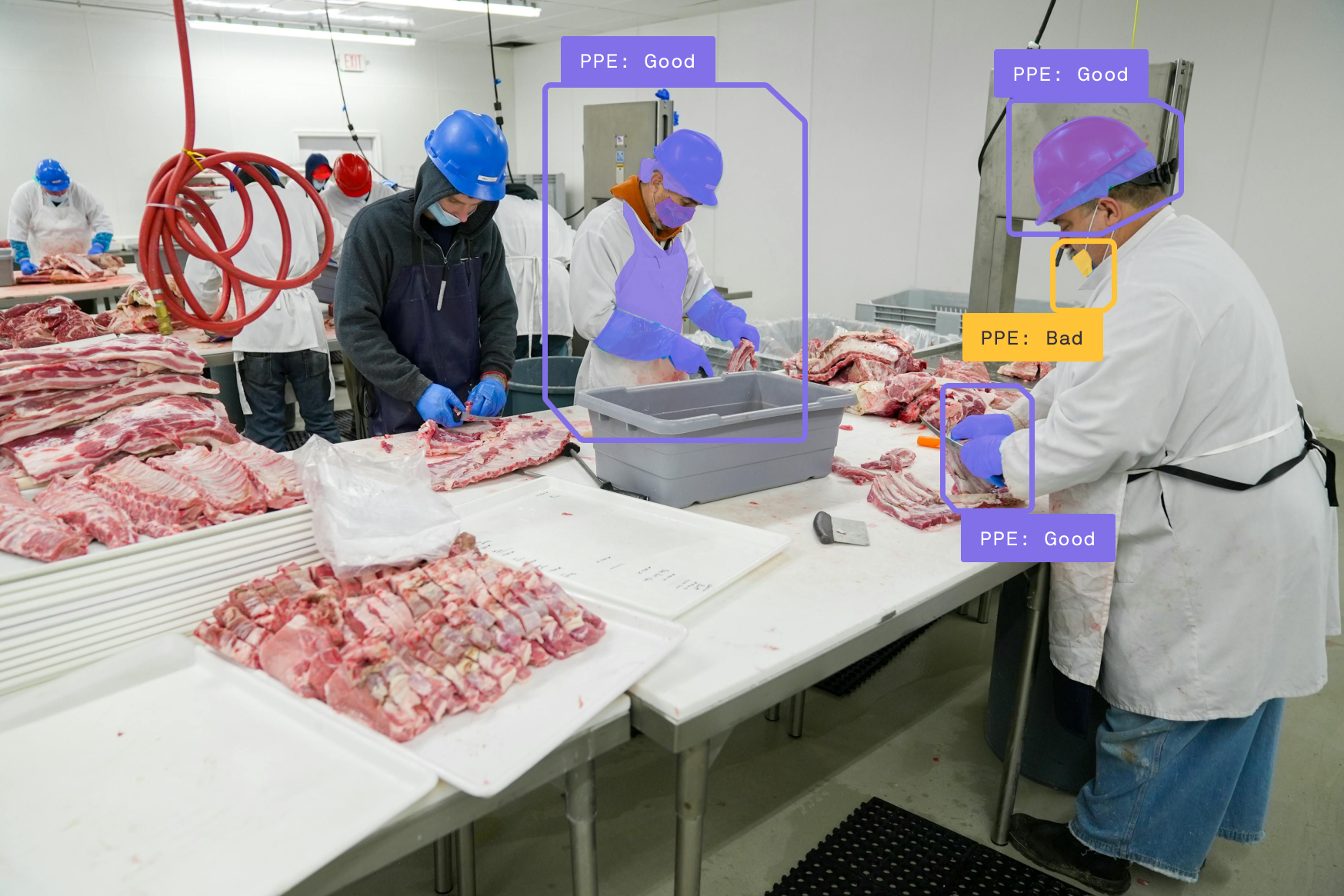
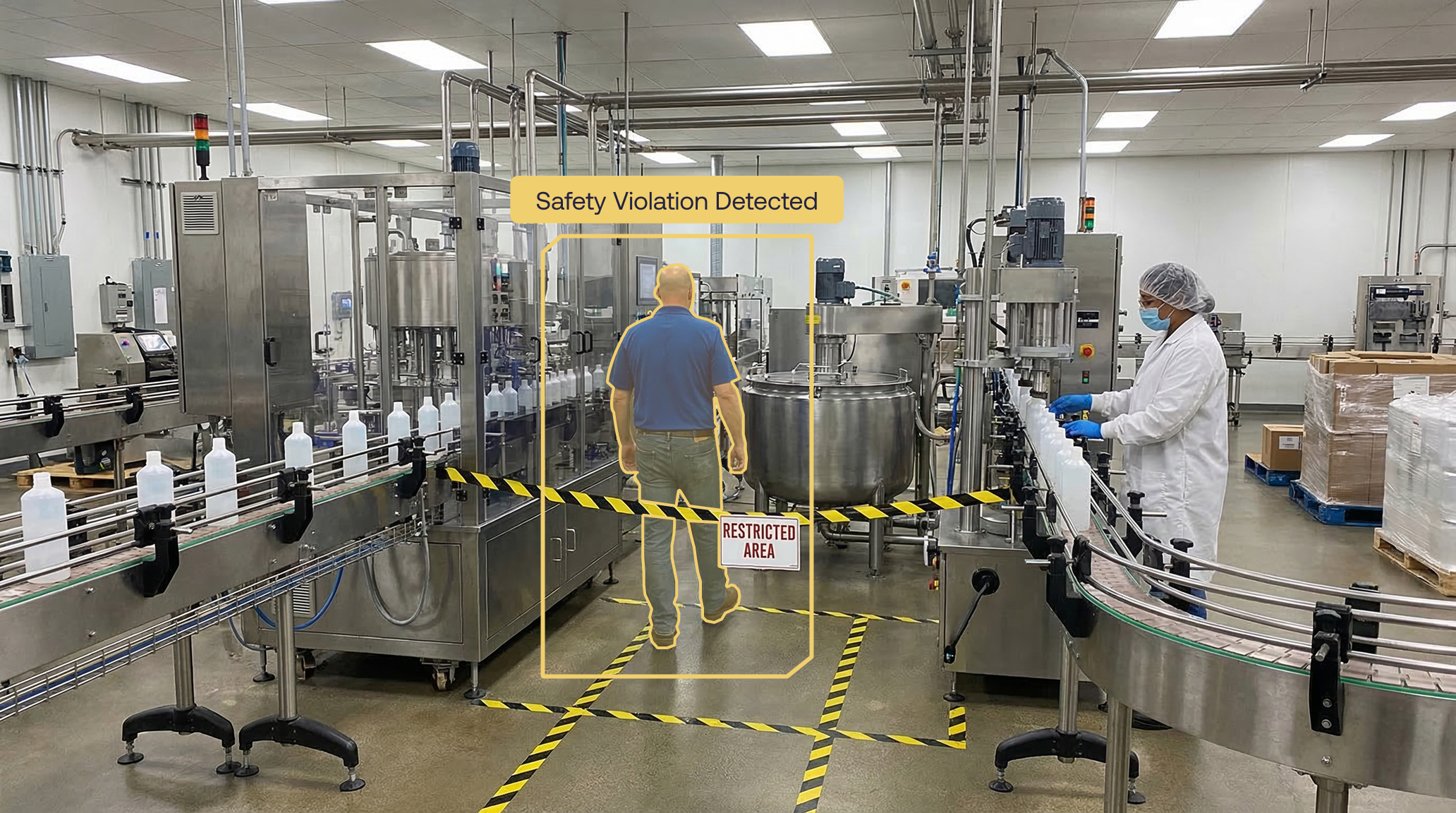
That's the promise behind PPE compliance monitoring software, and it's why I think this is one of the most immediately valuable applications of AI factory safety monitoring on the plant floor today. Instead of relying on a supervisor's walk-through, a monthly audit, or the assumption that people will always remember to put on the right gear, AI-based systems watch continuously and flag the gap between policy and practice in real time, before it becomes an incident, a citation, or a claim.
The Cost of Finding Out Too Late
Every year, OSHA publishes its list of the most frequently cited standards, and the pattern is remarkably consistent. According to OSHA's own Top 10 Most Frequently Cited Standards, the list includes fall protection, eye and face protection, respiratory protection, and machine guarding, categories that are, in one way or another, about whether the right protective equipment was worn, fitted, or used correctly at the moment it mattered. These aren't obscure or highly technical violations. They are the same handful of preventable gaps showing up year after year, plant after plant, industry after industry.
The financial weight behind those citations is staggering. Liberty Mutual's 2024 Workplace Safety Index estimates that workplace injuries cost U.S. employers roughly $167 billion a year once you account for medical costs, wage replacement, lost productivity, and administrative overhead. That number doesn't even capture the harder-to-quantify costs: the retraining, the morale hit on a line after a coworker gets hurt, the regulatory scrutiny that follows a serious incident, or the simple human toll on a family.
What strikes me most, looking back at my own years running operations, is how rarely these incidents were truly unpredictable. In almost every case I reviewed, the hazard existed for days, weeks, or months before it caused harm. Someone walked past a missing guard. Someone noticed a worker without eye protection near a grinding station and meant to say something. The information to prevent the incident existed, it just wasn't captured, escalated, or acted on in time. That gap between "the hazard was visible" and "the hazard was addressed" is exactly where AI factory safety monitoring earns its place.
How PPE Compliance Monitoring Software Actually Works
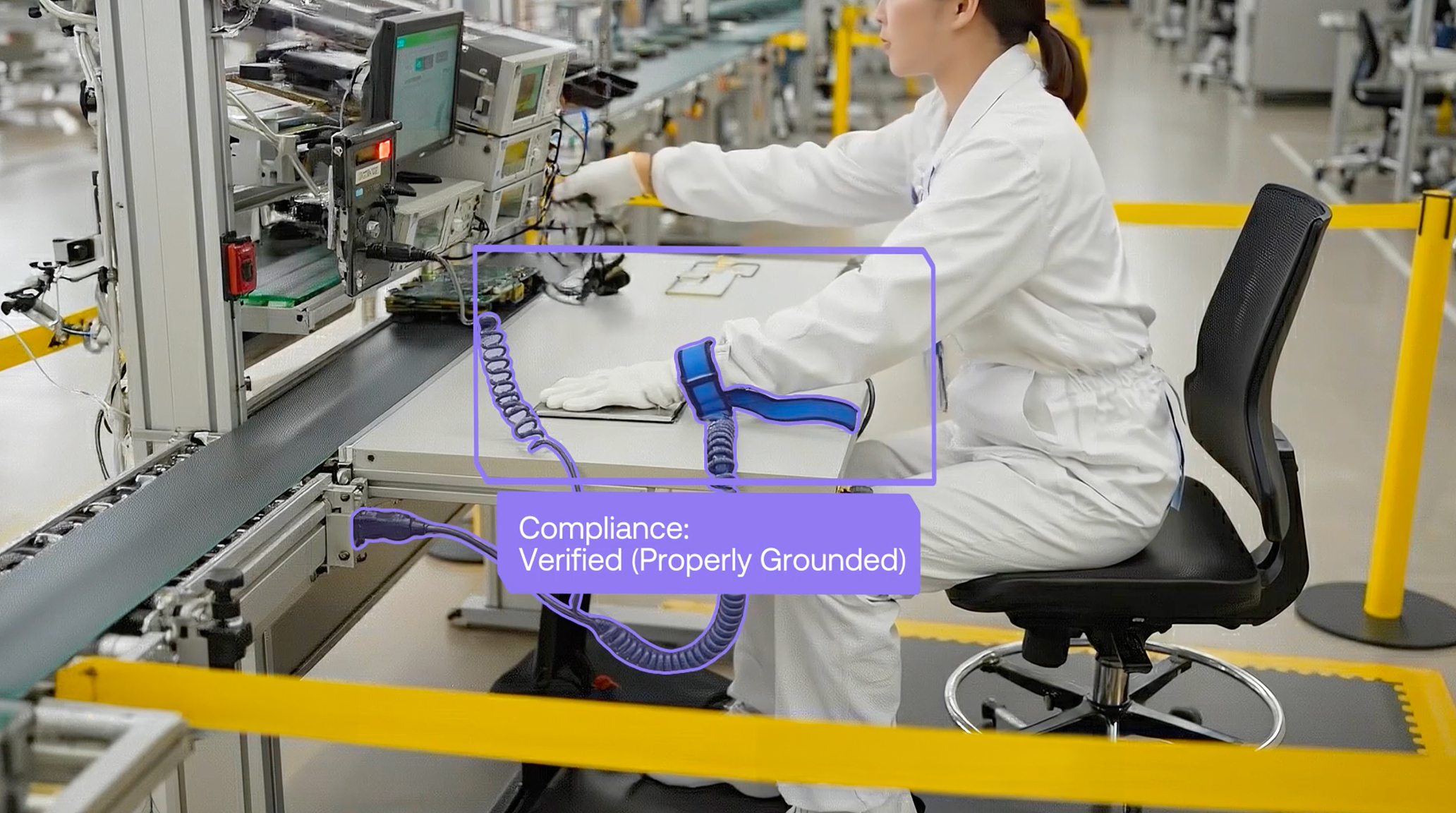
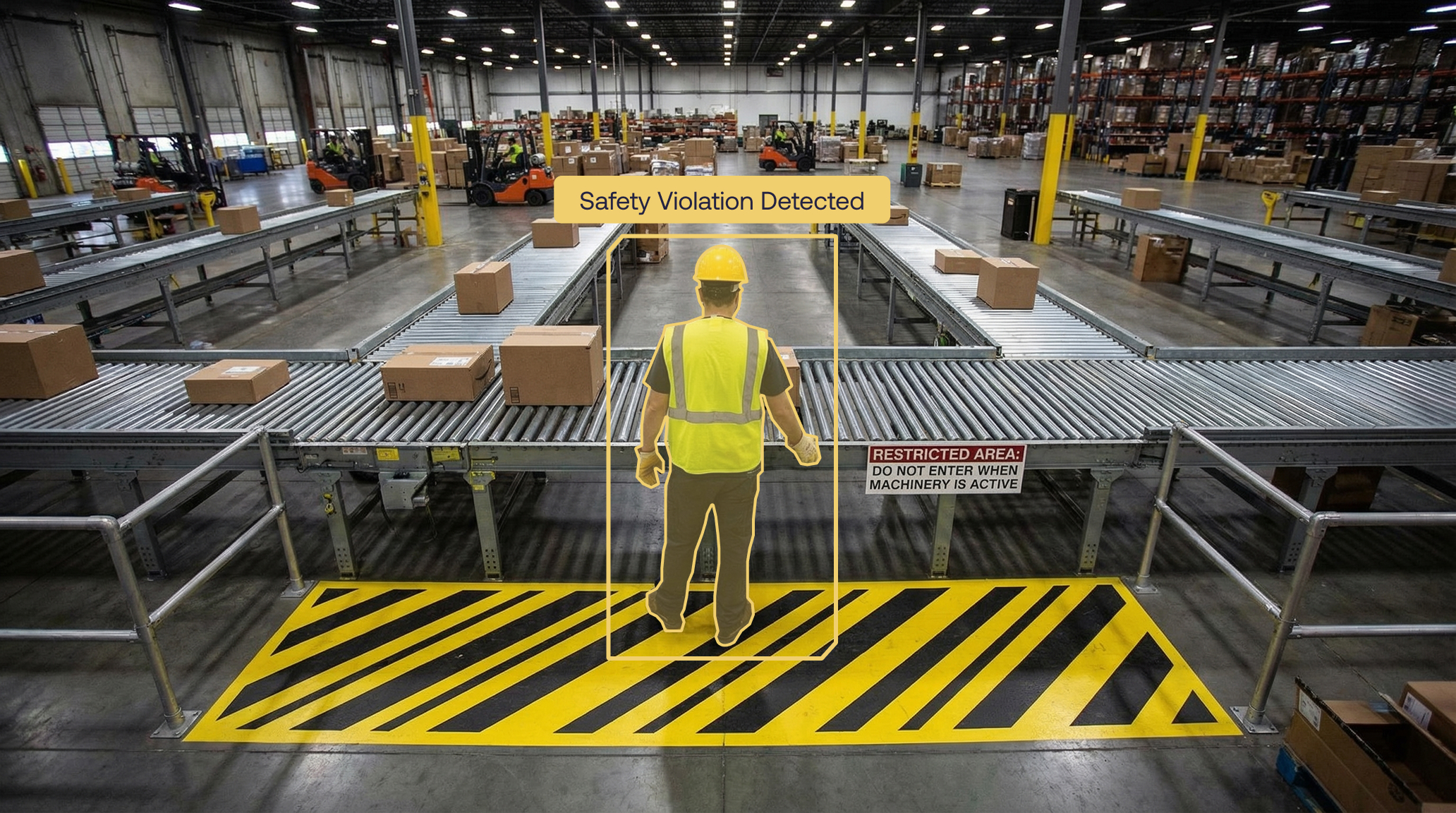
At its core, PPE compliance monitoring software uses computer vision models trained to recognize protective equipment (hard hats, safety glasses, gloves, hearing protection, high-visibility vests, respirators) against the specific zones and tasks where each is required. Cameras already installed for security or quality purposes, or purpose-built sensors, feed a continuous stream of footage into a model that has learned what compliant behavior looks like in that specific environment. When someone steps into a zone without the required gear, or removes protection mid-task, the system flags it immediately.
That's a meaningfully different model than the traditional approach, which depends on a safety manager or a shift supervisor physically walking the floor and catching the violation in the moment, or reviewing footage after something has already gone wrong. Human observation is valuable, but it's also finite. A safety lead can't be in six places at once, can't watch a hazardous zone at 2 a.m. on third shift, and can't review every frame of every camera looking for the one moment that mattered. AI-based PPE compliance monitoring software doesn't get tired, doesn't blink, and doesn't get pulled away to handle a different fire on the floor. It watches every zone, every shift, continuously, and it escalates only the moments that actually need a human decision.
That last point matters more than people often realize. The goal isn't to bury a safety team in alerts, it's to filter thousands of hours of footage down to the handful of genuine gaps worth a conversation, a coaching moment, or a process fix. Done well, this turns PPE compliance from a periodic audit exercise into a live feedback loop that catches an event before it becomes a pattern, and catches a pattern before it becomes an injury.
Why This Is a Human-First Story, Not a Headcount Story
I want to be direct about something, because I think it's the part of this conversation that gets lost most often: this technology is not about replacing the people on the floor. It's about giving them information they've never had before, at the moment they can actually use it.
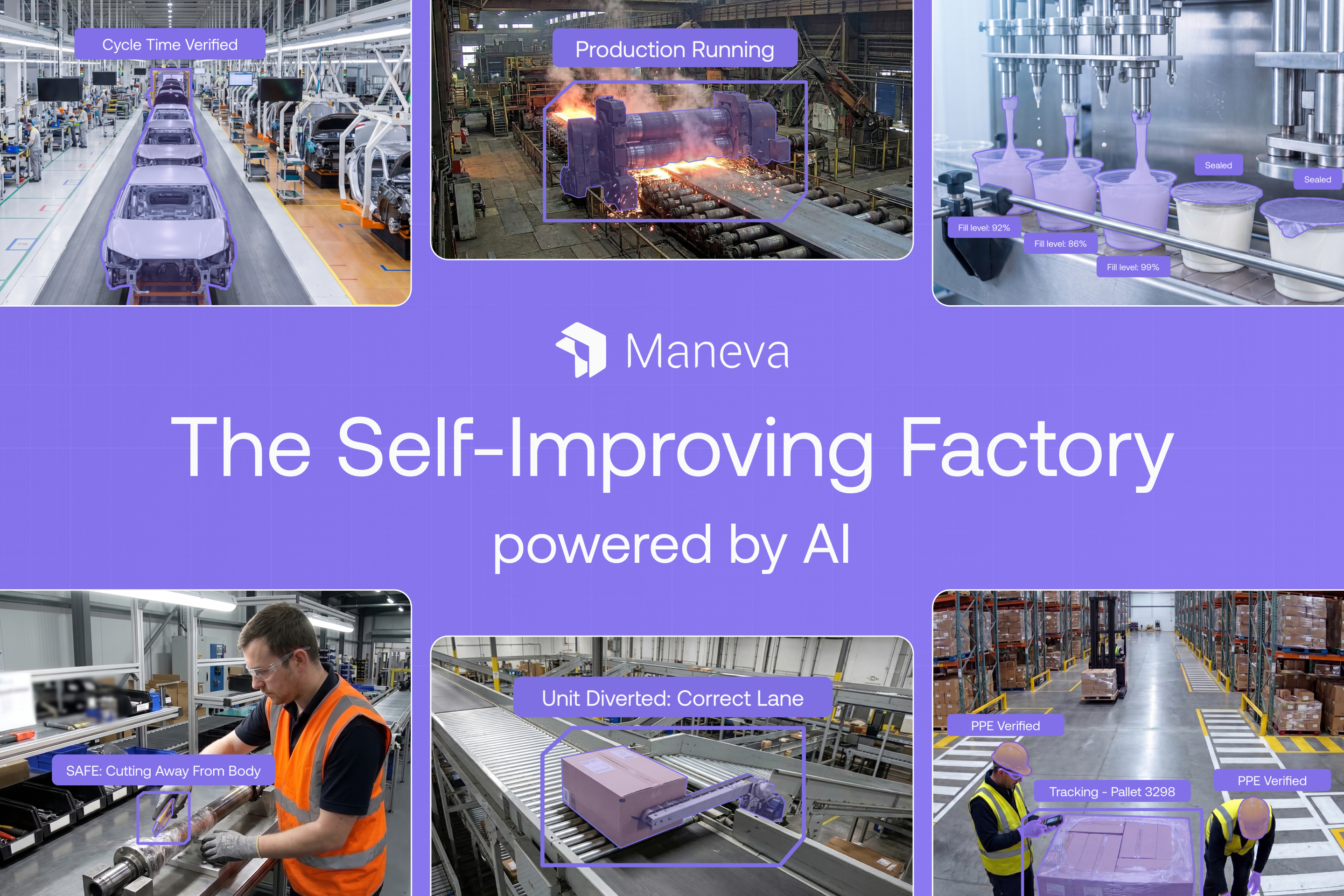
At Maneva, our ALIS (AI Line Supervisor) agent gives frontline teams real-time visibility into what's happening on their line, including PPE and safety conditions that simply didn't exist before. A line lead who used to find out about a compliance gap during a weekly review now finds out during the shift, while there's still time to correct course. That's not automation replacing judgment; it's automation feeding better judgment. The frontline worker becomes a sharper decision maker because they're no longer operating on yesterday's information. In our deployments, that shift in visibility has translated into a 10% increase in total output through improved worker productivity. This is proof that when you put better information in front of the people closest to the work, the human is still very much at the center of the result. Brenda Salinas covered the same dynamic in her piece on how computer vision is reducing workplace incidents.
Our VITA (Video-to-Action AI) agent tells a similar story on the quality side. Quality technicians have historically spent a huge share of their time on repetitive visual inspection, staring at parts, staring at screens, checking the same criteria over and over. VITA takes that repetitive visual work off their plate so those technicians can spend their time where their expertise actually adds value: root cause analysis, process improvement, and the judgment calls that no model should be making alone. We didn't build VITA to shrink a quality team. We built it so a skilled quality tech stops spending eight hours a day on pattern-matching and starts spending that time solving the problems that are actually costing the plant money.
The distinction between AI as a tool that makes the people on the floor more capable versus AI as a tool that makes fewer people necessary is the single most important thing for plant leaders to get right as they evaluate this technology. The vendors selling pure headcount reduction are selling the wrong outcome, and frankly, they're selling a story that erodes trust with the very workforce you need bought into a safety program for it to work. The plants that get the most out of AI factory safety monitoring are the ones that frame it honestly to their teams: this system exists to catch what a supervisor can't be everywhere to see, and to hand you the visibility you've always deserved but never had.
What This Looks Like in Practice
Picture a fabrication cell where operators are required to wear cut-resistant gloves and face shields near a specific piece of equipment. A camera-based system trained on that zone continuously verifies compliance. If an operator steps in without a face shield, or it's cracked and they set it aside meaning to grab a replacement, or they simply forgot, the system flags it in seconds and notifies the shift lead, not three weeks later during an audit, and not after an eye injury. The shift lead has a quick conversation, the operator grabs the correct gear, and the incident that might have happened never does.
Scale that same logic across a facility with dozens of zones, three shifts, and hundreds of PPE-dependent tasks, and you start to see why this category of PPE compliance monitoring software is gaining traction so quickly. It's not replacing your safety culture, it's giving your safety culture the coverage it was always missing.
The Bottom Line
OSHA's citation data tells us the same handful of preventable hazards keep showing up year after year. Liberty Mutual's cost data tells us those hazards are expensive well beyond the human cost. And 25-plus years on the floor tells me that in almost every serious incident I've ever reviewed, the warning signs were there long before the injury was. AI factory safety monitoring closes that gap, not by watching for people, but by watching for them, so the frontline team, the quality tech, and the safety leader all have the visibility to act before an incident happens instead of explaining one after the fact. If you want a practical blueprint for rolling this out, I broke down the full approach in how to build an AI factory safety compliance program that actually works.
That's the shift I've spent my career chasing on the plant floor, long before I had a tool this good to help make it real. To see what continuous PPE compliance monitoring looks like on a live floor, start at maneva.ai/solutions/health-safety-compliance.