
PPE Compliance Monitoring: What Manual Checks Miss and AI Catches
PPE compliance programs are built on a reasonable assumption: that having a policy, posting signage, and stationing supervisors on the floor is enough to keep workers protected. In practice, that assumption breaks down every day across shift changes, in low-traffic zones, and during the hours when nobody is watching closely. Most facilities have no dedicated PPE compliance monitoring software to fill that gap, and it shows.
The result is a persistent gap between documented compliance and actual compliance. That gap is where incidents happen, where regulatory findings originate, and where the real cost of a safety program that looks good on paper quietly accumulates.
Closing it requires more than better training or more supervisors. It requires a fundamental change in how facilities collect safety data: from periodic and subjective, to continuous and objective. Modern AI factory safety monitoring platforms are now making that shift possible at scale.
The Challenges of Traditional PPE Compliance Programs
Manual PPE compliance monitoring has been the standard across food, CPG, and industrial manufacturing for decades. And while it establishes a framework for safety accountability, it has structural limitations that reduce its effectiveness:
- Observer bias: Manual observations reflect individual interpretation. Two supervisors watching the same zone will record different things depending on their experience, attention, and standards. The data collected represents perception, not ground truth.
- Coverage gaps across shifts: Compliance checks concentrate during peak hours and scheduled audits. What happens at 2am on a weekend shift, in a low-traffic area, or between supervisor rounds goes largely unobserved. The safest-looking hours are the ones most scrutinized, not necessarily the riskiest.
- Compliance theater: Workers are more likely to comply during visible audits than during routine production. The compliance rate your program reports reflects the audit, not the baseline. That distinction matters when a regulatory inspector or a third-party auditor shows up unannounced.
- Reactive documentation: Manual logs capture violations after they occur. A written record doesn't prevent the exposure that existed before the supervisor arrived. In food and CPG environments where a single PPE failure can trigger a contamination event or an FDA finding, documenting a problem after the fact isn't the same as preventing it.
- Data too thin to act on: When observations are infrequent and inconsistent, trend identification becomes difficult. Safety leaders end up making program decisions based on incomplete data, addressing the violations they know about rather than the ones most likely to result in an incident.
The Real Cost of the Compliance Gap
Safety compliance deserves the same financial framing that leadership applies to quality or productivity, because the cost of non-compliance is just as real and just as calculable.
A single OSHA recordable incident involving PPE non-compliance carries an average direct cost of $38,000 to $150,000 depending on severity. According to OSHA's SafetyPays Estimator, indirect costs typically run 1.1 to 4.5 times the direct cost. Add workers' compensation claims, legal exposure, lost productivity, and retraining, and one incident routinely costs multiples of the direct figure.
In food and CPG manufacturing specifically, the exposure compounds. A PPE-related contamination event that triggers an FDA finding doesn't just carry a dollar figure, it consumes executive bandwidth, triggers mandatory audit programs, and creates the kind of regulatory record that follows a facility for years.
The question that resolves the investment decision quickly: what is one preventable incident actually costing this facility fully loaded, and how does that compare to the annual cost of preventing it?
How ALIS Bridges the Gap
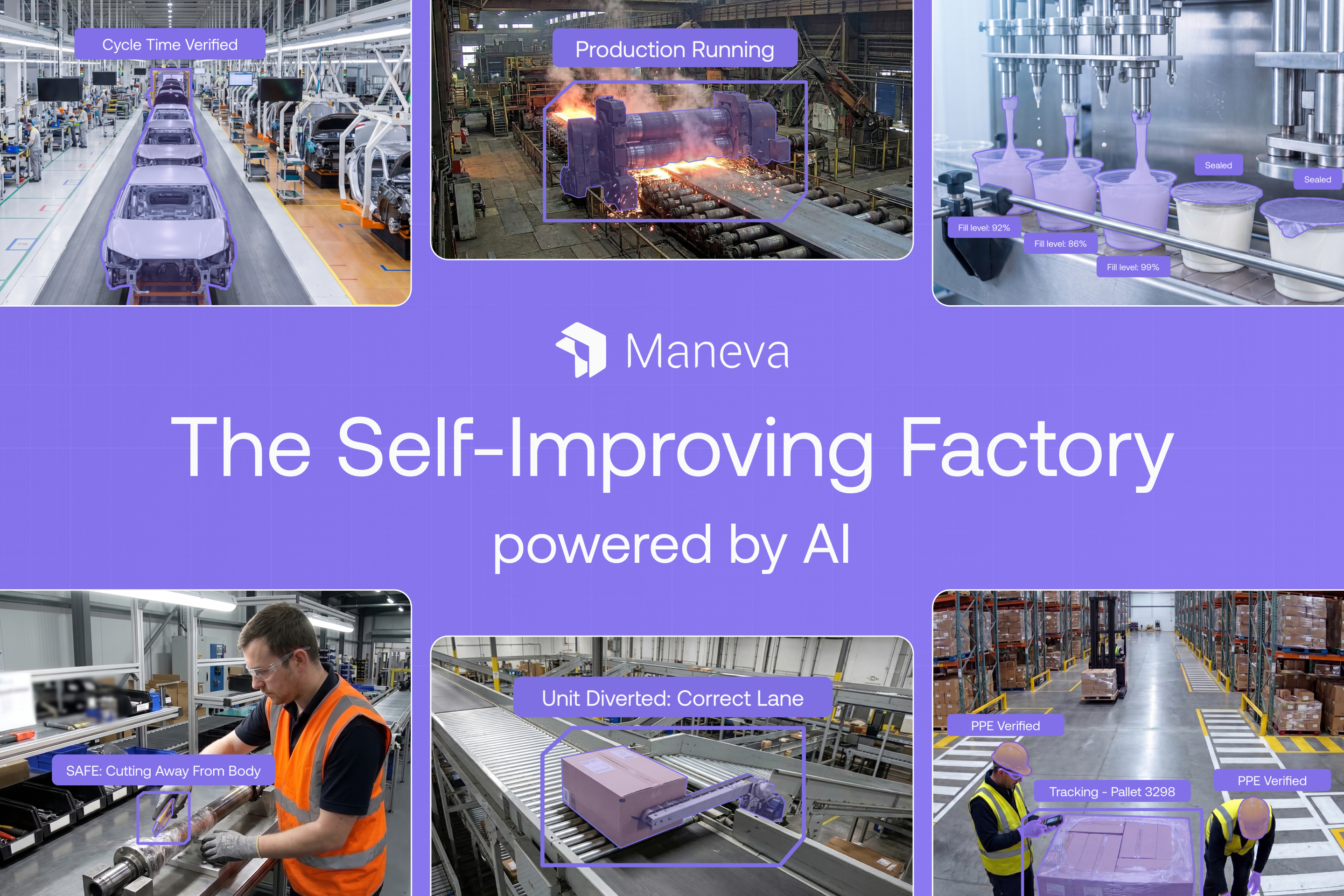
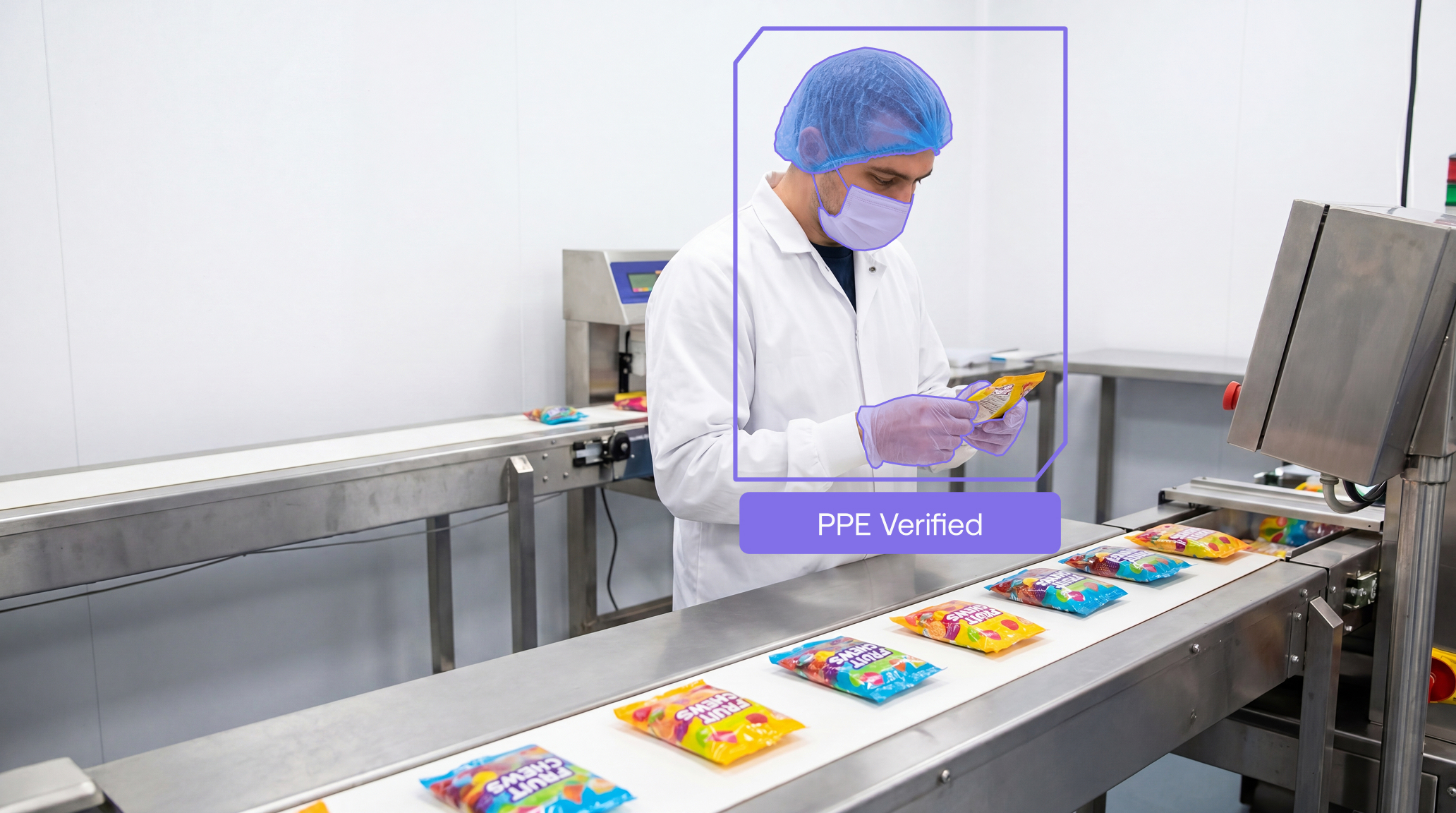
Maneva's ALIS (AI Line Supervisor) agent is purpose-built for people and safety monitoring. Rather than replacing the supervisors and safety professionals who run these programs, ALIS delivers what manual programs never could: AI factory safety monitoring that provides continuous, unbiased coverage across every zone, every shift, without fatigue.
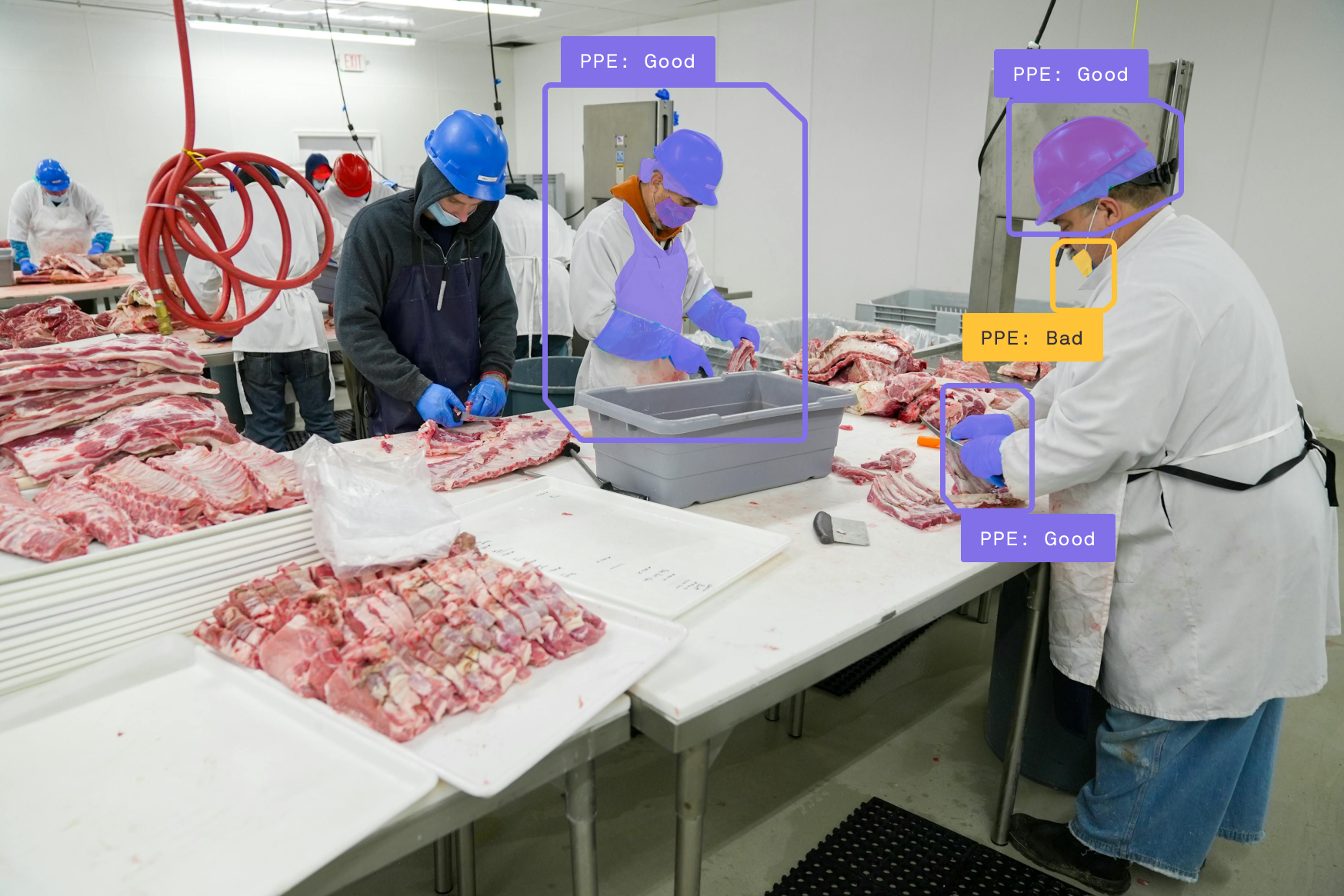
Working with your existing facility cameras, ALIS monitors the floor in real time and flags violations the moment they occur, not hours later in a supervisor's report. The shift it creates is from reactive documentation to proactive prevention, and from periodic audit data to continuous PPE monitoring across the entire operation.
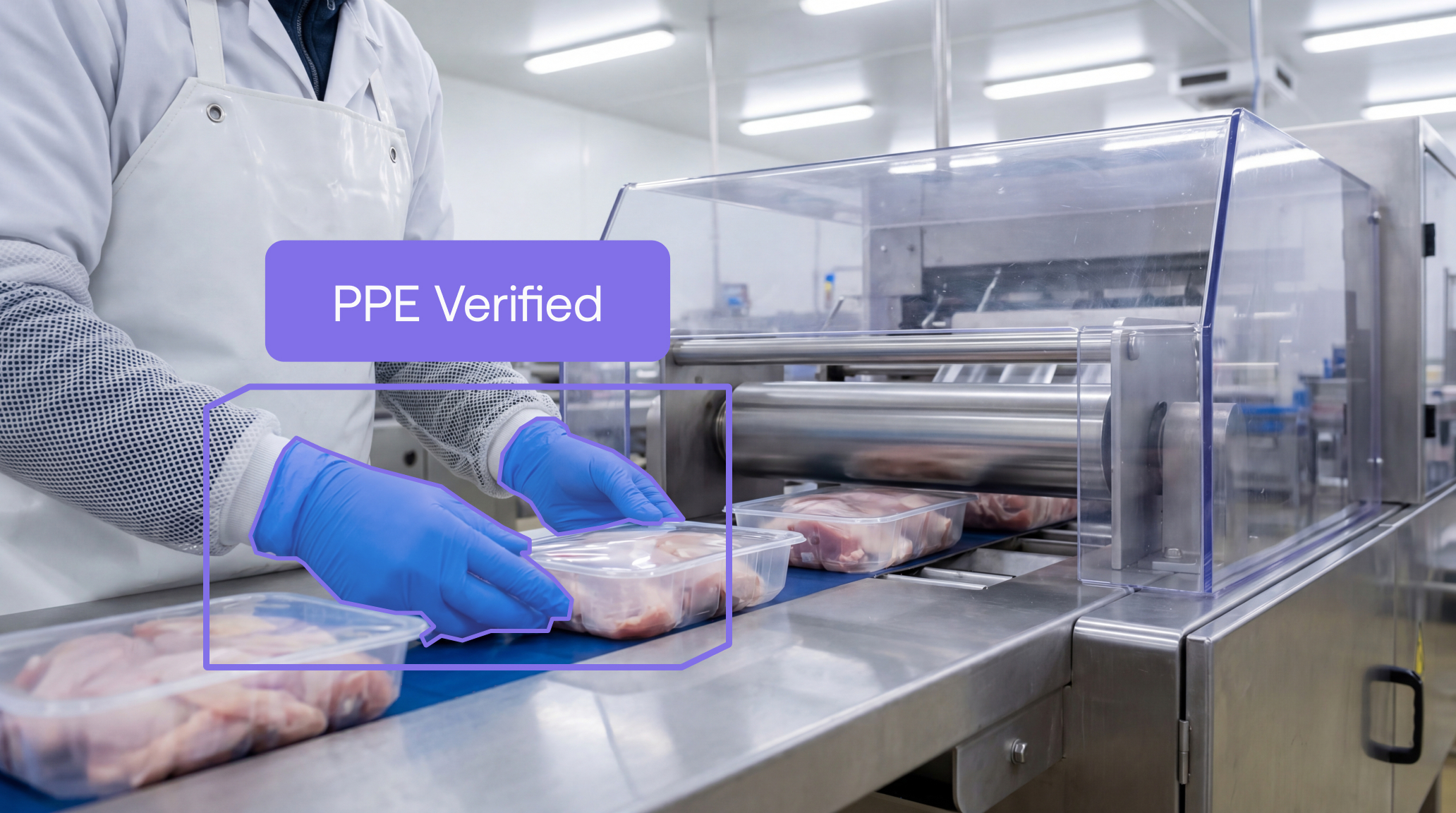
- Immediate detection, immediate response: ALIS identifies PPE violations, handwashing non-compliance, unauthorized access to danger zones, and slip and fall risks in real time. When a violation is detected, an alert is triggered immediately, before the risk becomes an incident, not after.
- Objective, continuous data: Because ALIS monitors every camera-installed zone simultaneously, the data it generates reflects what's actually happening on the floor, not what was observed during a scheduled walkthrough. Safety leaders can see patterns, prioritize risk areas, and make program decisions based on ground truth rather than incomplete audit logs.
- Focused safety conversations: Instead of spending time on the floor looking for problems, EHS teams can spend it driving improvements. ALIS identifies the specific zones, shifts, and behaviors driving the most risk, so coaching and intervention go where they matter most.
- Audit-ready compliance records: Every detection is automatically logged: timestamped, zone-specific, and complete. When a regulatory inspection or third-party audit requires evidence of your PPE program, the record exists without reconstructing anything from memory or manually compiled forms.
- Configurable to your facility's standards: ALIS is fully customizable. Whether the requirement is gloves in food handling zones, hard hats near heavy machinery, high-visibility vests in forklift areas, or masks in clean rooms, the AI learns your specific compliance standards and improves in accuracy over time.
The Impact in Practice
The gap between manual observation and AI-powered monitoring is not marginal. In facilities that have deployed continuous AI safety monitoring, the volume of violations detected compared to what manual checks captured tells the real story.
A peer-reviewed MDPI study on computer vision systems for PPE compliance monitoring in manufacturing documents how deep learning systems consistently outperform manual observation across detection rate, response time, and coverage. Manual programs tend to capture a fraction of actual non-compliance events: the ones that happen to occur when a supervisor is present and paying attention. AI monitoring captures the full picture.
That data doesn't just improve compliance rates. It changes how safety leaders prioritize resources, structure coaching, and build the case for program investment.
The broader shift is from a compliance culture driven by audit targets to one driven by actual risk reduction. When safety professionals have access to complete, unbiased data, the conversations on the floor change from 'were you wearing your PPE during the walkthrough?' to 'here's where the risk is concentrated, and here's what we're doing about it.'
Building a Smarter AI Factory Safety Monitoring Program
The goal of a PPE compliance monitoring program isn't documentation. It's prevention. And prevention requires visibility that manual programs, by their design, can't consistently deliver.
Start with your highest-risk zones, where PPE violations are most consequential and hardest to monitor manually. Map the gap between your documented compliance rate and what you'd realistically expect if you had continuous coverage on every shift. That gap is your baseline, and it's usually larger than any audit report suggests.
From there, the case for AI factory safety monitoring builds itself. The violations you're not catching aren't just a safety problem. In today's regulatory environment, with OSHA enforcement tightening, third-party audits becoming standard, and the cost of a single incident rising, they're a financial and operational risk that manual checks simply weren't designed to manage at scale.
The manufacturers building the most resilient safety programs right now aren't the ones with the most policies. They're the ones with the most complete picture of what's actually happening on their floor, and the tools to act on it before it becomes a statistic. If your facility is ready to map that gap, book a demo at maneva.ai and see what continuous PPE compliance monitoring actually looks like on your floor.