
What a Single Defect Costs When It Reaches Customers: The Numbers Manufacturers Don't Want to See
The most expensive defect is not the one you catch at the line. It is the one a customer finds first. In 8 years running Kaizen events, conducting SQF audits, and leading quality programs across food and CPG facilities, that is the number I have seen manufacturers consistently underestimate. The rise of machine vision defect detection and AI quality control manufacturing technology has finally given production teams a way to close that gap. But the business case starts with understanding what it actually costs when you do not.
The Iceberg Nobody Budgets For
When a recall hits, finance teams move fast on the visible costs: regulatory fines, logistics, destroyed inventory. What almost never makes it into the model is everything underneath. And that is where the real damage lives. According to the GMA and Food Marketing Institute, the average food recall costs $10 million in direct costs alone, with indirect costs driving the total significantly higher.
Brand equity erosion: Studies in food and beverage show that a single publicized recall can reduce brand value by 3-5%. For a $500M brand, that is $15-25M gone and it compounds over quarters.
Customer churn (permanent): 59% of consumers who experience a product quality issue switch brands permanently. In a category with 3-5% net margins, you are not just losing a customer. You are losing a decade of margin contribution. A 2022 NielsenIQ survey found that 68% of consumers would stop purchasing a brand after a food safety incident, and 44% would spread negative word-of-mouth.
Retailer relationship damage: Retailers have their own reputations to protect. A defect that reaches shelf, especially in fresh produce or refrigerated goods, often triggers chargebacks, delistings, or punitive audit requirements that last years.
Regulatory and legal exposure: FDA enforcement actions, class action suits, and consent decrees do not just cost money. They consume executive bandwidth for years and signal vulnerability to activist investors.
Workforce morale and turnover: This one surprises executives. When a quality failure hits the news, frontline workers feel it. I have seen team engagement scores drop 10-15 points at facilities linked to publicized incidents. Replacing a trained line worker costs $3,500-$5,000.
Why Human Inspection Alone Cannot Close This Gap
I want to be clear: I have enormous respect for quality technicians and line inspectors. Their expertise is irreplaceable for complex judgment calls, supplier negotiations, and root cause analysis. But the math on visual inspection is unforgiving.
A skilled human inspector, operating at full focus, can reliably detect roughly 80-85% of visible defects on a standard production line. By hour four of a shift, cognitive fatigue drops that figure closer to 60-65%. On a line running 400 units per minute, that is hundreds of missed defects per hour, every hour, every shift. Maneva's AI models achieve up to 99.9% accuracy — inspecting 100% of units at full production speed, 24/7, without the fatigue-driven drop-off that makes human inspection fundamentally unreliable at scale.
This is not a people problem. It is a physics problem. The human visual system was not designed to track high-speed conveyor belts for 8 hours at a time. No training programme, incentive scheme, or staffing model changes that fundamental constraint.
What Machine Vision Defect Detection Actually Sees
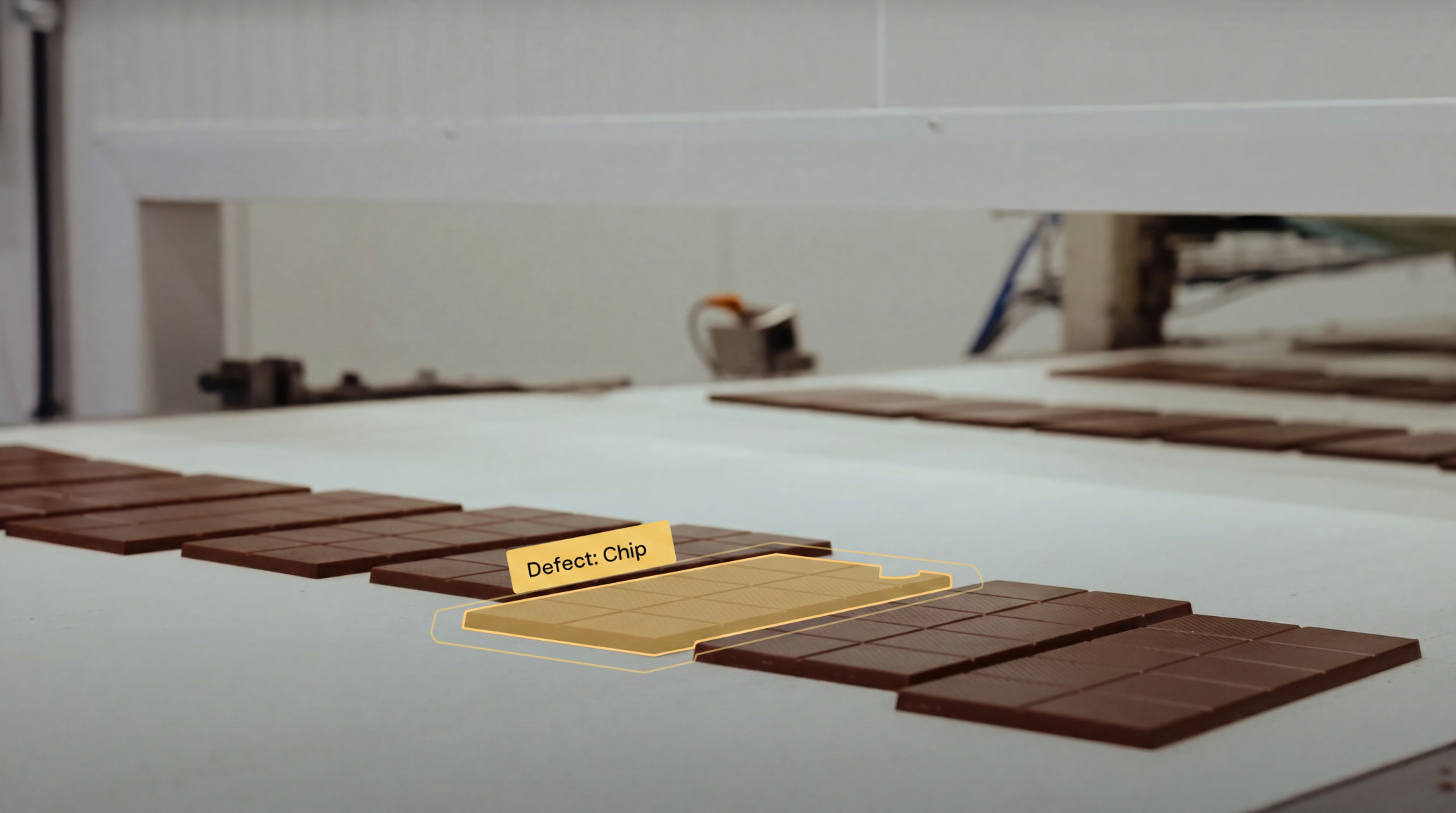
This is where I have seen the most meaningful shift in my recent work. AI-powered quality control systems, particularly those built on machine vision defect detection, are not trying to replace the judgment of an experienced QA manager. They are solving a different problem: consistent, tireless visual inspection at machine speed.
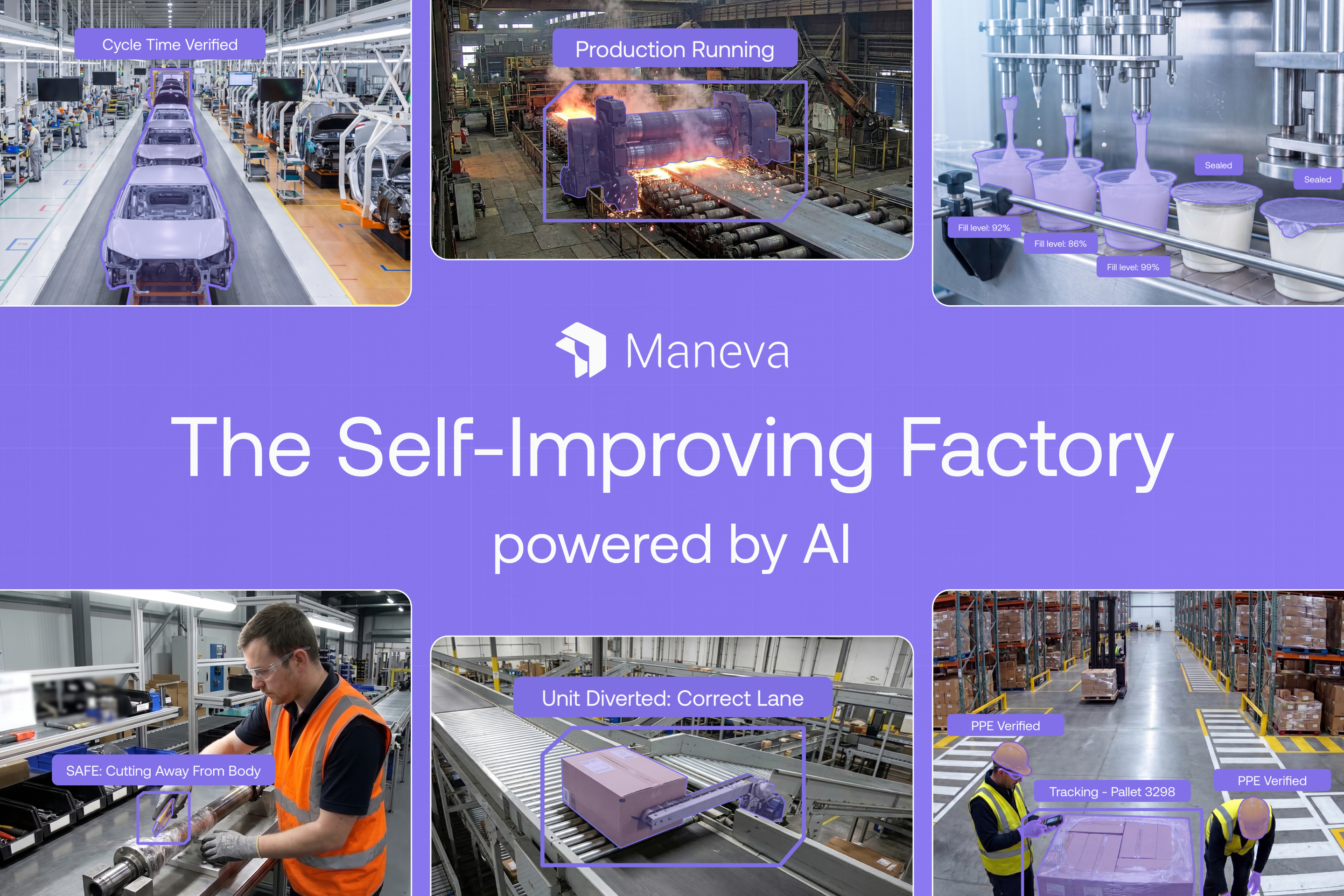
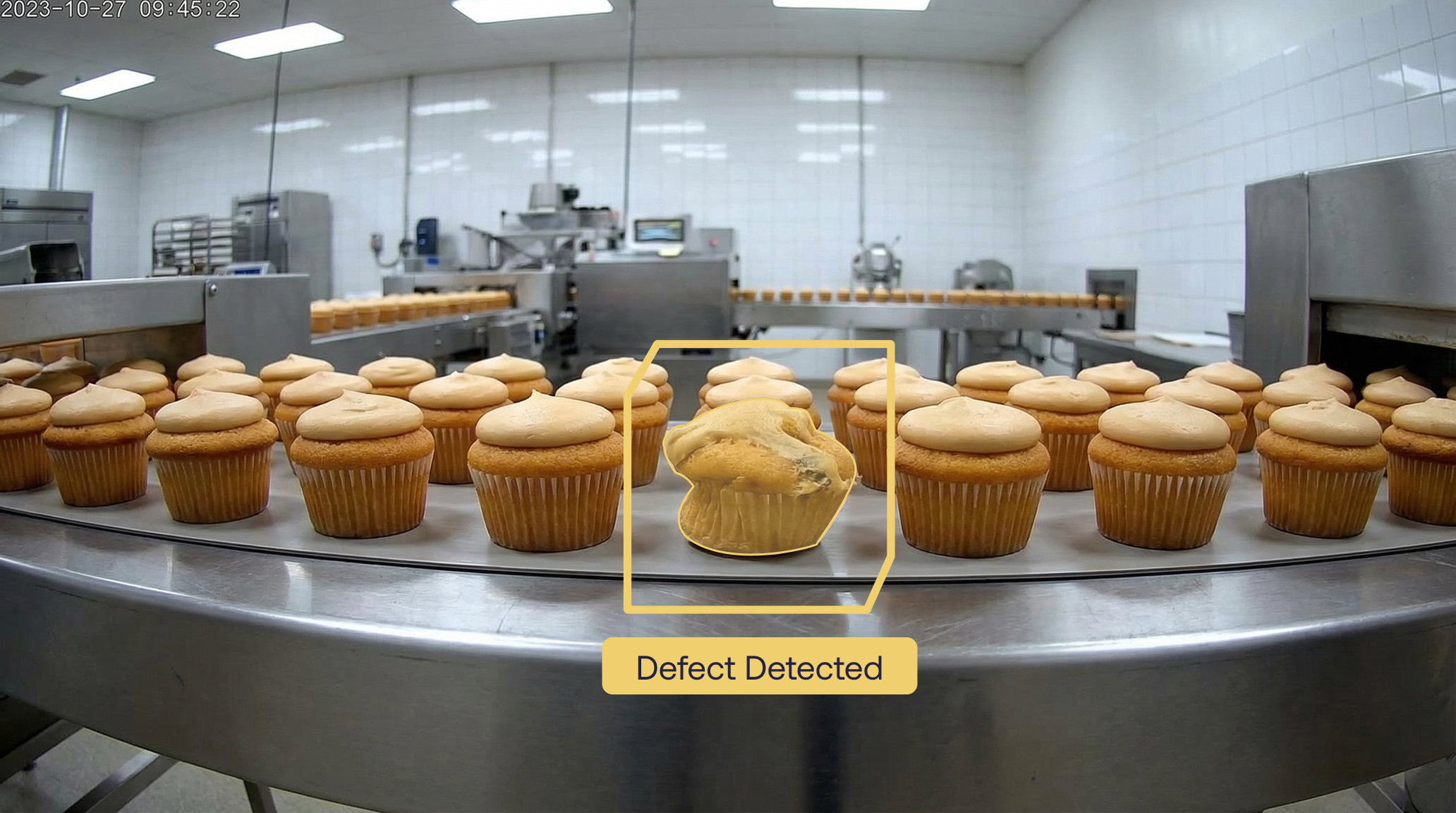
This is where AI quality control manufacturing technology closes the gap that human inspection cannot. Maneva's VITA (Video-to-Action AI) agent uses machine vision defect detection to inspect every single unit on the line in real time, at production speed, without fatigue. Unlike manual spot checks or rigid rule-based systems, VITA learns from real production data and adapts over time. It works with your existing factory cameras, meaning no expensive hardware overhaul and no disruption to the line.
What VITA catches that human inspectors miss:
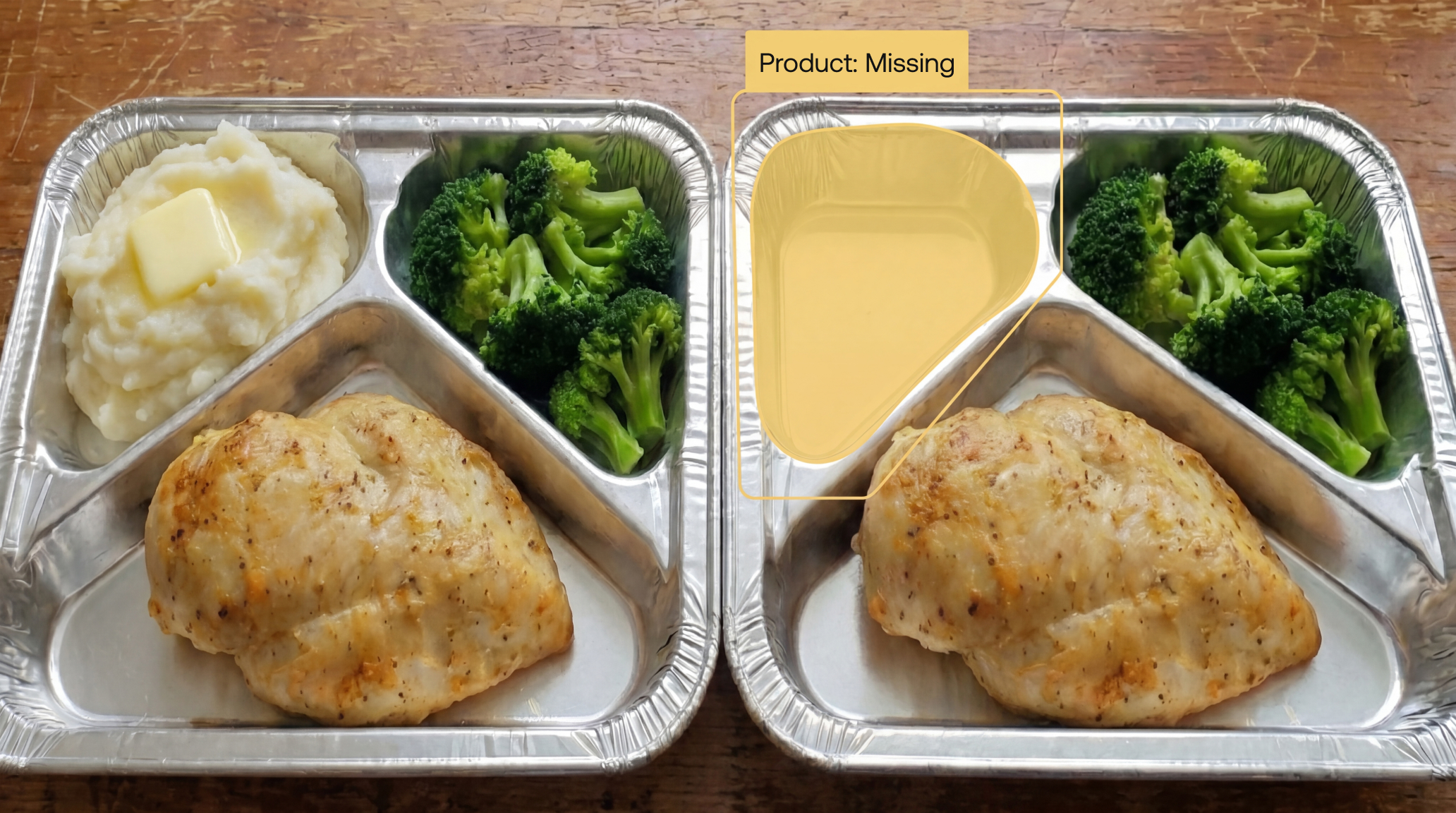
- Surface defects: scratches, cracks, dents, and contamination invisible at production speed
- Packaging failures: broken seals, missing labels, and fill level inconsistencies
- Foreign object contamination: identified before it moves downstream
- Subtle pattern shifts: like a gradual change in seal integrity across a time window, that signal a process problem before it becomes a recall
But machine vision defect detection is not just about catching what is wrong. It is about building the data infrastructure underneath your quality programme. Every unit VITA inspects is logged at the unit level, not the batch level. When a complaint comes in, you have a complete visual record, not a reconstruction of what might have happened. Defect trends surface proactively, so your team is responding to data, not reacting to customer calls.
In practice, facilities using AI quality control manufacturing solutions like VITA have documented the rate of defective products reaching customers dropping by 60-80% in the first 6 months. That translates directly into fewer complaints, fewer chargebacks, and most critically, fewer of the scenarios described above.
The ROI Conversation Executives Need to Have
When I model the business case for AI quality control with manufacturing leadership, I always anchor on the cost of a single escape event, not average defect rates. Because a single batch that reaches retail in a high-profile failure scenario can wipe out 12-18 months of cost savings from any other CI initiative on that line. The GMA/FMI study confirms that more than 50% of recall respondents reported costs in excess of $10M, with 23% reporting costs over $30M and 9% over $50M. 81% described the consequences as either significant or catastrophic.
The question is not 'Can we afford to invest in AI quality control?' It is: 'What does one bad quarter of escapes cost us, and how does that compare to the annual cost of preventing it?'
In my experience, that math typically resolves in favour of investment within 6-9 months of deployment, without even accounting for the OEE uplifts and scrap reduction that AI-powered quality systems generate as secondary benefits.
A Factory Where Defective Products Never Reach Your Customers Is Possible Now
Every shift that runs without AI quality control manufacturing in place is a shift where defective products can reach your customers undetected. That is not a quality statistic. It is a financial exposure, one that compounds quietly until it does not.
Maneva's VITA agent gives manufacturers the visibility to change that. Not someday, not after a major capital project. Starting with your existing cameras, on your highest-risk line, in weeks. The manufacturers we work with do not wait for a recall to make the business case. They build it from the data they already have, and then they act on it.
If you are ready to see what your line is actually producing and what it is costing you to find out the hard way, book a demo at maneva.ai and find out what VITA sees that your current process is missing.


