

Real-Time Defect Detection on the Conveyor Belt: Why Your Line Is Missing Defects: And What AI Sees That Humans Don’t
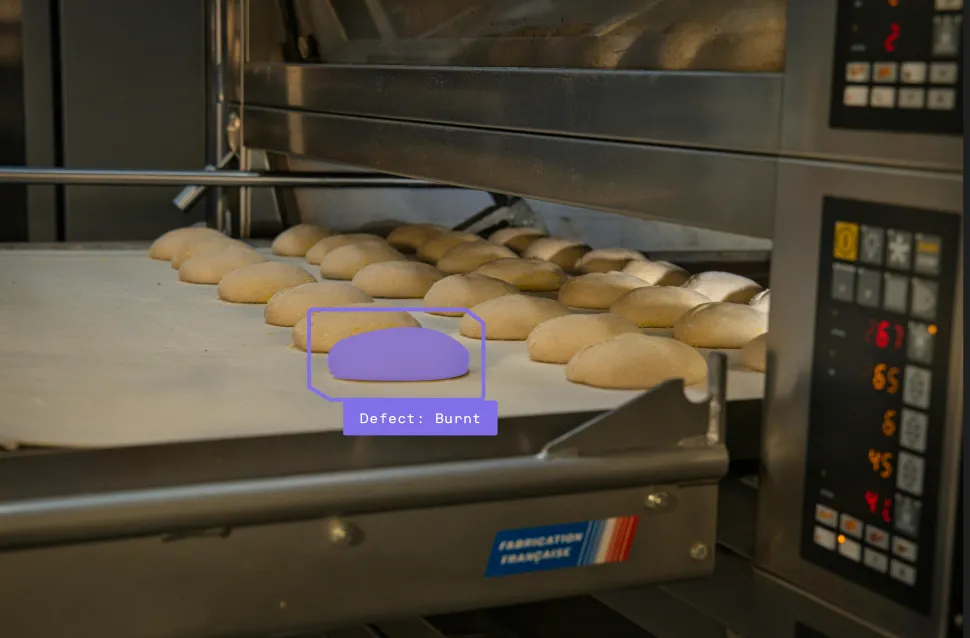
In my 30 years of food and beverage manufacturing, one thing I realized is the conveyor belt is the “quality pulse” of the operation. Yet even with dedicated operators stationed along the line, real-time defect detection remains the single biggest gap; defects always slip through. It isn’t a lack of effort; it’s a matter of limitations. While working with Video AI over the last few years, I found that when it comes to high volume production, the human eye is simply outmatched by the speed and consistency of real-time defect detection. This is where Maneva AI's ecosystem, and specifically the VITA (Video to Action) application, transforms the production floor into an automated powerhouse.
Why We Miss Defects
Human operators are remarkable at complex problem-solving, but they are biologically ill-equipped for repetitive, high-speed visual inspection. Research suggests that human inspection accuracy typically tops out around 80% to 90% under ideal conditions. Over a standard shift, that number drops significantly due to:
Visual Fatigue: The “eyestrain” of watching thousands of identical items leads to “change blindness,” where the brain stops registering subtle anomalies.
Micro-Lapses: A blink or a momentary distraction takes only a fraction of a second, but at high belt speeds, that represents several feet of uninspected product.
Subjectivity: Inconsistency between operators leads to uneven quality standards, a problem solved only by the cold, hard logic of machine vision defect detection.
VITA: The AI Advantage
The VITA application by Maneva AI doesn’t just “watch” the line; it understands it. By leveraging Video-to-Action AI, VITA acts as a tireless, 24/7 quality assurance lead that operates with a level of precision the human eye cannot replicate.
How Much More Accurate is AI?
While humans struggle to maintain up to 90% accuracy, VITA pushes detection toward 99% and beyond. By utilizing real-time defect detection conveyor belt AI, VITA processes frames at a rate faster than the human brain can register, identifying defects in milliseconds.
What VITA Sees That Humans Miss
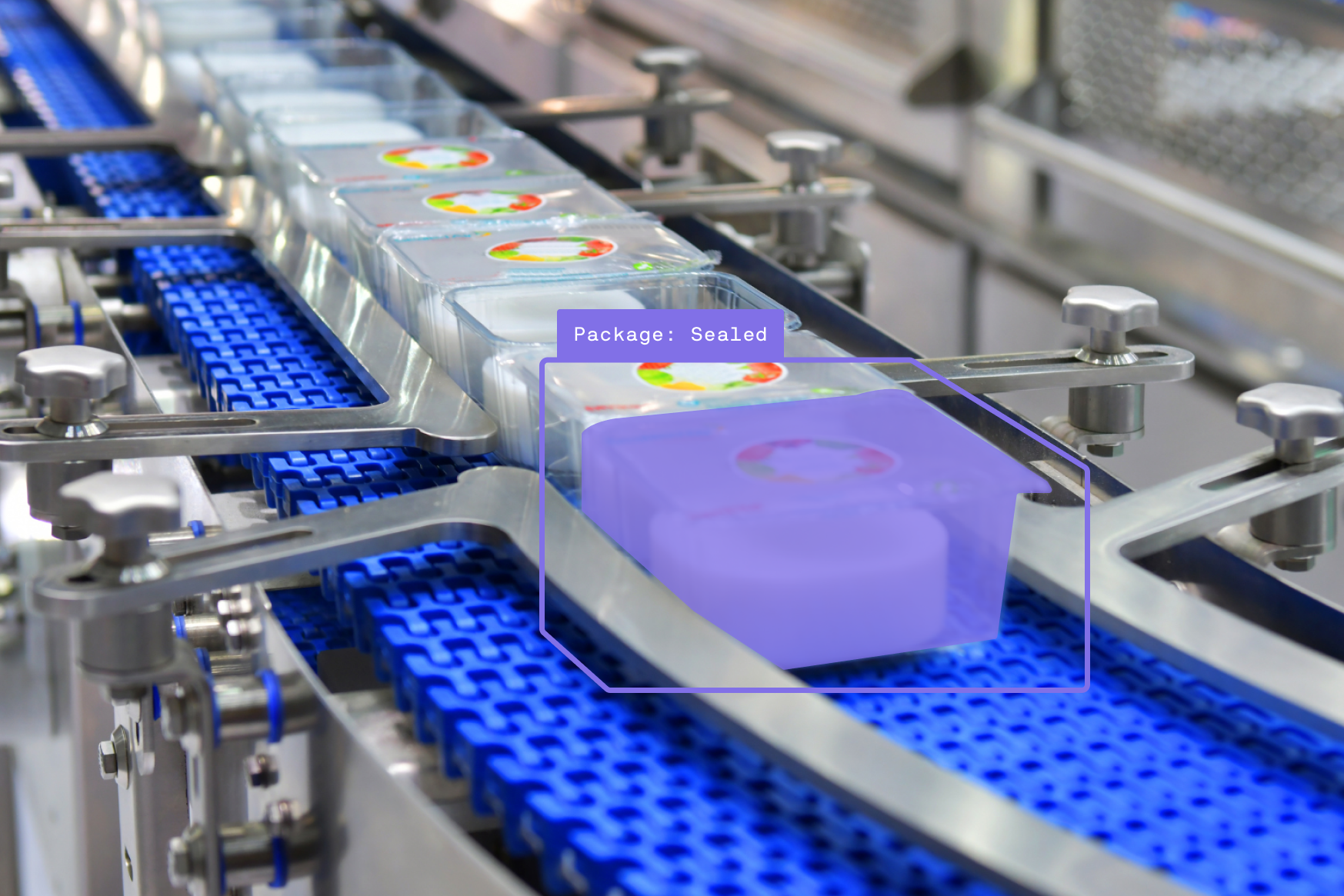
Traditional quality control relies on the human eye, limited by fatigue, subjectivity, and biological thresholds. VITA operates beyond these limitations, capturing data points that are physically impossible for a person to register in a high-speed manufacturing environment. Here’s what it can see:
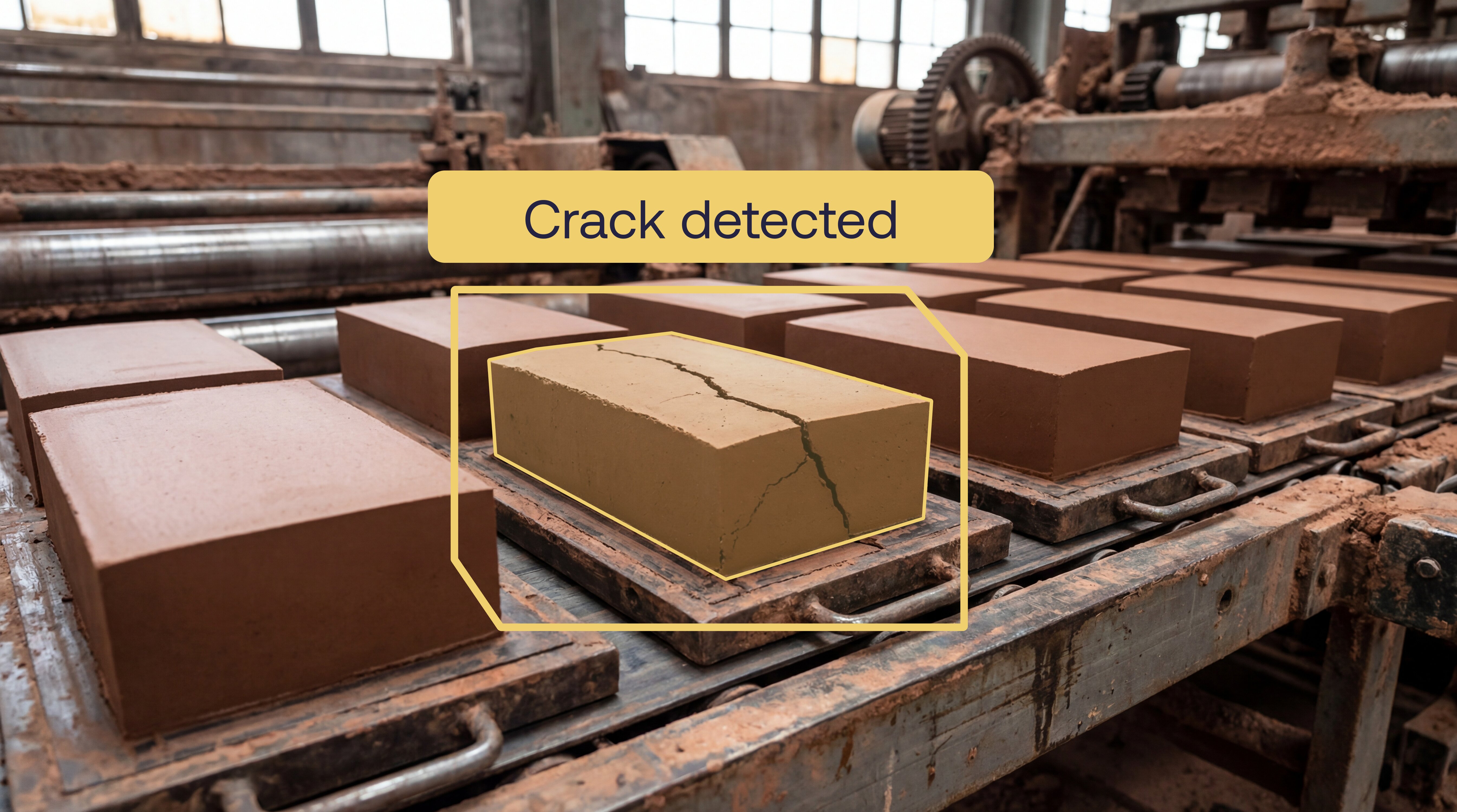
Sub-millimeter Cracks: VITA detects micro-fissures in packaging or products that are invisible to the naked eye. While a human inspector might see a pristine surface, this AI inspection system identifies structural compromises at the microscopic level, preventing leaks or recalls before the product leaves the facility.
Color Variance: Human color perception is highly dependent on ambient lighting and individual biology. VITA detects minute shifts in product hue that indicate critical issues like temperature fluctuations during processing or subtle ingredient imbalances. This ensures brand consistency across every batch.
Foreign Objects: The system excels at identifying non-conforming materials that “camouflage” by blending into the product’s texture or color profile. This is a specific area where traditional automated quality inspection once struggled, but where Maneva’s AI now provides a definitive safety net.
Size Differentials: VITA identifies minute volumetric inconsistencies, down to a single percentage point. By monitoring precise dimensional tolerances, the AI quantifies deviations that human perception simply cannot, ensuring every component fits perfectly within the specified assembly or packaging parameters. It’s not just inspection, it’s more
While the human eye sees a finished product, VITA sees a stream of continuous, multidimensional data. This transition from visual observation to Video-to-Action AI allows for:
Instantaneous Feedback: Actions are triggered the millisecond a deviation is detected.
Trend Analysis: Identifying if a “passable” variance is actually the beginning of a downward trend in machine performance.
Total Traceability: Every micro-fissure or color shift is logged, creating a digital twin of your quality standards.
Creating Tangible ROI
The “Action” in Video-to-Action is where the true value lies. VITA doesn’t just flag a problem; it triggers a response and builds a continuous loop of operational intelligence. This creates a massive return on investment (ROI) through four primary channels:
1. Waste Reduction and Yield Optimization
When a defect is caught early, you prevent a “domino effect.” For example, if VITA detects a misaligned container at the start of the line, it can trigger an automated arm to remove it before it jams the downstream labeler. This saves the product, the packaging material, and most importantly, prevents the cascading downtime of the entire line.
2. Protecting Brand Integrity
One missed defect can lead to a costly product recall. Real-time defect detection provides a visual library for every item on the line, ensuring that only 100% compliant products reach the customer. This level of scrutiny builds a “digital fortress” around your brand’s reputation.
3. Labor Reallocation
Instead of forcing skilled workers to perform mind-numbing visual inspections, AI frees them for high-value tasks that require human judgment and creativity. Transitioning to advanced machine vision defect detection improves plant morale and reduces the high costs associated with turnover and human error.
4. Data-Driven Continuous Improvement
Perhaps the most significant long-term ROI comes from the ability to turn visual data into a roadmap for excellence:
Establishing the Baseline: Before any process changes are made, VITA, as a dedicated manufacturing AI software platform, collects high-fidelity data to establish an objective “ground truth.” This removes the guesswork and anecdotal evidence often found in traditional manufacturing environments.
Precision Benchmarking: You can pinpoint exactly where, when, and why deviations occur, whether it's a specific shift, a particular raw material supplier, or a single machine component starting to wear.
Measuring Impact: Once a change is implemented, such as a new belt speed or a different ingredient mix, VITA provides immediate, quantifiable feedback. You can compare post-change performance against your baseline to verify improvement in real-time, allowing for rapid iteration and “Kaizen” style micro-improvements.
The Future of the Production Floor
The conveyor belt is the key area in the production process for quality control but needs a tool for data collection for improvement and assisting labor. By integrating VITA applications, manufacturers can move from a reactive, “hope we caught it” mindset, to a proactive, data-driven culture of excellence.
In an industry where margins are thin and the cost of error can be astronomical, the ability to catch what the human eye misses is your greatest competitive advantage. Maneva’s AI turns your facility’s greatest overhead, specifically unseen waste, into your greatest opportunity for growth.
It’s time to stop looking at your process and start seeing the results.