
Stop Massaging OEE: Measure the Whole Truth or Miss the Real Opportunity
Overall Equipment Effectiveness can be one ofthe most powerful indicators in manufacturing, or one of the most misleading.When companies exclude planned downtime, changeovers, scrap, lack of demand, orshort stops, OEEstops showing the real performance of an asset and becomes a customized comfortmetric instead. This article makes the case for a more honest approach: keepthe full data visible, make every exception explicit, and use an AI advisorsuch as the Maneva Orchestration Platform to reduce bias while preserving theinformation leaders need to find the improvement opportunities that convenientdefinitions tend to hide.
Why OEE can mislead as much as it helps
OEE can be a fantastic indicator or a terribleone. It can help you improve your process, or it can fool you completely, andyou may not even realize which one is happening. On paper, the OEE calculation has ashort, simple definition: availability multiplied by performance multiplied byquality. But the moment you start debating what to include or exclude, you havealready started to compromise it. Every exclusion feels reasonable inisolation, a changeover here, a quality hold there, but each one quietly narrowswhat the number represents, until it stops describing your equipment and startsdescribing your assumptions.
A simple analogy: your investment return withexceptions
Imagine you go to the bank, and your managerpromises you a 3% risk-free investment. You think, that's fantastic, and sinceit sounds correct, you accept the deal. A year later, when you come to collectyour return, you discover you only earned 1.5%.
When you complain, your manager explains, withthe most satisfied expression you have ever seen, that the rate was indeed 3%per year, but the bank doesn't operate on weekends or national holidays, hetook a month of vacation, and 10% of the remaining time the branch had nocustomers at all. Add it up, and barely half the days were actually left foryour money to grow. But during those days, it truly was 3% per year.
The danger of excluding reality from the metric
By now you see where this is going. OEE issupposed to measure the overall effectiveness of your equipment, not itseffectiveness only on the days you happened to choose. It exists to tell youhow much return your capital investment is generating relative to its absolutemaximum potential. Every time you discount planned downtime, lack of sales, orany other exception, what's left is a distorted number that only makes senseinside your own company, on your own terms, and buried inside that distortionare the improvement opportunities you can no longer see.
When definitions hide the factory floor
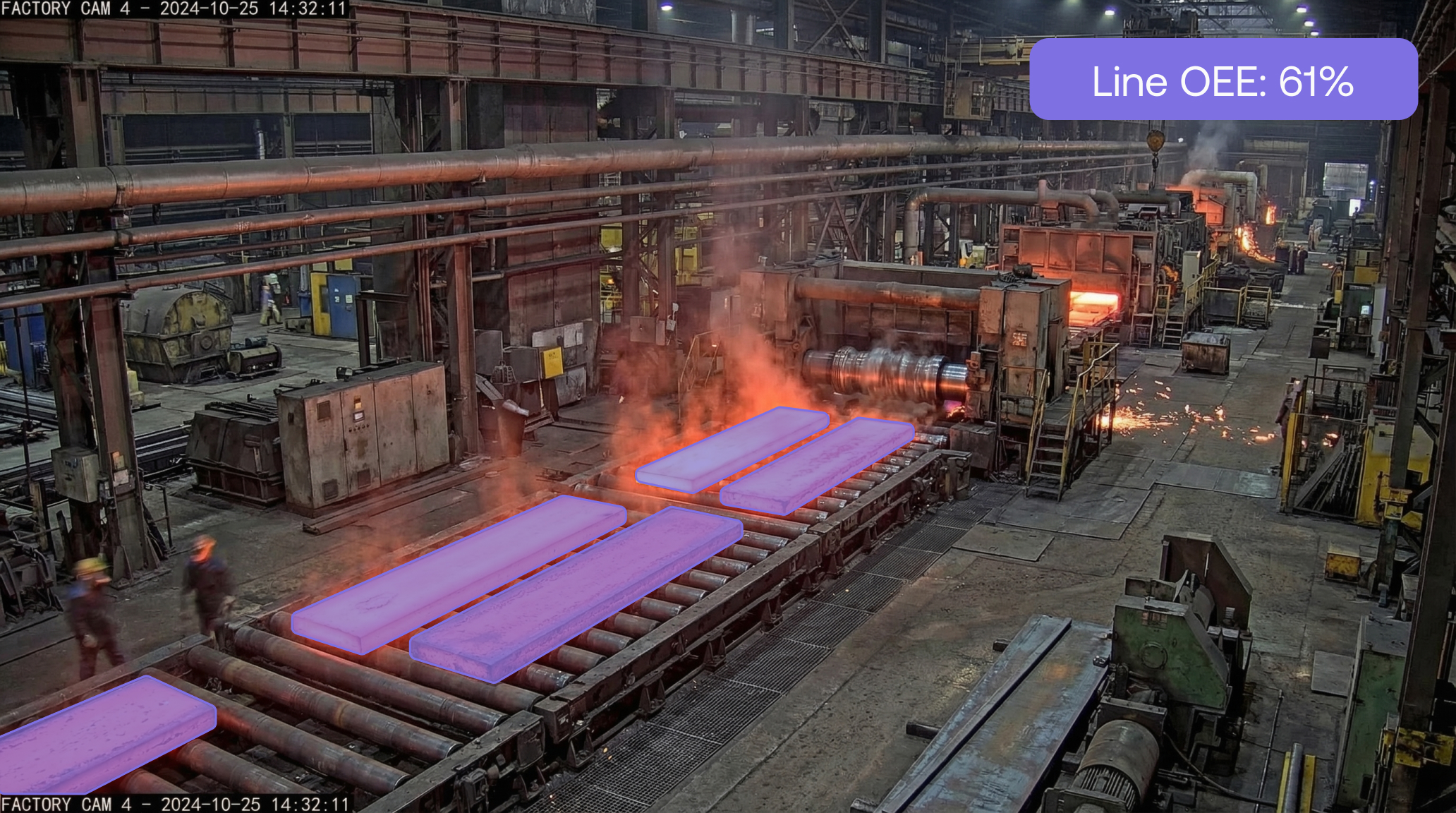
I remember walking a customer's plant flooronce and seeing scrap everywhere. I asked him: what's your OEE? He answeredimmediately: 90 to 95%. So I asked a different question: what's your scraprate? He said 50%, but they had agreed to exclude rejects from the OEE calculation. I havemet another customer who excluded any stoppage shorter than ten minutes, andanother still who excluded every changeover entirely. Each exclusion, on itsown, seemed defensible. Together, they made the number meaningless.
That is why I consider myself an OEE purist:nothing should be excluded. Vorne, whose world-class OEE benchmark sits around 85%, defines the metric against the full calendarof potential production time for exactly this reason. You are free to disagree,and most people do, especially when OEE feeds directly into their bonus.
But the real problem isn't the definitionitself; it's that humans are emotional beings, unable to stay fully unbiasedand fair, so our own definitions start to drift over time.
How an AI advisor keeps you honest
An AI advisor such as the Maneva OrchestrationPlatform can solve this problem, partially or completely. It is bias-free, nomatter the day, and no matter how good or bad the result looks. Moreimportantly, whatever exceptions you want to apply to your OEE calculation, youhave to make them explicit, and those rules then get applied consistently,everywhere, every time.
That might sound like a small improvement, butit is a significant one. Even if you decide to heavily massage your OEE so yourChristmas bonus is safe, you still have to spell out those rules to the AI. Itwill report the OEE the way you asked for it, but it will also keep track ofevery number you pushed under the rug, so the day you finally decide to tacklethe problems you have been ignoring, all the data is already there and readyfor you.
The Orchestration Platform goes a step further:it acts as a real advisor, proactively challenging you on the issues you havebeen ignoring and pointing out the gains you are leaving on the table. This isthe hidden-data-gap problem Carl Tokarek described in what your OEE score is nottelling you, nowsolved by keeping the complete data set preserved underneath whateverdefinition you choose. You get the best of both worlds: the freedom to definethe rules that govern your OEE, and the certainty that nothing gets quietlyburied. That is very different from a "humanized" interface, becausehumans tend not to keep track of the metrics nobody asked to see.
Conclusion
OEE was never meant to be a comfort metric. Itwas designed to answer one honest question: how much value is your equipmentactually returning on the investment you made in it? Every exclusion you allow(planned downtime, changeovers, scrap, short stops) buys short-term peace ofmind at the cost of long-term visibility. The opportunities do not disappearwhen you exclude them from the calculation; they simply move out of view.
You do not have to give up the flexibility todefine OEE in a way that fits your business. What you do have to give up is theillusion that convenient definitions come without cost. Tools like the ManevaOrchestration Platform let you keep both: the freedom to set your own rules,and the certainty that nothing gets quietly buried. Measure the whole truth,keep every exception explicit, and the real opportunities will finally havesomewhere to be found. Book a demo at maneva.ai to see honest OEE on your own line.