.png)
Robert Scoble has interviewed the people building the future of technology for three decades. When he sat down with Maneva CEO Rae Jeong on UNALIGNED, the conversation went somewhere most AI podcasts never go: the actual factory floor. Not the demo. Not the pitch. The reality of what it takes to deploy video to action AI in a facility where a line stoppage costs $50,000 a minute and the people running it have been doing it their way for 20 years.
1. Global manufacturing is running at 60% efficiency. That gap is worth $10 trillion a year.
Rae put a number on the problem that most manufacturing leaders already feel but rarely quantify. Global OEE (Overall Equipment Effectiveness), the standard measure of manufacturing efficiency, sits at around 60% worldwide. World-class is 85%. That 25-point gap, applied across every factory on earth, represents roughly $10 trillion in lost output every single year.
"That gap is $10 trillion disappearing every year. And closing it is not about a blackout factory with no one in it. It is about the operations and people already there, just without the mistakes." — Rae Jeong
The point he made that stopped the conversation: world-class OEE does not mean lights-out automation or zero headcount. It means the same people, the same machines, the same factory making fewer mistakes, catching more problems before they escape, and keeping the line moving. Unplanned downtime, product defects escaping to customers, and workplace safety incidents are not inevitable. They are gaps. And the technology to close them exists now.
2. “If you can see it in a video, our AI can understand it and act on it.”
That single line from Rae is the clearest explanation of what makes video to action AI manufacturing different from every previous generation of AI factory floor technology. Traditional machine vision systems are brittle: they require controlled lighting, fixed conveyor colours, and custom setup for every product variant. Maneva’s AI learns from video the way a human does, from real data, in the real environment, adapting as conditions change.
What that enables in practice:
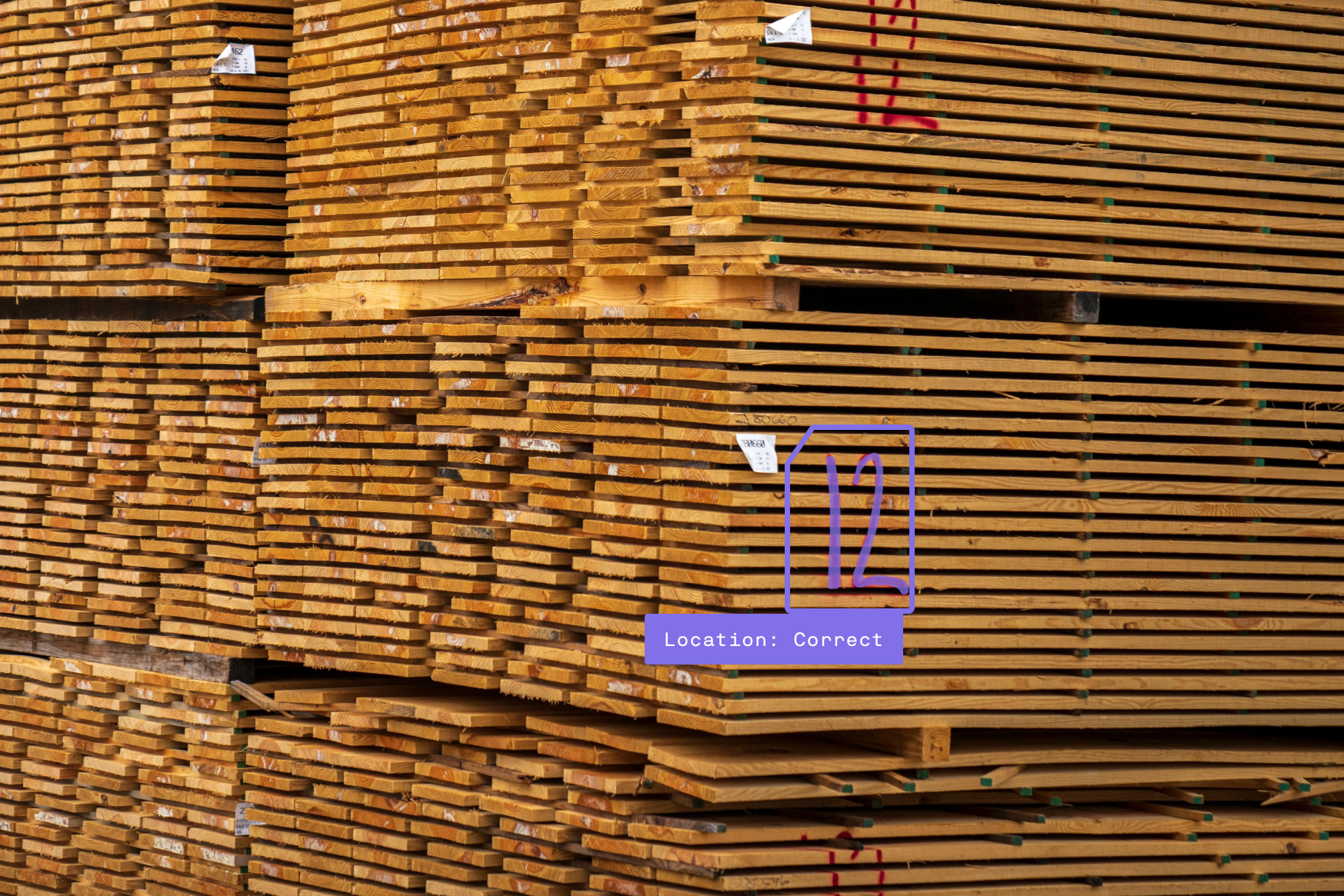
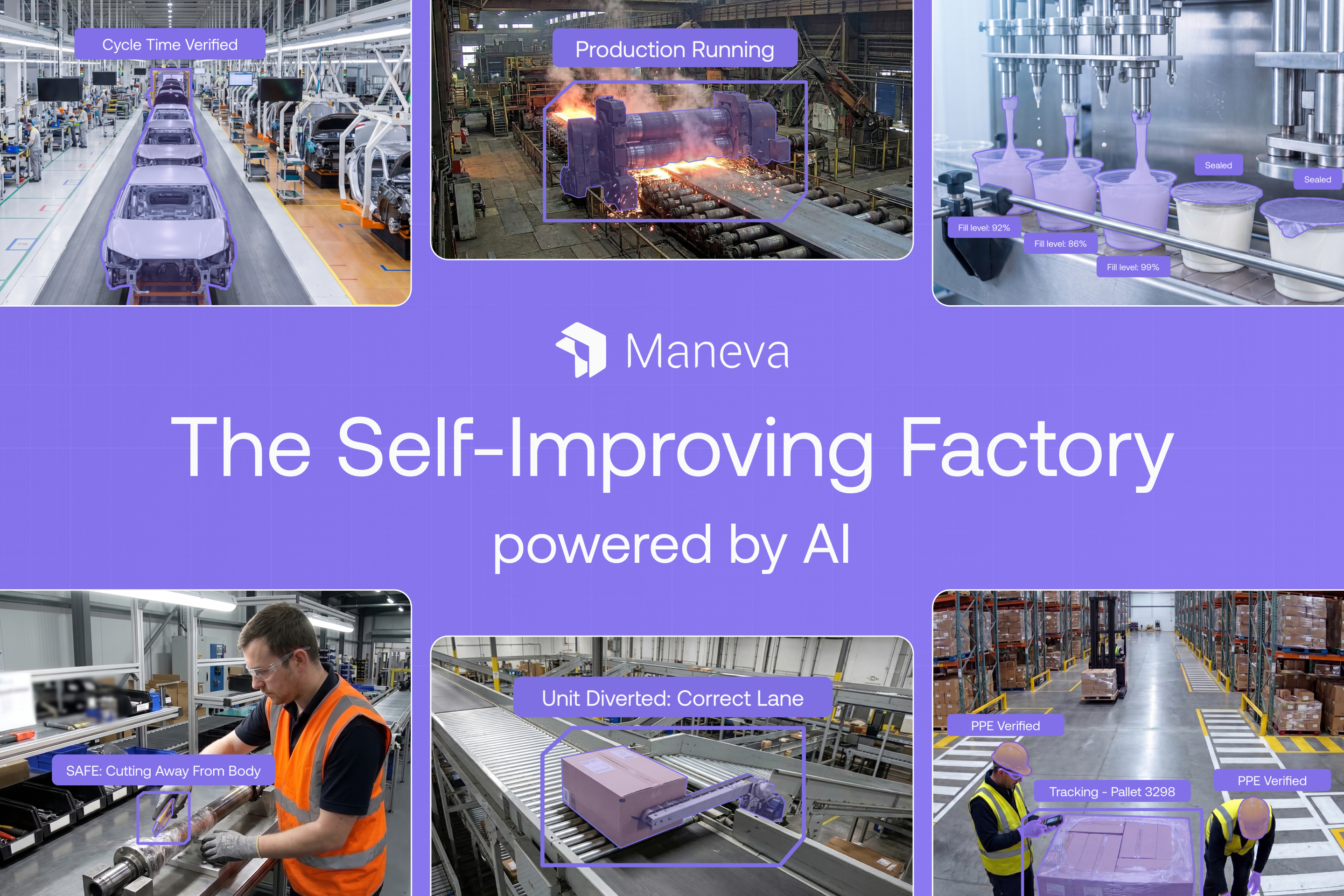
- Quality control: 100% of units inspected at line speed. 99.9% model accuracy. No fatigue, no shift changes, no coverage gaps. Defect detection happens at every unit, every shift.
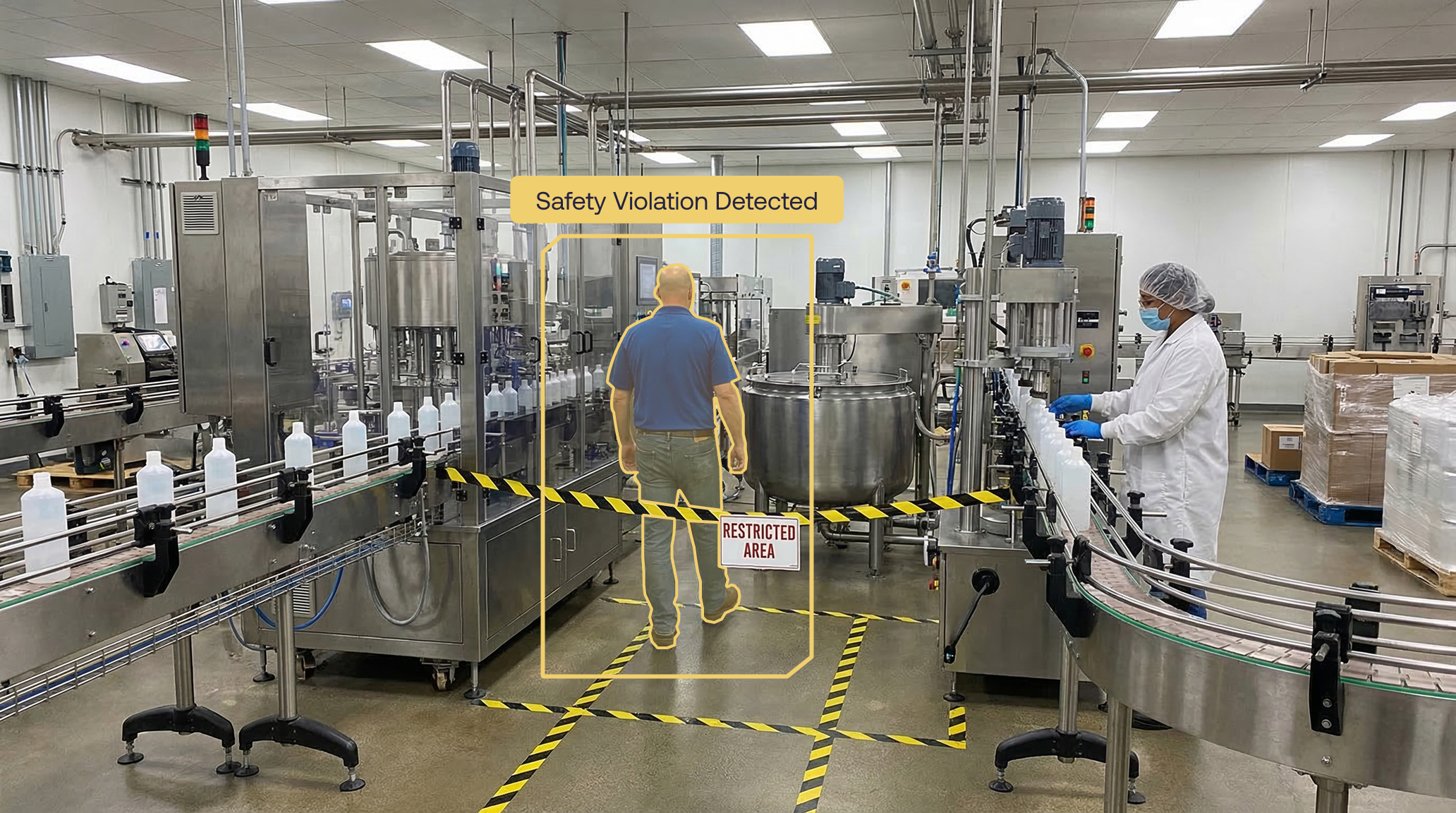
- Worker safety monitoring: ALIS detects hand proximity to dangerous machinery, PPE non-compliance, and unauthorized zone access and triggers a local alert before an incident, not a report after.
- Reducing unplanned downtime: VITA identifies early failure signatures in equipment, jams, process drift, misfeeds, before they stop the line. Up to 16x increase in production uptime documented across deployments.
- Production output: ALIS deployments have delivered up to a 10% increase in total output through improved worker performance. The AI carries the monitoring; the people drive the improvement.
3. Maneva works with any camera. Including ones that see through plastic.
One of the most surprising moments in the conversation came when Rae described what Maneva’s AI factory floor technology actually connects to. Most people assume AI quality inspection means a standard RGB camera on a conveyor belt. The reality is considerably more sophisticated.
Because Maneva is hardware agnostic, VITA plugs into whatever camera the facility already has or needs. That includes regular RGB cameras, depth cameras that capture three-dimensional spatial data, and short-wavelength cameras that see through plastic to check seal integrity from the outside. For high-precision applications, Maneva supports hyper-resolution setups where a single surface area needs to be checked for defects smaller than a millimetre, requiring cameras producing up to a million by a million pixels of data per frame.
“We are hardware agnostic. If you can see it in the video, our AI can understand it and act on it.” — Rae Jeong
No custom lighting. No changes to your conveyor. No infrastructure overhaul. Traditional machine vision inspection systems used if-then logic built around specific colours, controlled environments, and fixed product types. They break the moment anything changes. Maneva’s models learn from real video in real conditions and improve over time. The factory does not have to change for the AI. The AI adapts to the factory.
This also means retrofitting AI on existing production lines without new equipment purchases or line shutdowns. Whether the facility runs food and beverage, automotive parts, CPG packaging, or precision components, VITA deploys on what is already there.
4. Trust is the first thing Maneva deploys. The technology comes second.
Scoble pushed on the cultural side and Rae answered it directly. Walking into a facility where a plant manager has run a successful operation for 25 years and telling them their process needs to change is not a technology problem. It is a trust problem.
Maneva’s answer is built into how the company is structured. Alongside the AI team, Maneva employs 20 to 30 year manufacturing veterans, former plant managers, full time, whose job is to walk the floor, speak the language, and earn the trust before a single camera is installed. Rae calls it craftsmanship: the deep, vertical understanding of an industry that lets you build technology that the people inside it actually want to use.
Every deployment starts with what Rae calls the gimbal walk. His team walks the facility, measures OEE at each station, identifies the highest-leverage gaps, and maps the project before any technology is discussed. The ROI case is built first. The technology follows the problem, not the other way around.
5. VITA and ALIS are not dashboards. They are autonomous agents that act.
Rae made a distinction that most AI manufacturing vendors avoid. A system that sees a problem and sends you an alert is not autonomous AI. It is an expensive notification. What manufacturing needs is a system that sees, decides, and acts without waiting for a human to confirm every step.
Maneva’s two agents are built from the ground up around that principle. VITA, the Video-to-Action AI, provides real-time quality control on the production line, inspecting every unit at full line speed, making accept, reject, or reroute decisions up to 30 times per second, entirely autonomously. No human in the loop. No review queue. The decision is made and executed before the next unit arrives.
ALIS, the AI Line Supervisor, handles factory floor safety monitoring and worker safety compliance, running at a longer horizon across the facility in real time. When a worker’s hand moves too close to a bandsaw, ALIS triggers a local alert immediately, not a report the following morning. And it only escalates to management after a defined threshold, because as Rae put it, everybody wants to be safe, but there is a balance between monitoring and creating a culture of fear.
“The difference between driving assist and fully autonomous is enormous. You cannot gradually get there. The ROI only exists at full autonomy.” — Rae Jeong
Rae used the analogy of Google Maps versus Waymo. Google Maps tells you where to go. Waymo takes you there. Maneva builds Waymo for the factory floor, systems that do not require a human to stay in the loop for every decision, because in manufacturing, if the AI is not fully autonomous, it has no ROI from day one.
Watch the full UNALIGNED interview:
If you are in manufacturing and want to see what video to action AI looks like on your line, book a demo at maneva.ai.