
The Thinking Factory, Part 2: What Happens to Manufacturing After the AI Line Supervisor Takes Over
In Part 1, we talked about a quiet shift happening across plant floors: the arrival of the AI Line Supervisor. We looked at how AI is moving beyond static dashboards and passive predictive analytics to step directly into real-time operational execution. If you missed it, here is Part 1.
Having spent 35 years running operations on the plant floor, walking the lines, dealing with raw material variations, and living through every operational headache imaginable, I have seen plenty of "game-changing" technologies come and go. But when you hand the minute-by-minute orchestration of a line over to an autonomous reasoning system, something fundamentally different happens. The ripples do not stop at the conveyor belt. They reshape the entire facility. Here is what actual manufacturing operations look like once the AI Line Supervisor (ALIS) takes charge.
The Human Shift
In a typical food and beverage facility, a great supervisor spends 80% of their shift playing human shock absorber. They are constantly reacting: chasing down missing packaging materials, reassigning staff when someone calls in sick, or investigating a sudden, unexplained spike in giveaway. When AI absorbs that daily noise, the human role does not disappear, it finally becomes what it was always supposed to be.
- Codifying tribal knowledge upstream: Instead of spending two hours investigating why a line slowed down, the supervisor's role shifts to teaching the system. They take the unspoken expertise of veteran operators, how to handle subtle film variations or adjust for ambient humidity on a hot summer morning, and embed those rules into the operational guardrails the AI executes automatically.
- Elevating the frontline: Junior operators no longer need ten years of tribal knowledge to spot subtle line imbalance. Guided by the collective wisdom programmed into the AI, they can make complex operational decisions on day one.
- Focusing on edge cases: Humans step in where pre-programmed rules hit hard limits: managing complex workforce dynamics, resolving vendor quality disputes, or troubleshooting novel mechanical failures that lack historical precedent.
Real-World Example 1: Micro-Bottlenecks on the Packaging Line
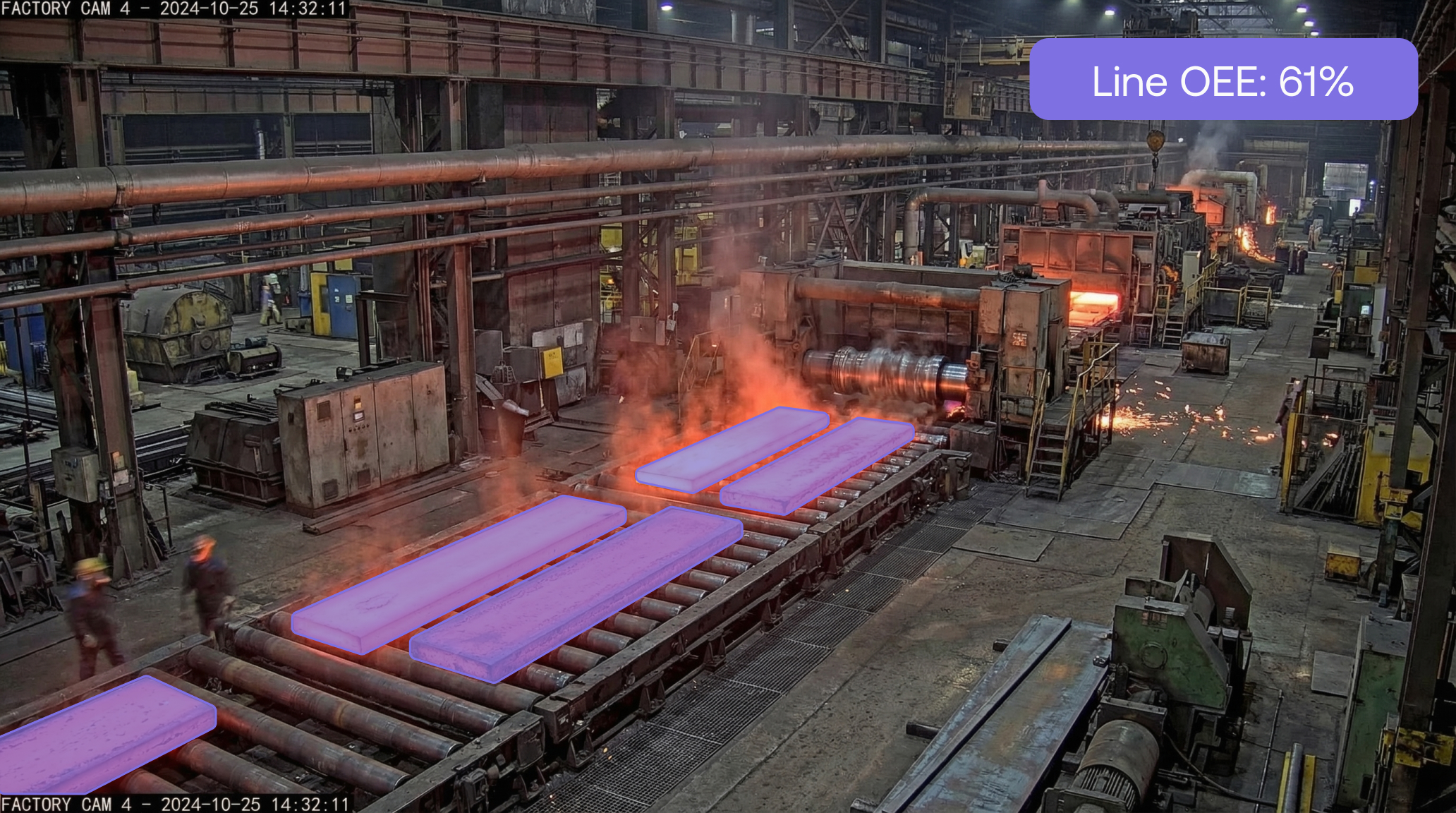
To understand how this plays out in practice, take a high-speed roll-stock thermoforming packaging line, a familiar setup in protein processing. In the old way, a minor film tension variance causes a micro-stoppage every 12 minutes. Each pause lasts only 40 seconds, not enough to trip a major system alarm, but over an eight-hour shift it quietly eats up 30 to 40 minutes of operating time. The shift supervisor only notices the loss at the end of the day when reviewing the Overall Equipment Effectiveness (OEE) report. By then, the throughput loss is already locked in.
Video-to-Action AI (VITA) cameras monitor the web feed visually and track queue density upstream. The system detects the micro-drift in film feed before a stoppage occurs, alerts the operator with recommended setting adjustments, dispatches a fresh roll of film, and flags maintenance to inspect the tension arm during the next scheduled break. The line keeps running, throughput stays steady, and the supervisor never had to stop their Gemba walk to put out a fire.
Real-World Example 2: Post-Seal Quality Inspection and Closed-Loop Feedback
Every packaging manager knows the nightmare of seal defects, whether it is product contamination in the seal area, insufficient heat, or mechanical misalignment on a thermoformed tray or pouch. A bad seal does not just mean a rejected package at the plant; it means leakers in the trade, costly product returns, and potential food safety risk.
In the old way, a sealing platen develops a subtle, localized temperature drop or alignment drift. Packages move through the sealing station and continue to case packing. Traditional machine sensors report normal cycle times, so no alarm sounds. QA catches a defective seal 30 minutes later during a routine offline destructive test or water bath squeeze. By then, hundreds of packages have been boxed and palletized, forcing a massive, labor-intensive teardown, sort, and repack effort.
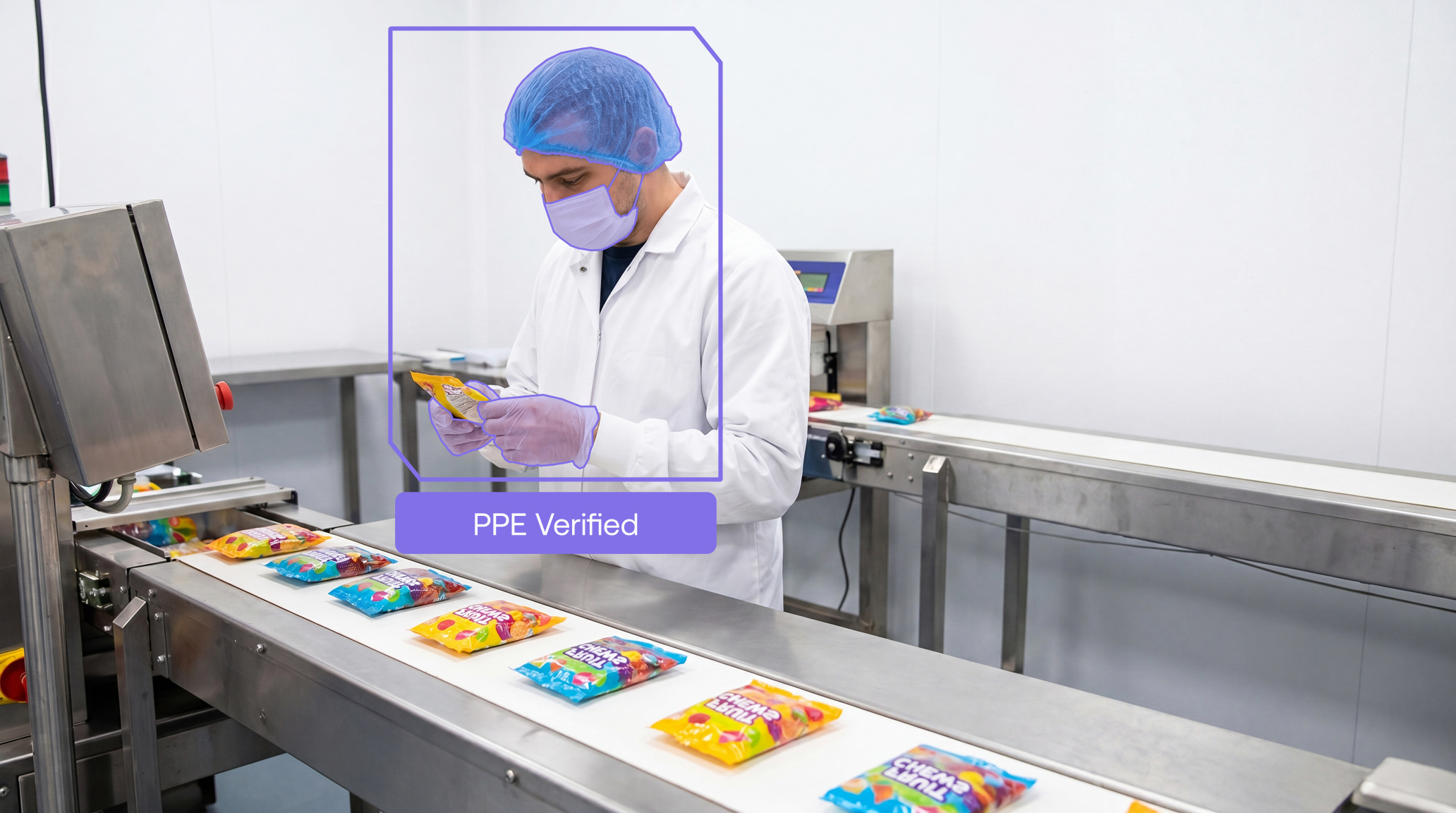
With the AI Line Supervisor, Video-to-Action AI cameras are installed directly after the sealing station, frame by frame inspecting every completed seal for surface contamination, channels, or incomplete bonding.
- Instant defect isolation: The vision system detects microscopic seal anomalies the millisecond a package exits the sealer, instantly triggering a reject arm to purge the single bad unit before it reaches case packing.
- Upstream root-cause diagnostics: The AI does not just see the flaw; it analyzes the defect pattern and alerts the upstream operator to potential root causes, such as product loading geometry issues or pocket misalignment.
- Maintenance precision: If the system detects a repeating defect pattern across a specific die pocket, it sends a targeted alert to Maintenance to inspect the sealing head, heating elements, or temperature controls during the next scheduled pause.
Instead of discovering defective seals 30 minutes too late in a water bath, seal integrity is continuously audited and corrected in real time.
Breaking Down the Departmental Silos
In almost every plant I have run, Operations, Maintenance, and Quality operate as adjacent kingdoms with competing priorities. Production wants maximum speed, Quality wants to slow things down for inspections, and Maintenance wants the line stopped for preventive care. An AI Line Supervisor does not care about internal department politics. It optimizes for holistic operational performance using the rules established by all three teams, coordinated through the Maneva Orchestration Platform that connects them.
If a drive motor shows micro-vibrations, the AI does not wait for a breakdown or force an immediate total shutdown. It throttles speed slightly to protect the equipment, signals Quality to increase inspection rates on that output, and schedules maintenance during an upcoming washdown or shift break.
Video-First Intelligence as the Ultimate Ground Truth
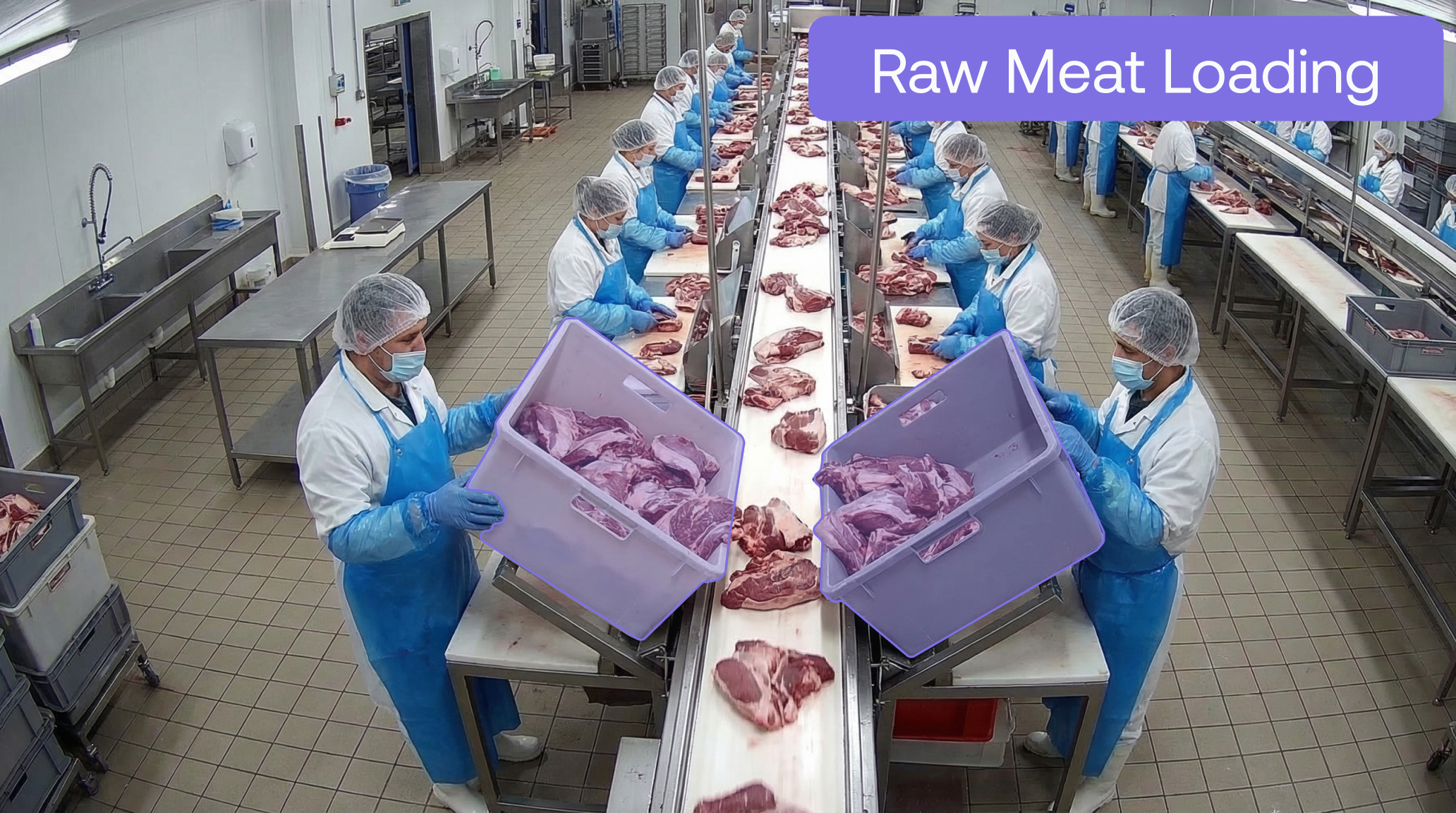
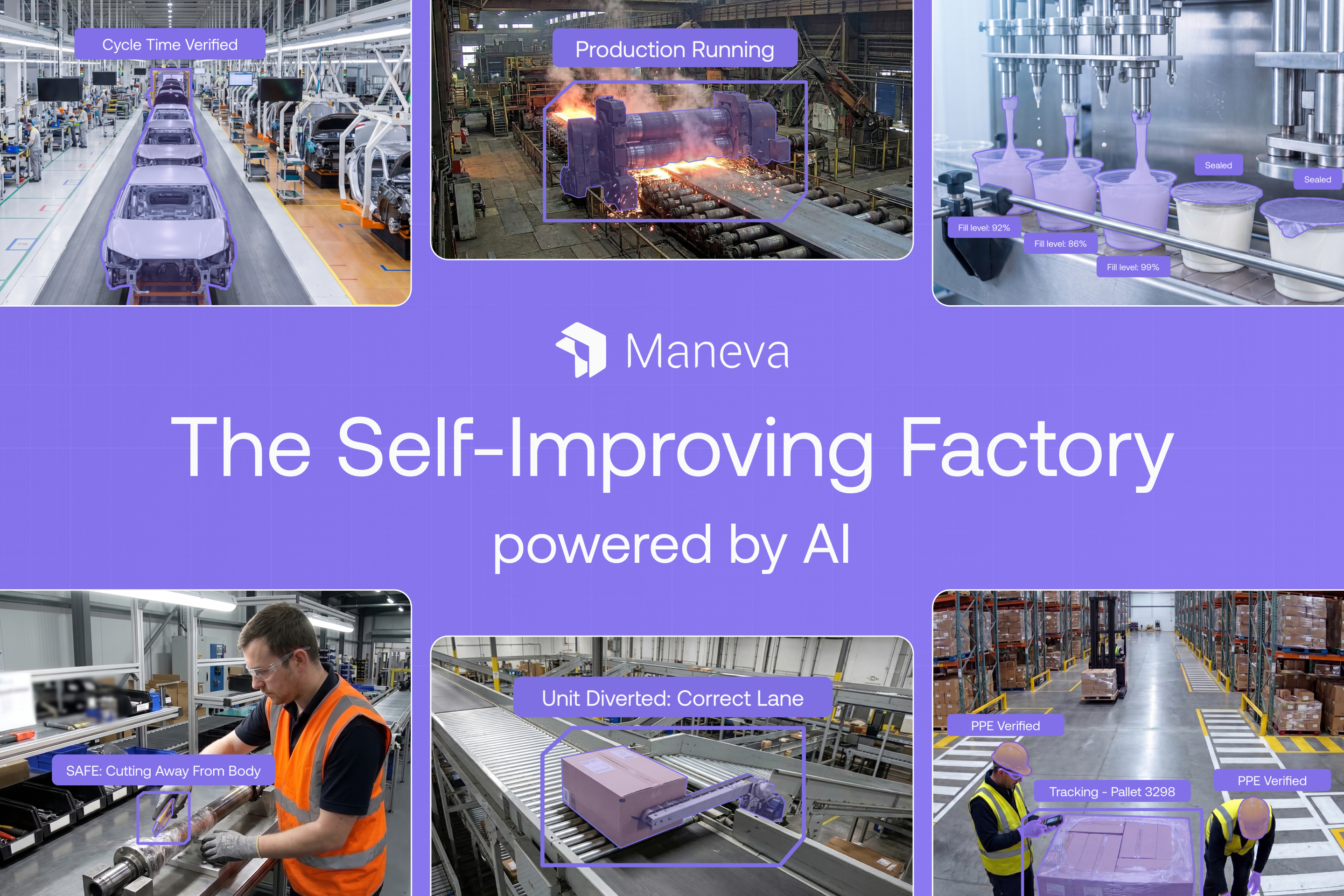
How does an AI supervisor make these calls? It relies on continuous visual context. In many plants, data collection still relies on manual logs or periodic barcode scans. Video-to-Action AI turns existing camera networks into active, real-time sensors that see what is happening across the floor instantly.
- Tracking spatial movement: Cameras do not just inspect product quality; they track operator positioning, staging area accumulation, and conveyor congestion.
- Closed-loop action: Visual insights drive immediate responses, halting an accumulator before a jam occurs or alerting a team lead if an uninspected batch bypasses a metal detector step.
The New Reality for Operational Leadership
After 35 years on the floor, my view on plant technology is simple: the true measure of any system is not how many graphs it generates, but how fast it turns insight into action. When you remove laggy escalation chains and give an AI Line Supervisor the authority to observe, reason, and alert based on your best experts' rules, the plant floor stops being a reactive environment. It becomes a self-correcting system.
The goal is not an empty factory without people. It is an empowered factory where machines take care of the operational noise, visual AI monitors the ground truth, and human leaders are finally freed to focus on strategy, continuous improvement, and building great teams. It is the same pattern the world's most advanced plants are proving out, what McKinsey calls the manufacturing "lighthouses": real-time data in the hands of the people running the line, not another dashboard to watch. Book a demo at maneva.ai to see the AI Line Supervisor on your line.