Why the Safest Floors Are Also the Most Productive
In manufacturing, PPE compliance programs are built on a reasonable assumption: that posting a policy, putting up signage, and stationing supervisors on the floor is enough to keep workers protected. In practice, that assumption breaks down every day.
It breaks down at shift change. It breaks down in low-traffic zones. It breaks down at 2am on a Sunday when the supervisor is managing three other issues at once. And for most facilities today, there is no dedicated AI factory safety monitoring software filling those gaps.
The result is a persistent and costly disconnect between what a safety program documents and what's actually happening on the floor. That gap is where incidents happen, where regulatory findings originate, and where the true cost of a safety program that looks good on paper quietly accumulates.
Manual Safety Checks Have Four Structural Failure Points
Traditional compliance programs depend on people being in the right place at the right time. That's not a strategy. It's a gap waiting to happen.
- Supervisors can't cover everything. A floor supervisor managing 20+ workers has a dozen competing priorities at any given moment. PPE checks happen when there's time, which means they happen inconsistently, if at all.
- Spot checks create compliance theater. Workers comply during visible audits. What happens between rounds, or on the night shift, is a different story. The data collected reflects the check, not the baseline.
- Logs document risk. They don't prevent it. By the time a violation is recorded, the exposure already happened. In industrial environments, a single PPE failure can trigger a contamination event or an FDA finding. A paper trail doesn't undo that.
- Incomplete data drives incomplete decisions. When observations are infrequent and inconsistent, EHS teams end up managing the violations they know about, not the ones most likely to result in a serious incident.
The Cost of Getting This Wrong Is Not Abstract
A single OSHA recordable incident involving PPE non-compliance carries an average direct cost of $38,000 to $150,000 depending on severity. According to OSHA's SafetyPays Estimator, indirect costs typically add another 1.1x on incidents at that scale. Add workers' compensation claims, legal exposure, lost productivity, and the indirect costs of retraining and morale impact, and one preventable incident can cost multiples of that figure.
And those are just the numbers that get captured in a report. The real cost also includes the hours an EHS manager spends on investigation and corrective action, the regulatory scrutiny that follows a recordable event, and the chilling effect on worker trust when a preventable incident occurs on a floor where workers assumed the safety program had things covered.
In manufacturing, a PPE-related contamination event that triggers an FDA finding doesn't just carry a dollar figure. It triggers mandatory audit programs, consumes executive bandwidth, and creates a regulatory record that follows a facility for years.
The question that resolves most investment decisions quickly: what is one preventable incident actually costing this facility, fully loaded, and how does that compare to the annual cost of preventing it? That is exactly the calculation that makes AI factory safety monitoring not just a safety decision, but a business one.
What AI Factory Safety Monitoring Changes
AI factory safety monitoring replaces periodic human observation with continuous, camera-based coverage across the entire facility, in real time, on every shift, without fatigue.
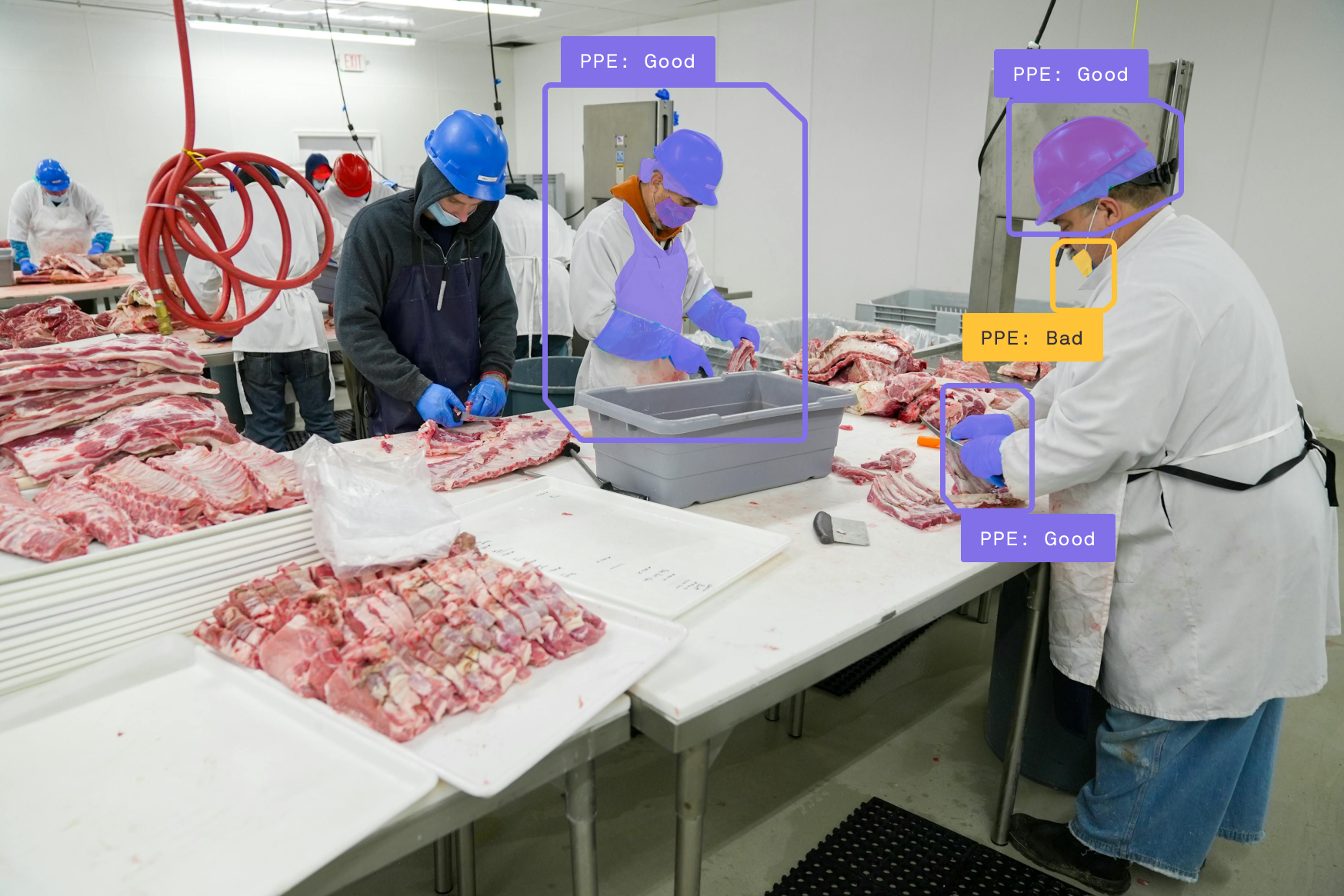
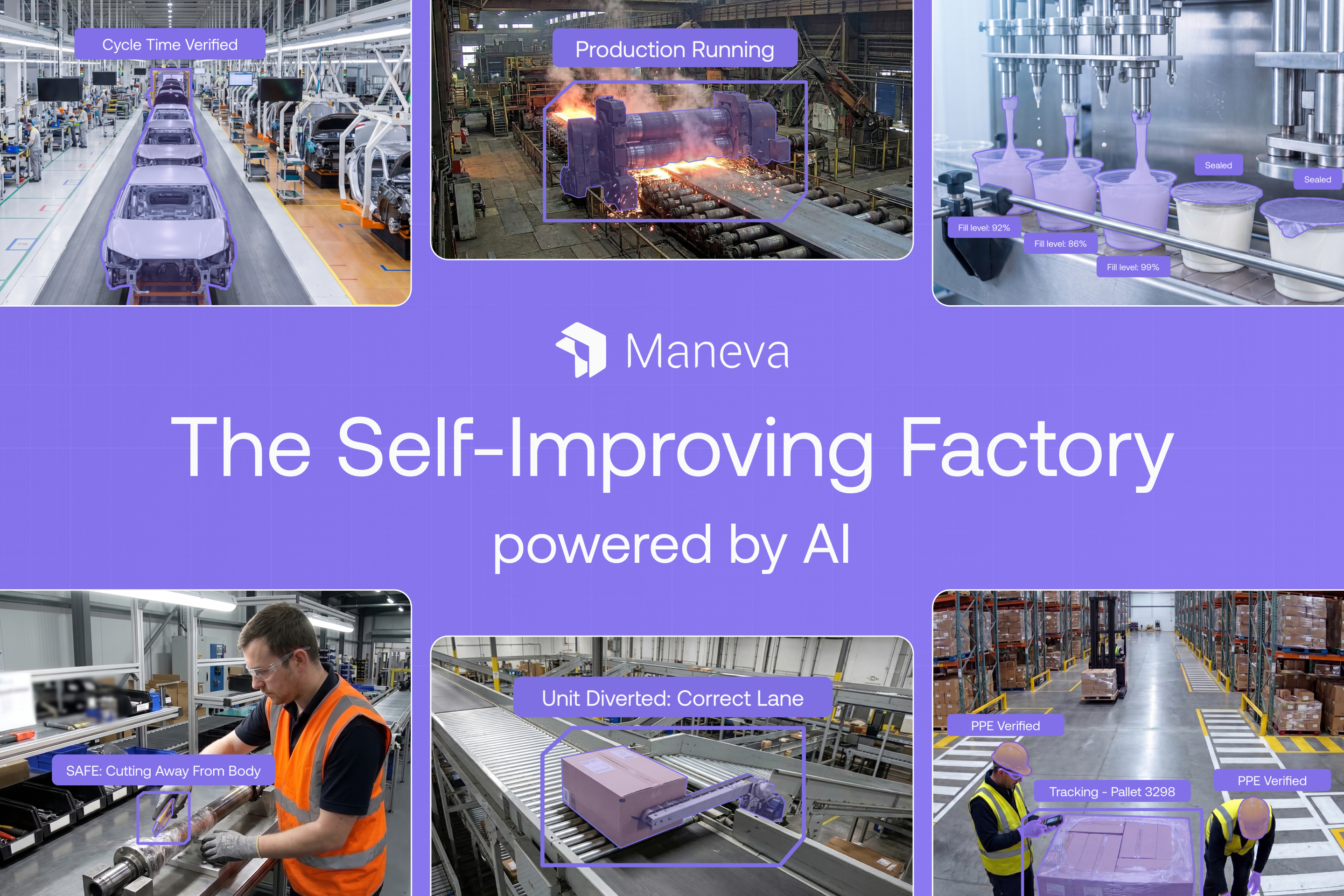
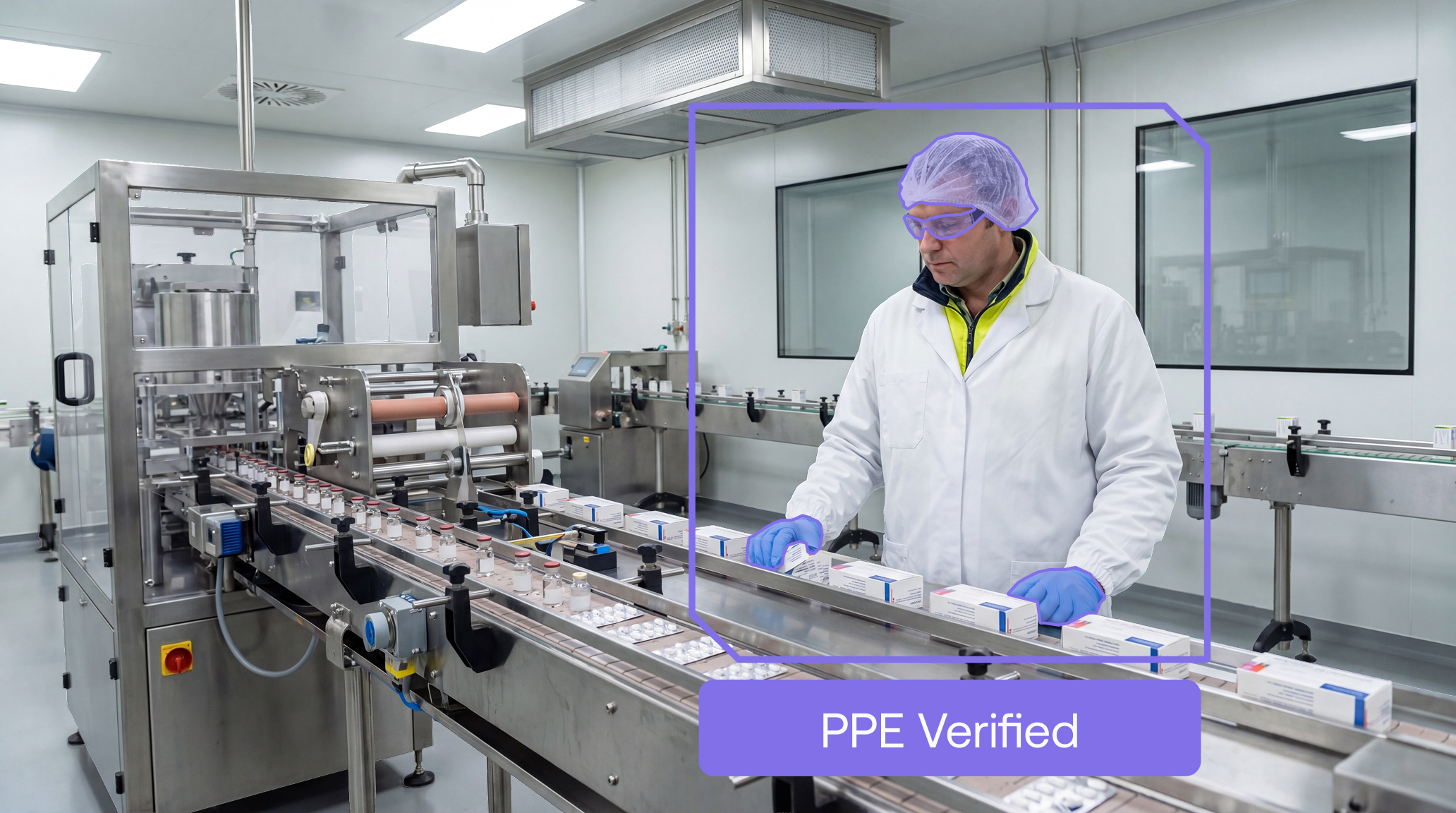
Maneva's ALIS (AI Line Supervisor) agent is built for exactly this. Working with existing facility cameras, no new hardware investment required, ALIS monitors the floor continuously, detecting PPE violations, handwashing compliance, unauthorized access to danger zones, and slip and fall risks in real time. The difference it creates isn't incremental. It's structural.
Facilities deploying ALIS have documented up to a 50% improvement in health and safety compliance and a 10% increase in total output through improved worker productivity. That's not a compliance win. That's an operational one. Those results sit at the core of the AI health and safety compliance case for executive leadership. The reason those results are achievable comes down to four specific changes ALIS makes on the floor:
- Violations are caught the moment they occur. ALIS flags a worker entering a no-go zone without gloves at 3am the same way it does during a peak daytime audit. Coverage doesn't change by shift, zone, or hour.
- Alerts trigger before the risk becomes an incident. Real-time detection means supervisors are notified immediately, not hours later when a log is reviewed.
- Compliance data is objective and complete. Every detection is automatically logged, timestamped, zone-specific, and audit-ready. When a regulatory inspection requires evidence of your PPE program, it exists without reconstruction.
- EHS teams finally have the data to lead, not just respond. Continuous monitoring identifies the specific zones, shifts, and behaviors driving the most risk. Coaching and intervention go where they matter most, not where they're easiest to observe.
What Real Results Look Like
The gap between manual observation and AI factory safety monitoring is not marginal. Facilities still relying on periodic walkthroughs as their primary safety program are capturing a fraction of actual non-compliance events, specifically the ones that happen to occur when a supervisor is present and paying attention. ALIS captures all of them, and that changes how safety programs are run.
AI monitoring captures the full picture. McKinsey's 2025 survey of manufacturing COOs confirms that the manufacturers pulling ahead are the ones connecting AI to the floor itself, not to back-office dashboards. When safety leaders have access to complete, objective data, three things shift meaningfully:
- Program decisions are driven by actual risk patterns, not audit impressions.
- Coaching targets the behaviors and zones generating the most exposure, not just the ones observed.
- Safety culture moves from compliance-driven to prevention-driven, because the data now supports a different conversation.
Beyond safety, Maneva's ALIS agent, as part of the broader VITA and ALIS ecosystem, has also been shown to deliver up to 16x improvement in production uptime and a 99.9% model accuracy rate. That matters because the case for AI factory safety monitoring doesn't have to rest on safety ROI alone. Fewer disruptions, fewer incidents, and a workforce that trusts the safety program all contribute directly to production output. Safety and productivity don't have to compete. With the right tools in place, they reinforce each other in ways that show up on the P&L.
Safer Floors Are Built With Better Visibility
The future of workplace safety in manufacturing isn't more policies, more clipboards, or more walkthroughs. It's continuous AI safety monitoring: the ability to see what's actually happening on every shift, in every zone, with data that doesn't depend on a supervisor being in the right place at the right time.
That visibility already exists. The manufacturers building the most resilient safety programs today aren't waiting for an incident to justify the investment. They're using AI to prevent the incident from happening at all.
Your workers deserve a safety program that protects them every hour of every shift, not just when someone is watching. That's what Maneva's ALIS agent delivers. And it starts with your existing cameras, on your highest-risk line, in weeks.
Ready to see what real-time AI factory safety monitoring looks like on your floor? Book a demo at maneva.ai and find out what ALIS sees that your current program is missing.