


How Do Soup and Sauce Plants Automate Fill Level Inspection?
Soup and sauce plants automate fill level inspection by watching the filler, not just sampling the finished container. Cameras on the filler show which valve is pouring short, when it started and why, while checkweighers and level sensors confirm each can. Drift gets caught in minutes instead of at the next scheduled check.
It's 2:40 a.m. on a sauce line. The QA tech pulls her twelve jars for the half-hour fill check, tares the scale, and logs the weights. All twelve are in spec. She initials the sheet and walks back to the lab.
What she can't see is valve 17. Twenty minutes ago, a worn seal on that filler head started short-pouring. On a 24-valve rotary filler, that's one light can every revolution, and they're heading to the seamer right now. By the next scheduled check, hundreds of them will be sealed, coded and on their way to the retort.
Nobody did anything wrong. The sampling plan worked exactly as designed. That's the problem.
Why is fill level inspection harder in soup and sauce?
Few products punish fill variation the way soups and sauces do. Particulates settle unevenly in the hopper. Hot product foams and splashes, creating false levels.
Many lines fill in two stages, solids first and broth or sauce second, so a can can hit its gross weight with the wrong ratio inside. And once a can is seamed or a pouch is sealed, nobody can see the level anymore.
Then there's the fact that fill fails in both directions.
Underfill is a net-contents problem. In the U.S., state and local weights-and-measures inspectors check packages against NIST Handbook 133, the standard for verifying that what's on the label is what's in the package. A lot that fails can be pulled from shelves.
Overfill is a margin problem everywhere, and a food safety problem on retorted lines. FDA's low-acid canned food regulation (21 CFR 113.83) names maximum fill-in weight and minimum headspace as critical factors that can affect the scheduled process. FDA's inspection guidance notes that fill weight is normally a critical factor wherever solid product is covered by a liquid packing medium, which describes most soups. Push past those limits and you're not giving away product. You're writing a process deviation.
Caught between those two risks, most plants do the rational thing: they run fat. As one Lean Six Sigma analysis of filling lines put it, some manufacturers decide it's safer to overfill, and pay for it in giveaway and lower margins. That isn't a filler problem. It's a visibility problem.
How do plants check fill levels today?
Most soup and sauce lines layer several checks, and each one answers a slightly different question:
- Manual sample checks. A statistical snapshot every 15 to 60 minutes. Good for compliance records, blind between samples.
- Checkweighers. Weigh every unit, but they measure gross weight, so container and lid variation blur the signal. They tell you a can is light, not why.
- Through-container level inspection. X-ray, gamma or high-frequency sensors read the level inside sealed cans and kick out the failures. Standard on high-speed can lines.
- Camera-based inspection. Common on glass jars and at the open-container stage, before lidding or seaming.
All four are built to answer one question: is this container acceptable? Very few answer the one that matters to an operations leader: what is happening at the filler that made it unacceptable?
Underfill detection is a rejection problem. Fill control is a process problem.
A reject system is the end of the pipe. It kicks the light can into a bin, and too often the information goes into the bin with it. Somebody counts the rejects at end of shift. Maintenance hears about valve 17 the next day, if at all.
Computer vision changes that when it watches the process, not just the container. A camera on the filler sees which head poured short, whether the product foamed or splashed, whether a can was misaligned under the nozzle, and exactly when it started. That turns underfill detection from a pass/fail gate into a live, head-by-head picture of the filling process.
The research supports pairing those signals. A 2024 study in Applied System Innovation combined image-based quality inspection with load-cell weighing and reached 99.268% accuracy on products weighing over 1 kg. The lesson for filling lines: cameras and weight data together are more reliable than either alone.
What changes when automated fill level inspection watches the filler?
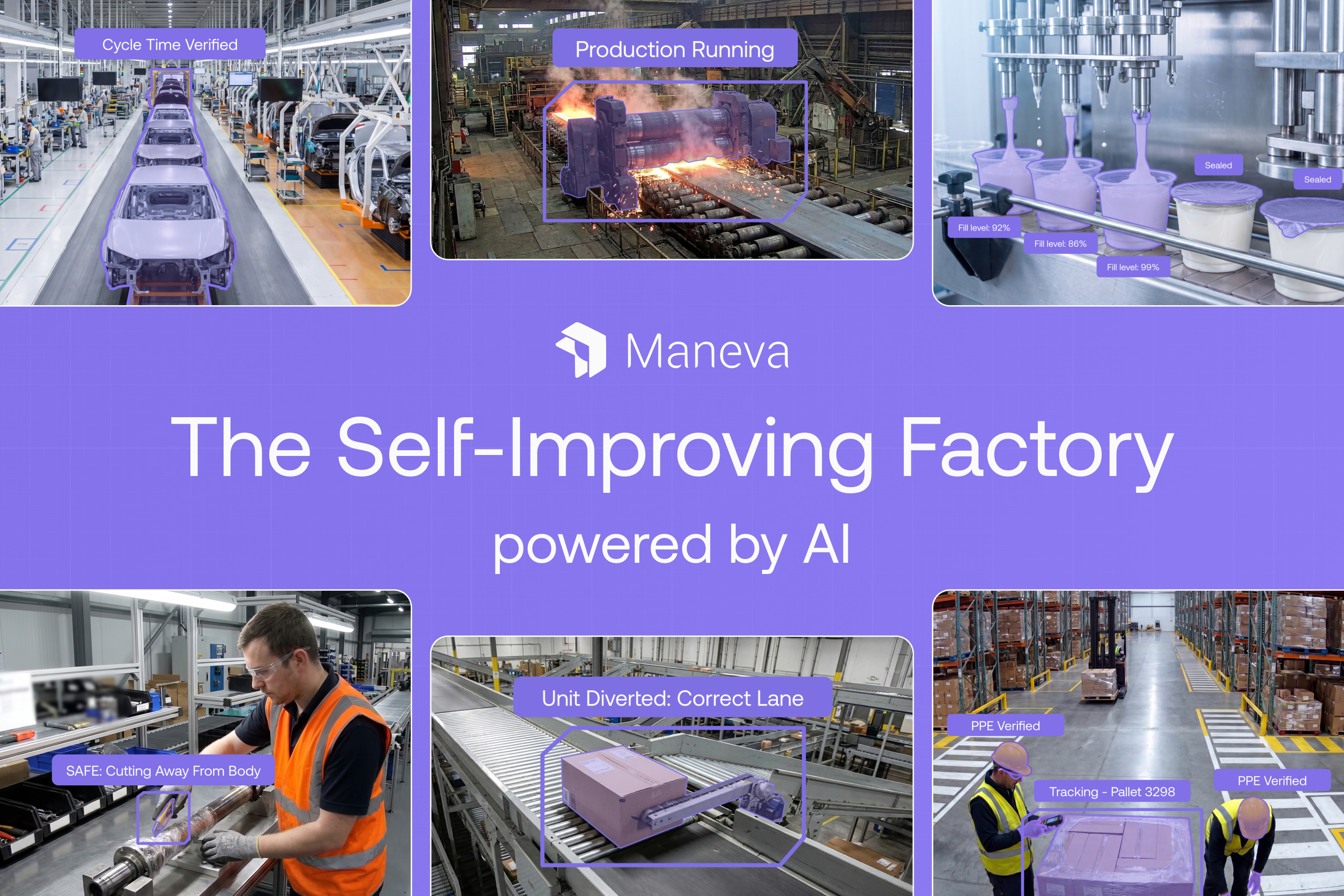
This is the gap Maneva's VITA (Video-to-Action AI) agent is built to close. VITA can run on the cameras a plant already has, where their angle and resolution suit the filler, and turns what it sees into action on the line. On a filling line, the operational shift shows up in five places.
Drift gets caught in minutes, not at the next check. When one head starts pouring short, the line knows while the problem is still a few cans, not a few pallets.
SPC moves down to the valve. Instead of one control chart for the whole filler, quality teams can trend each head. Maintenance replaces the seal on valve 17 instead of tearing down the filler.
The target can come down. Reducing variation lets a plant set its process target closer to declared net weight while still controlling the risk of failing Handbook 133's maximum allowable variation. That is where giveaway comes back as margin.
Audit readiness becomes evidence, not reconstruction. Every fill deviation is time-stamped and tied to video. When a process authority or auditor asks what happened at 2:40 a.m., the answer is on screen, not on a clipboard.
People move up the value chain. The QA tech stops being a human sampling device and spends her shift on root cause. The AI watches every can. The team decides what to do about it.
How do you calculate the ROI of fill level inspection?
Fill level is one of the cleanest business cases in food manufacturing because the inputs already live in your data. Annual giveaway is simply average overfill multiplied by annual units and cost per gram. A line averaging just 2 grams over target across 50 million units a year is giving away 100 metric tons of finished product, before counting the cost of rejects, reworks and the occasional held lot.
Run that number for your own highest-volume SKU. Then ask what it would be worth to move the target one gram closer to label, with full visibility into every head on the filler.
From blind spots to a line that tells you
Back to 2:40 a.m. Same tech, same line, same worn seal on valve 17. This time she gets an alert within minutes, with the valve number and a clip of the short pour. Maintenance swaps the seal before breakfast. Her initials on the sheet still matter, but now they sit on top of a complete record of every can that shift.
Fill level inspection was never really about weighing cans. It's about seeing the process clearly enough to stop running fat and stop hoping the sample catches the problem. The plants that get there first will feel it in margin, in audits and in how their teams spend their time.
See how VITA supports quality assurance on food and beverage lines, or explore Maneva for food and beverage manufacturing.