

Industry 4.0 Is Already Here. Most Factories Aren't Ready. Here's Where to Start.
Spend enough years on a plant floor, and you develop a sharp radar for ideas that sound great in a boardroom but fall apart Thursday day shift. Over my 35 years in manufacturing, much of it spent in the fast-paced, full-washdown world of further processed protein operations, I've seen dozens of "revolutionary" technologies promise to change everything.
Right now, the industry is flooded with that exact kind of noise around AI, Industry 4.0, and the so-called "smart factory." The boardroom obsession with these concepts has created a frustrating disconnect on the actual plant floor. Most tech vendors push a binary choice: either a massive, "all-or-nothing" enterprise platform that demands you replace your legacy infrastructure, or a rigid, out-of-the-box point solution. These cookie-cutter "box solutions" claim to be a quick fix but are completely un-customizable with your actual operations. They fail because no two plant floors are the same. Your layout, your line pacing, and your manual processes are entirely unique to your facility. If technology forces you to alter your operational workflow just to fit into its rigid constraints, it isn't solving your problem, it's adding to your overhead.
When factories implement these rigid systems, they often end up with "dashboard fatigue", digital scoreboards that tell them what broke yesterday, but leaving supervisors to manually guess why it happened or how to fix it in real time. Traditional smart factory platforms completely ignore the human element. They are designed for pristine, empty robotic lines, which leaves a massive blind spot in high-volume, labor-intensive operations where human performance is the biggest operational variable.
When I talk to teams about deploying Video-to-Action AI, I look at the floor through the lens of a seasoned plant manager, not a tech evangelist. The camera feeds already running across your facility are capturing the exact operational "ground truth" of your lines every single second. The goal isn't to add technology for the sake of it, it's about deploying practical tools that turn the physical reality of your existing floor into immediate, actionable adjustments on the line. If you want to move toward a smart factory without burning out your team or wasting capital, you need to identify the low-hanging fruit through a targeted application that can solve your most manual, hard-to-measure operational pain points today.
Choosing Your Starting Point
To build momentum, you must evaluate your operations through an Effort vs. Impact lens. You need an immediate operational victory, a deployment that addresses a critical bottleneck with minimal technical friction, while providing the most favorable cost impact to your bottom line.
Because every plant has a different weak spot, you shouldn't be forced into a single cookie-cutter application. Depending on where your leaks are, your best starting point will typically fall into one of these high-impact areas.
Option A: People Performance & Manual Process Monitoring
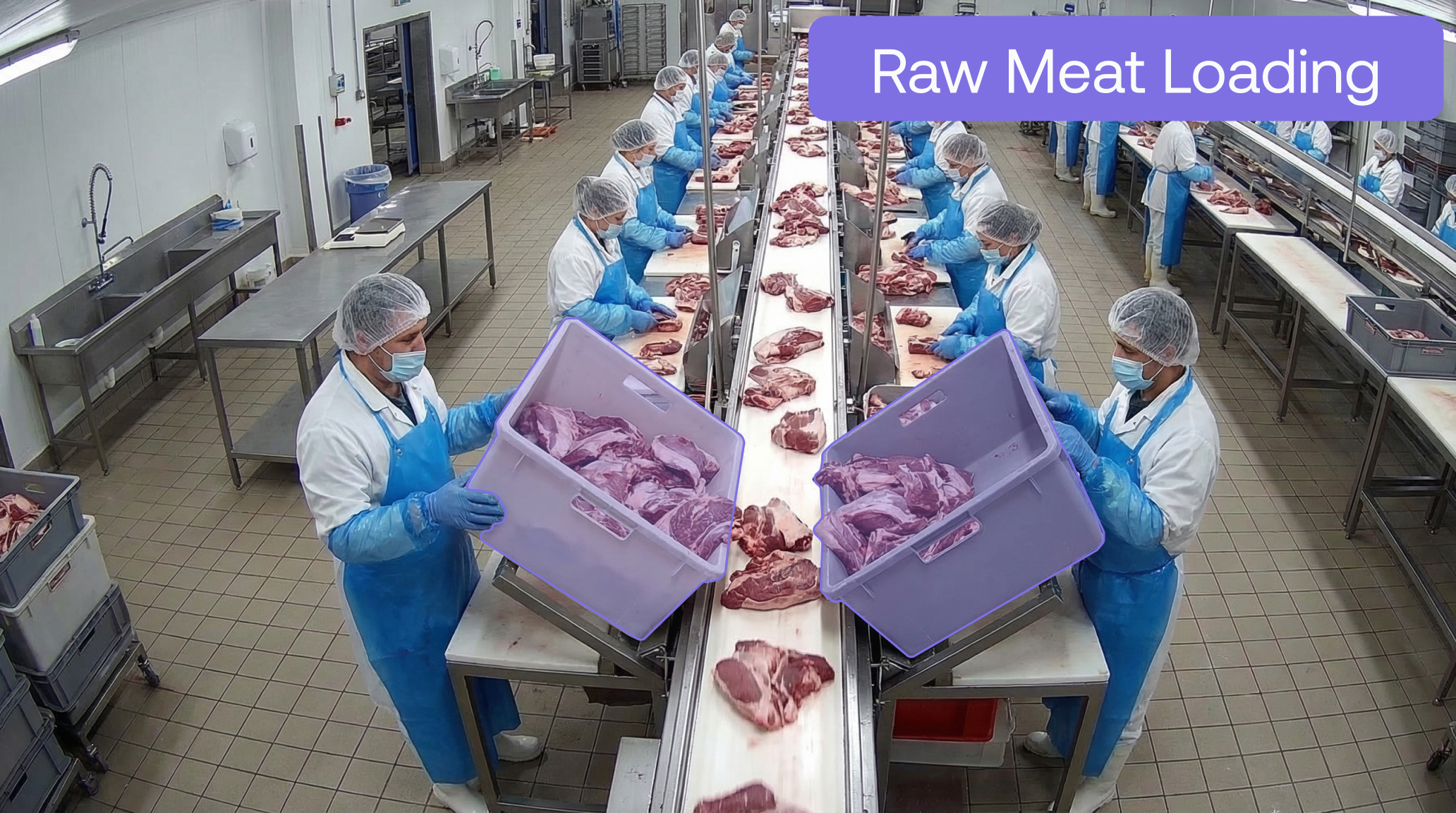
In facilities with heavy manual assembly, trim, or packing lines, your biggest variable isn't machinery, it's human activity and execution. We often have so many manual processes happening simultaneously that it is practically impossible for supervisors to successfully measure individual performance, cycle times, or technique.
This is where Video-to-Action AI delivers its most transformative impact. By deploying a process monitoring application like Maneva's ALIS (AI Line Supervisor) agent, you can automatically track manual cycle steps, pacing, and human/machine interactions in real time. It removes the guesswork from continuous improvement. The AI flags cycle time variances and deviations from standard operating procedures (SOPs) without requiring a supervisor to stand over an operator with a stopwatch. If a specific manual packing station or line segment is falling behind, the visual data shows you exactly why, whether it's an ergonomic bottleneck, material feed issue, or a training gap. Standardizing these human variables often yields the highest, fastest capacity recovery on the entire floor.
Option B: Part Counting & Flow Verification
If your primary pain point isn't manual labor variance but rather data integrity and line pacing, your low-hanging fruit is usually automated counting. Many facilities still rely on manual tallies, clipboards, or physical proximity sensors that constantly get knocked out of alignment during high-pressure washdowns or getting "bumped."
Deploying a counting and flow application like Maneva's VITA (Video-to-Action AI) agent stabilizes your line metrics immediately. It requires minimal technical friction because the AI is simply verifying quantities, spacing, and the presence or absence of an object rather than diagnosing specific defects. It eliminates manual verification labor, prevents short-shipping bottlenecks, and ensures your OEE calculations are built on real-time data.
Option C: Targeted Quality & Defect Inspection
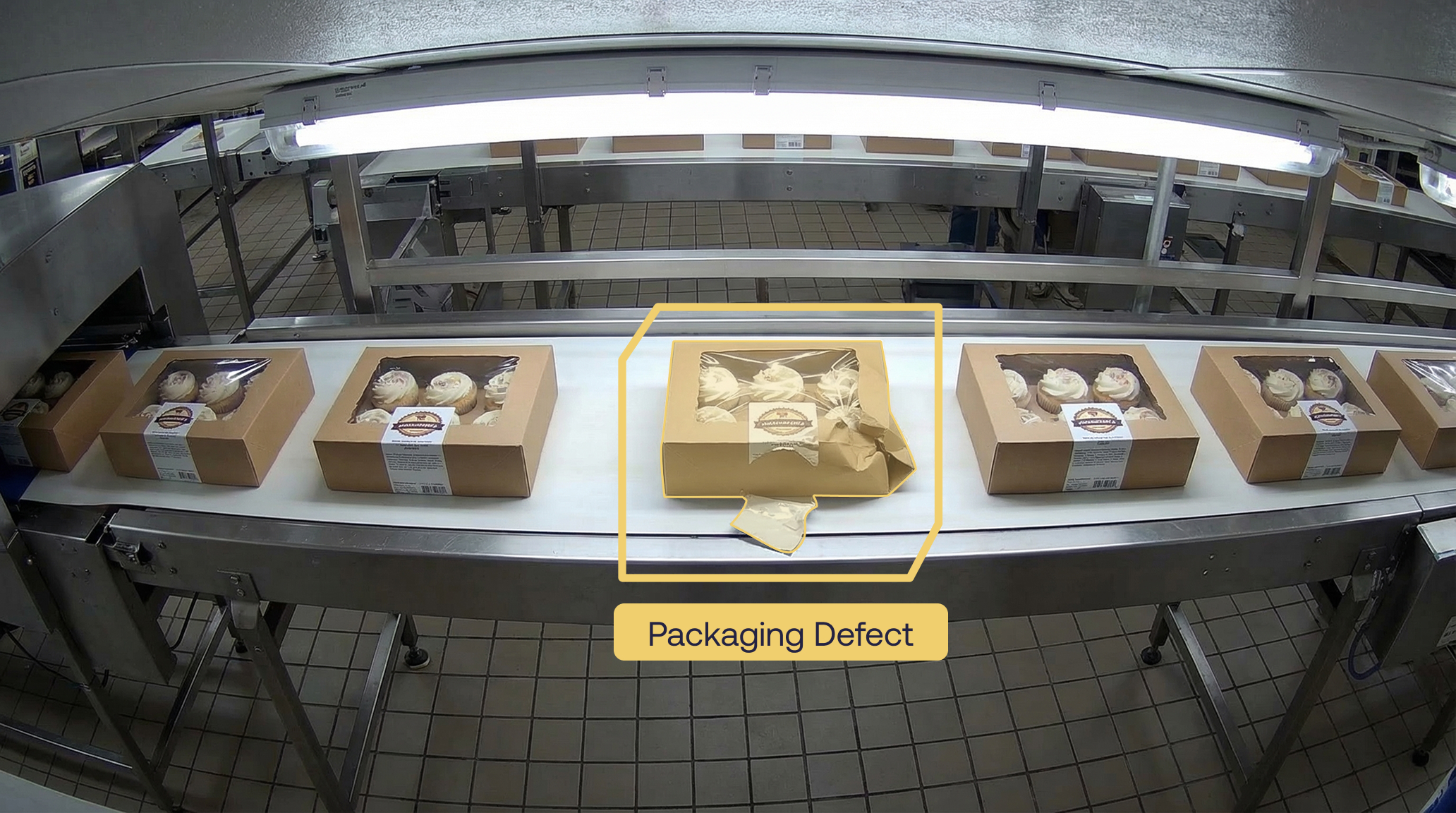
If your production volume is high but your margins are being eaten by scrap material, rework, or customer returns, your starting point should be quality inspection. Traditional vision systems struggle with the natural variations found in organic products or flexible packaging, leading to false positives that operators eventually just turn off.
Deploying a VITA application for defect detection targets your highest variable cost: the Cost of Poor Quality (COPQ). By training the AI on your exact quality thresholds, it catches surface defects, seal anomalies, or labeling errors early in the production cycle, before a bad part is boxed, palletized, and shipped. It moves your quality team from a reactive approach to a proactive approach, keeping yields high and preventing costly retailer penalties.

How to Expand (into Maintenance and Safety)
Once you have landed an immediate victory and secured clear financial returns using one of the options above, you can confidently expand your AI footprint into deeper operational layers.
Asset Health & Maintenance Monitoring
Once product flow and manual processes are optimized, you can point your visual infrastructure at the machinery itself. Using Video AI to monitor critical assets, tracking belt wear, fluid leaks, or component overheating, transitions your maintenance team from expensive, reactive firefighting to predictable, scheduled interventions that maximize machine uptime.
Health, Safety, and Security (EHS) Risk Shielding
A plant can't be efficient if it isn't safe. The final phase of a mature roadmap leverages the vision network to protect your people and mitigate corporate liability. The AI monitors for safety compliance in real time, identifying missing PPE, slips or trips, ergonomic strains, or unauthorized entry into high-risk zones. Brenda Salinas covered this layer in depth in how computer vision is reducing workplace incidents. While managing privacy and labor dynamics makes this a later-stage deployment, preventing a single lost-time injury delivers a massive, definitive impact to your operational risk profile.
Connecting It All Together with the Orchestration Platform
Historically, the biggest frustration with plant floor tech has been fragmentation. Even if a vendor's point solution solved a specific problem on Line 1, it remained isolated. Your team was left logging into multiple dashboards and trying to manually stitch together mismatched spreadsheets to understand the big picture.
To solve this, we developed the Maneva Orchestration Platform, which is available now.
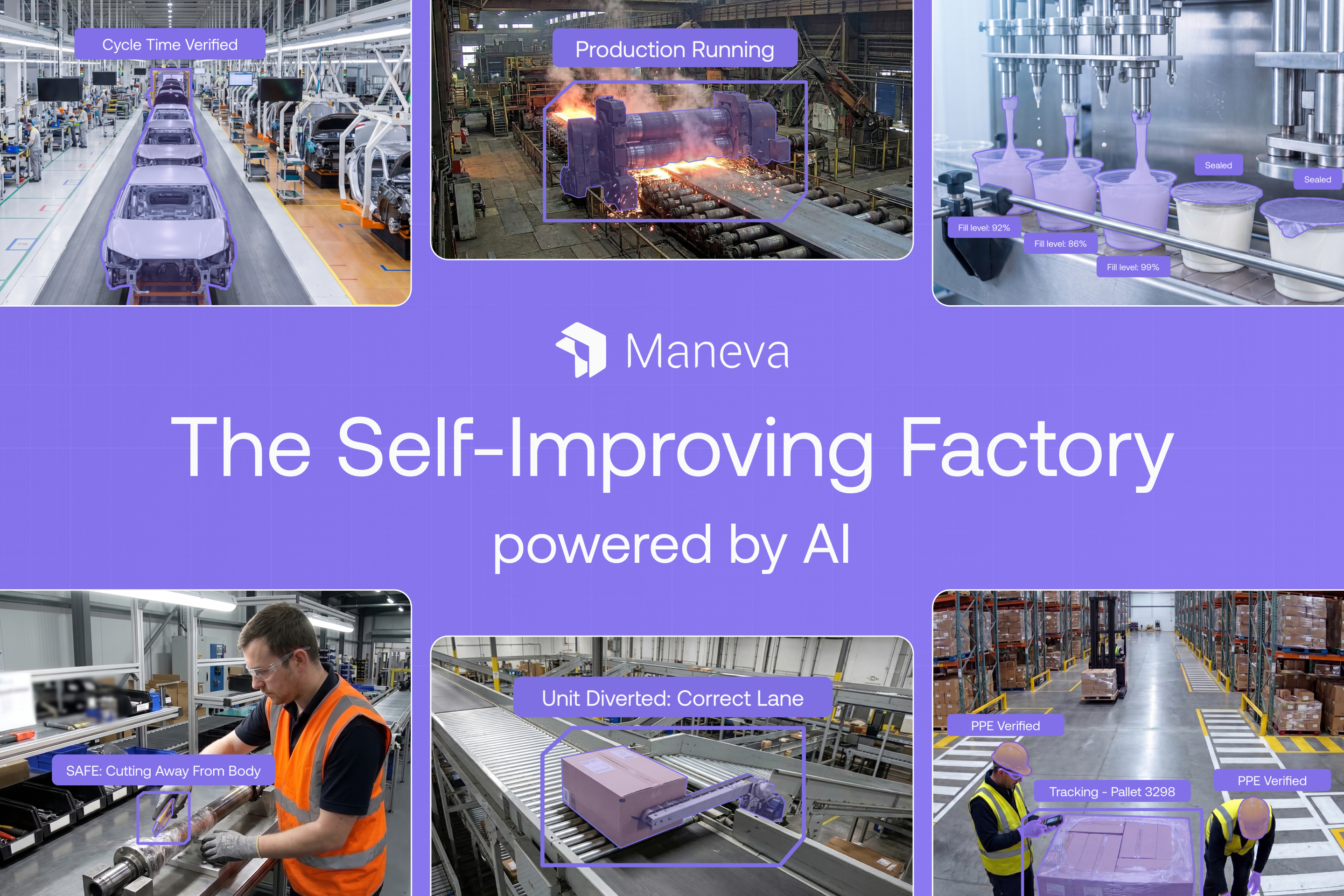
Instead of isolated applications, this platform acts as a centralized operational ecosystem. It pulls every deployed ALIS and VITA application into a single, unified view, connecting the data points between production, quality, maintenance, and safety in real time.
Most importantly, it isn't limited to a single facility. The Maneva Orchestration Platform connects separate manufacturing plants across your entire corporate network. If you are managing multiple operations, leadership can compare throughput performances, human performance metrics, or first-time yields across different locations, instantly identifying systemic issues or sharing best practices from one plant to the next.
Focus on Execution, Not the Hype
Traditional Industry 4.0 projects fail because they demand rigid uniformity or massive infrastructure replacement. McKinsey's research on scaling the smart factory and the World Economic Forum's Global Lighthouse Network both point to the same lesson: the factories pulling ahead start with focused, high-impact deployments, not big-bang platform rip-and-replace.
The infrastructure you need is likely already mounted on your walls and ceilings. The cameras on your floor are watching the answers to your toughest quality, velocity, and human performance challenges every day. The trick is using an adaptable, Video-to-Action AI approach to turn those passive video signals into real-time, actionable adjustments on the line.
Pick your biggest bottleneck, whether it's the unmeasurable variance of your manual processes, inaccurate counting, or a high defect rate. Secure that win, protect your margins, and then use the Maneva Orchestration Platform to tie your lines and facilities together. It's a step-by-step approach that respects the unique realities of your floor and delivers actual, measurable ROI from day one. Book a demo at maneva.ai to map your starting point.