
What it catches
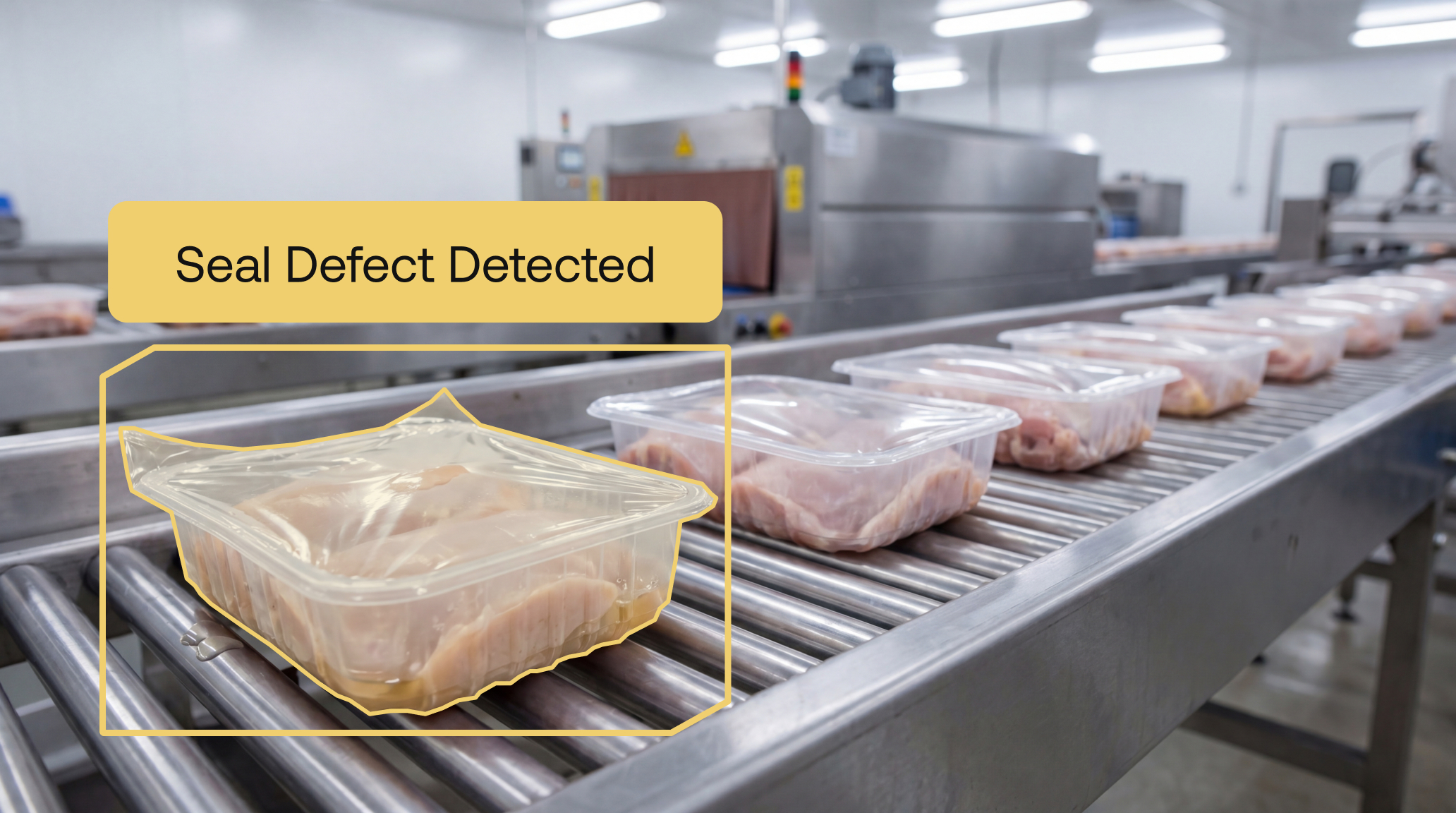
After sealing, Video-to-Action AI checks the seal on every tray for:
- Weak seals that may fail later in the cold chain
- Incomplete seals along an edge
- Compromised seals, such as a break in the seal line
- Seal defects down to about 3 mm
Why manual checks miss it
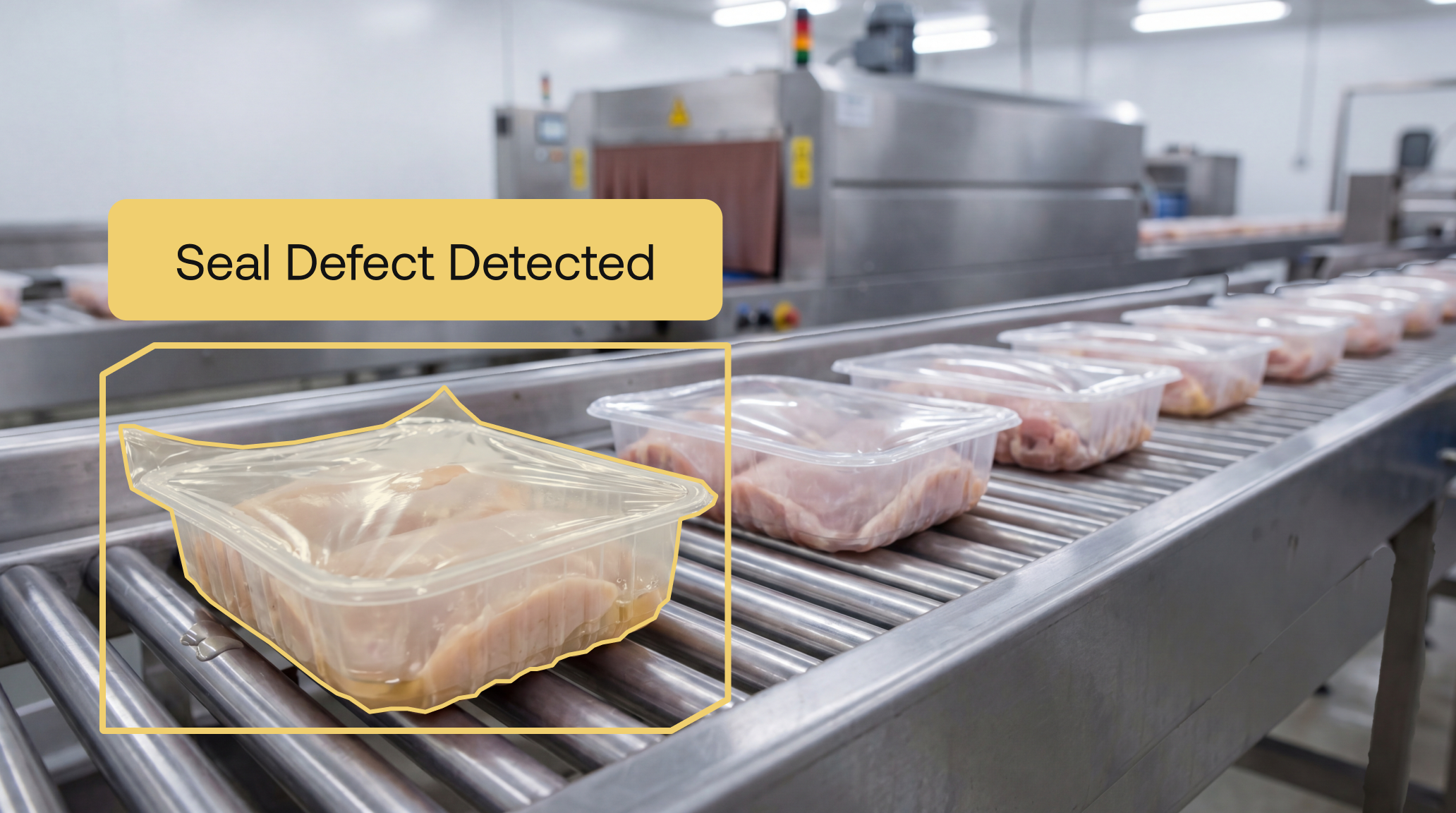
A bad seal on a clear tray is easy to miss at line speed, and sampling checks only a few packs per run. A failed seal shortens shelf life and can lead to leaks, complaints or a recall long after the tray left the plant. By then, finding which sealer and which run caused it is hard.
How it acts
VITA, Maneva's quality and downtime agent, checks the seal on every tray in real time. When it finds a weak, incomplete or compromised seal, it captures an image and video, and can send the signal to the line's reject system so the tray is removed before it is cased.
The images become a diagnostic tool. Because every bad seal is recorded by time and line, a run of failures points to the cause, such as sealer temperature, film alignment or product placement, so the team can fix it before more trays are affected.
Where it sits on the line
The camera sits directly after the sealer, looking down at the trays as they leave the machine. A standard camera only sees the surface of the film; checking the seal itself takes a short-wavelength infrared (SWIR) camera that sees through plastic. It can cover one or more lines. Maneva helps choose the camera and where it goes.
Result
Every tray is checked instead of a sample, and seal failures are caught in the plant instead of at the customer. Brenda Salinas explains what that is worth in practice. Read the article.
More quality checks for packed product: AI for quality assurance →
Frequently Asked Questions
Didn't find what you need? Our team will walk you through Video-to-Action AI and show how it fits your production environment.